
As an Amazon Associate I earn from qualifying purchases and sometimes recommend products from other sellers at no extra cost you. For more details see my disclosure policy and privacy policy.
What’s the best way to protect a board game collection once it stops fitting on one shelf? Sleeve the cards that get handled most, choose a deck box sized for how you actually play, and solve the rest of your storage with shelving and organisers rather than a pile of shrink-wrapped boxes in a closet. The details below cover sizing, materials, and where it’s worth spending more, and it sits alongside our other buying guides for players building out a serious collection.
Most of us don’t set out to build a paper collection. It just happens, one expansion and one deck-builder at a time, until sleeves and storage stop being optional and start being the difference between cards that shuffle cleanly for years and cards that warp, glare under lamps, or get creased in a bag on the way to game night.
🃏 Why Sleeving and Storage Actually Matters
Unsleeved cards pick up damage faster than most players expect. Repeated shuffling wears down corners and edges, oils from hands dull the finish over time, and cards stored flat under humidity swings can warp enough to become identifiable from the back. None of that is dramatic in the short term, but it adds up across dozens of play sessions a year.
Sleeving solves most of this outright. It also changes shuffle feel, which matters more than it sounds. A stack of 500 unsleeved cards shuffles differently to the same stack in quality sleeves, and players who shuffle a lot (deck-builders, drafters, anyone running a legacy campaign) notice the difference within a session or two.
Glare is the other overlooked factor. Cheap glossy sleeves under bright table lighting can wash out card text, which is a real problem for anyone streaming games or playing under strong overhead lights. Matte-finish sleeves cost a little more and solve this cleanly.
📏 Matching Sleeve Size to the Games You Actually Own
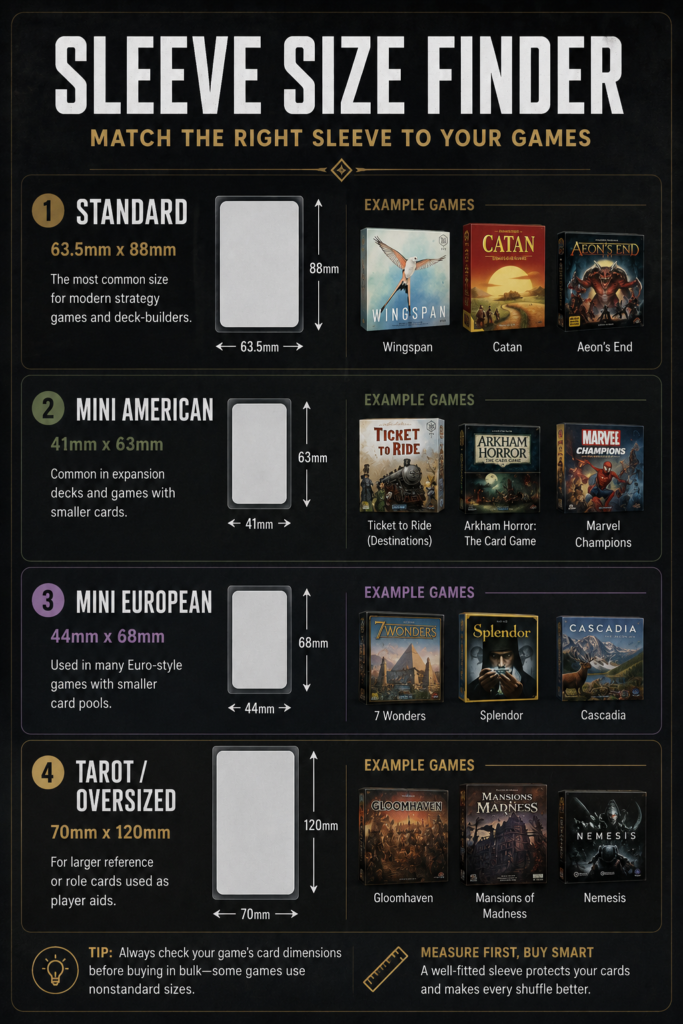
Sleeve sizing is where most first-time buyers go wrong, ordering one size and assuming it fits everything. It doesn’t. Here’s what actually matches which games:
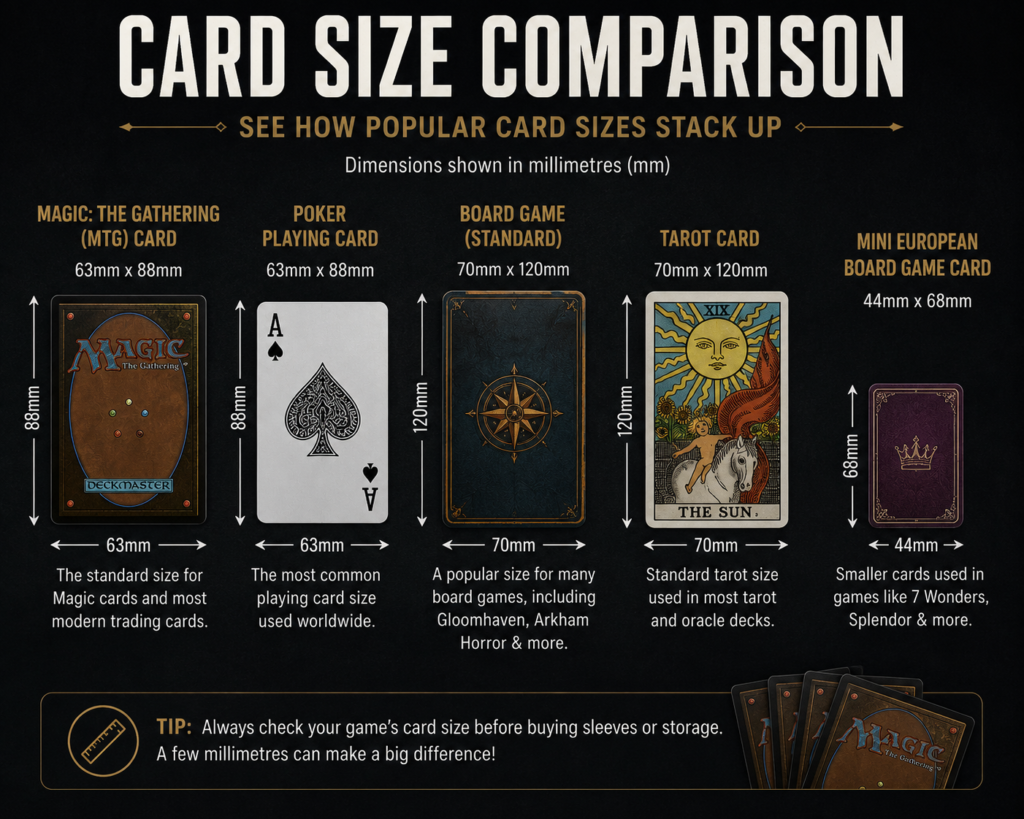
- Standard (63.5mm x 88mm): the size used by most modern strategy titles and deck-builders, including Wingspan‘s bird cards and the bulk of Catan‘s resource and development cards.
- Mini American (41mm x 63mm): common in expansion decks for games like Ticket to Ride.
- Mini European (44mm x 68mm): found in 7 Wonders and several Euro-style titles with smaller card pools.
- Tarot / oversized (70mm x 120mm): used for larger reference or role cards in games like Gloomhaven, where the physical card doubles as a battlefield reference.
Check your specific game’s card dimensions before buying in bulk. A handful of publishers use nonstandard sizes even within a stated category, and a mis-sized sleeve is worse than no sleeve at all since it either won’t close properly or will bend the card to fit.
📦 What Actually Matters in a Deck Box
A deck box needs to do three unrelated jobs well: hold enough sleeved cards without splitting at the seams, stack cleanly with the rest of your storage, and survive the trip to game night without cracking. Capacity is the first filter. If you’re storing a single sleeved 60-card deck, a compact box is fine. If you’re organising a full Gloomhaven campaign’s worth of cards, you need something built for volume, not a box that was designed for one Magic deck and stretched.
Material is the second filter, and it’s where cheap boxes fail fastest. Thin plastic hinges snap after a season of regular use, and soft-sided cases don’t protect against the corner damage a deck box exists to prevent in the first place. Stackability is the quieter third factor: a box that won’t sit flush on a shelf ends up loose on a table, which defeats the point of buying storage at all.
Commander Boxes: A Specialist Option Worth Knowing About
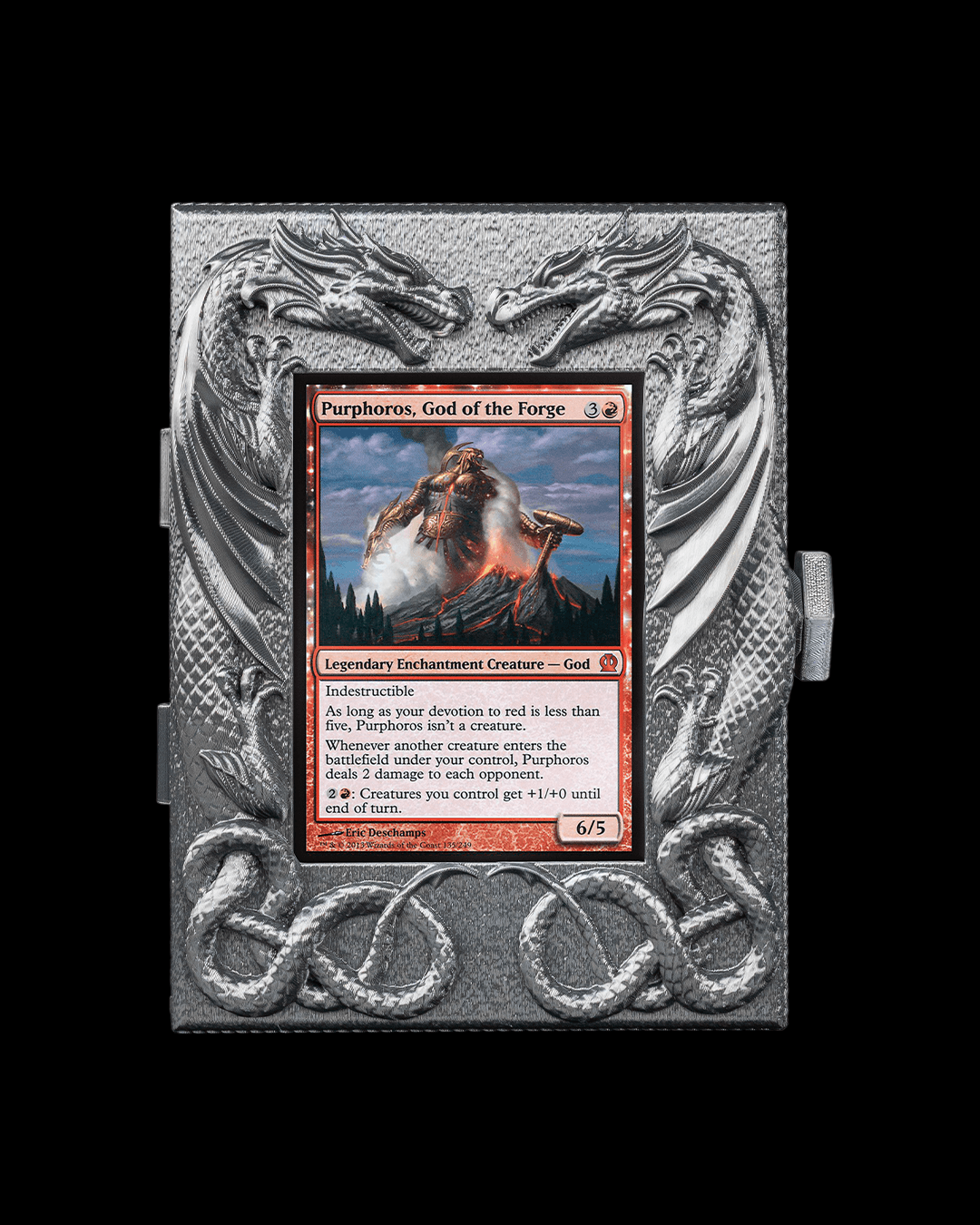
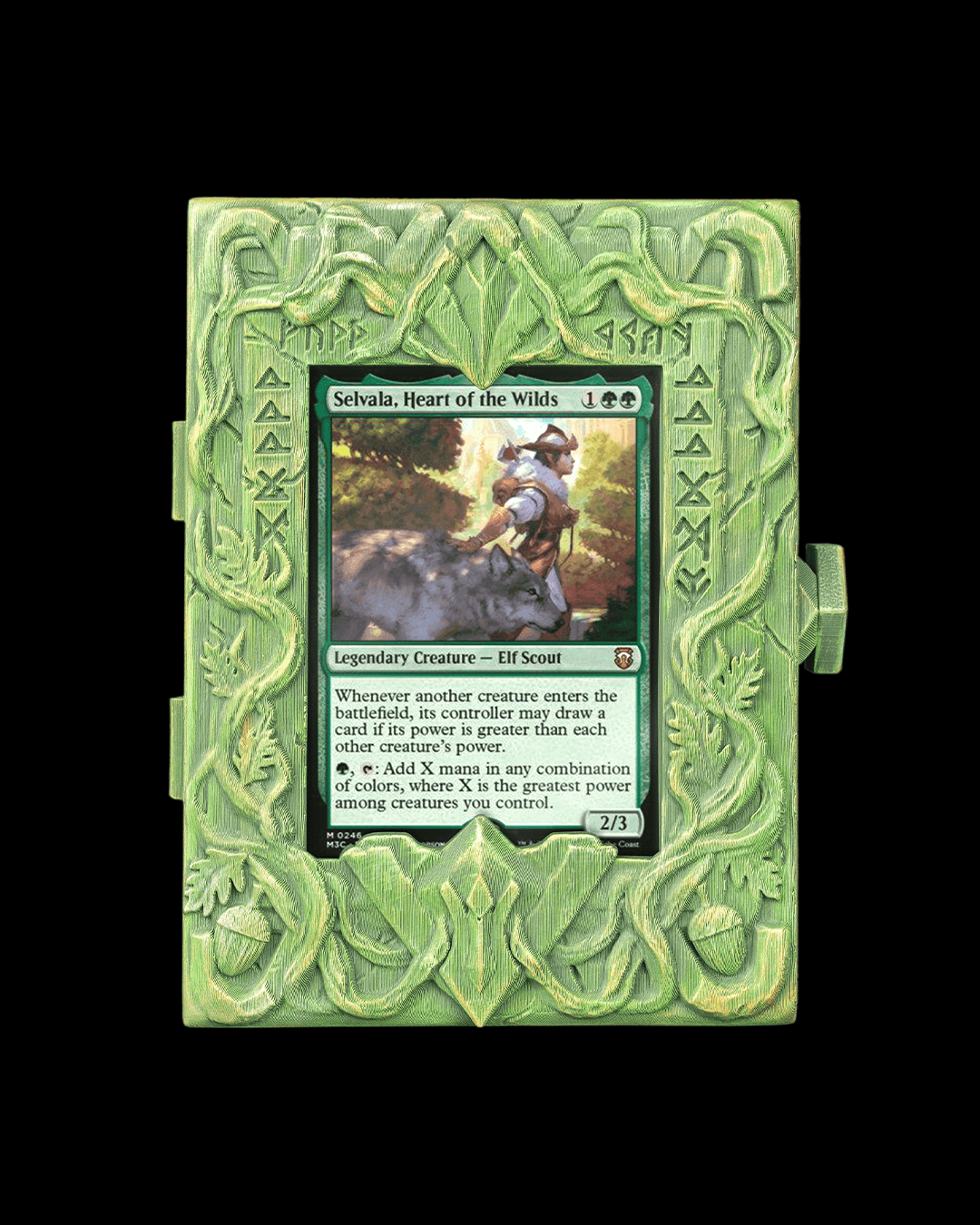
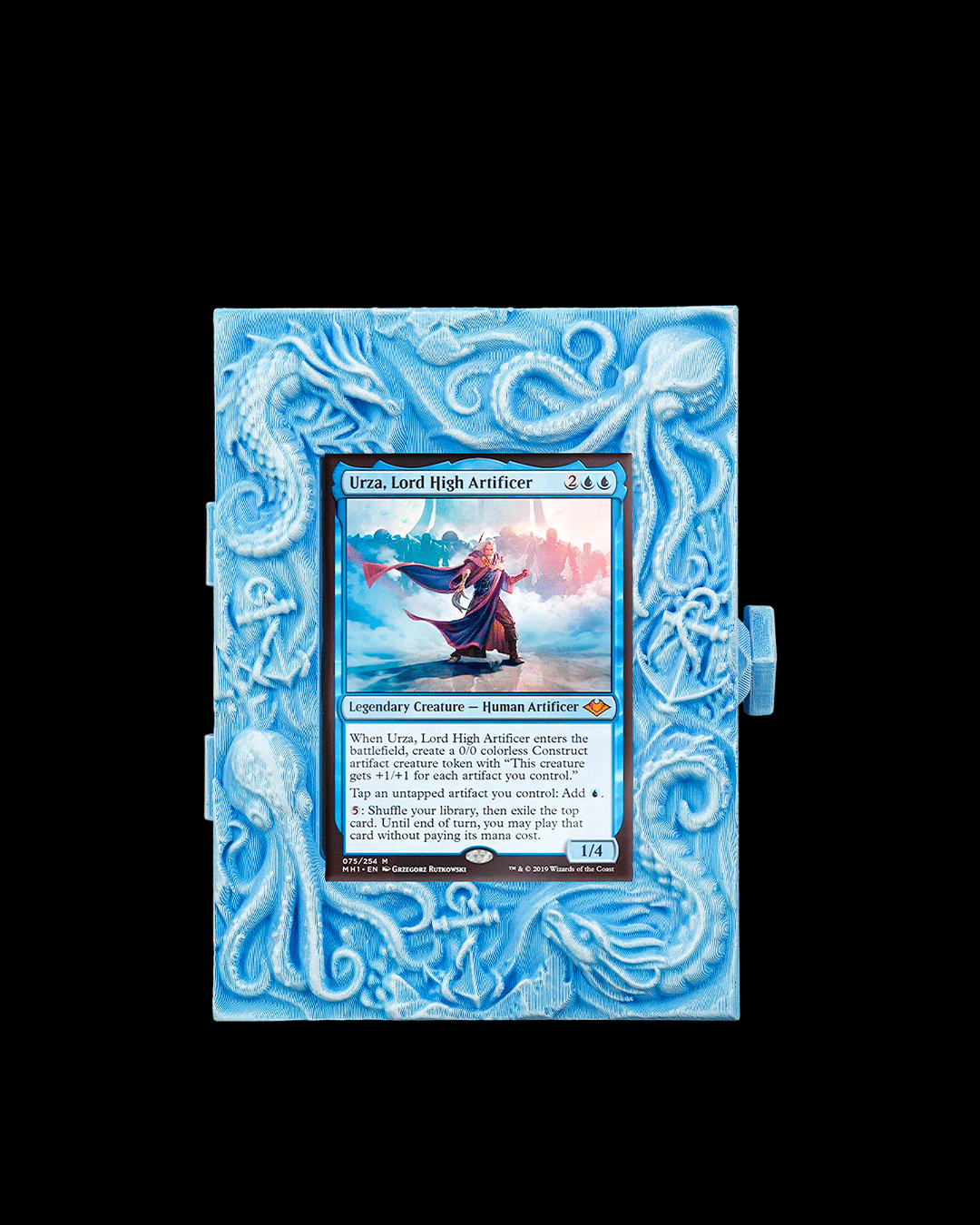
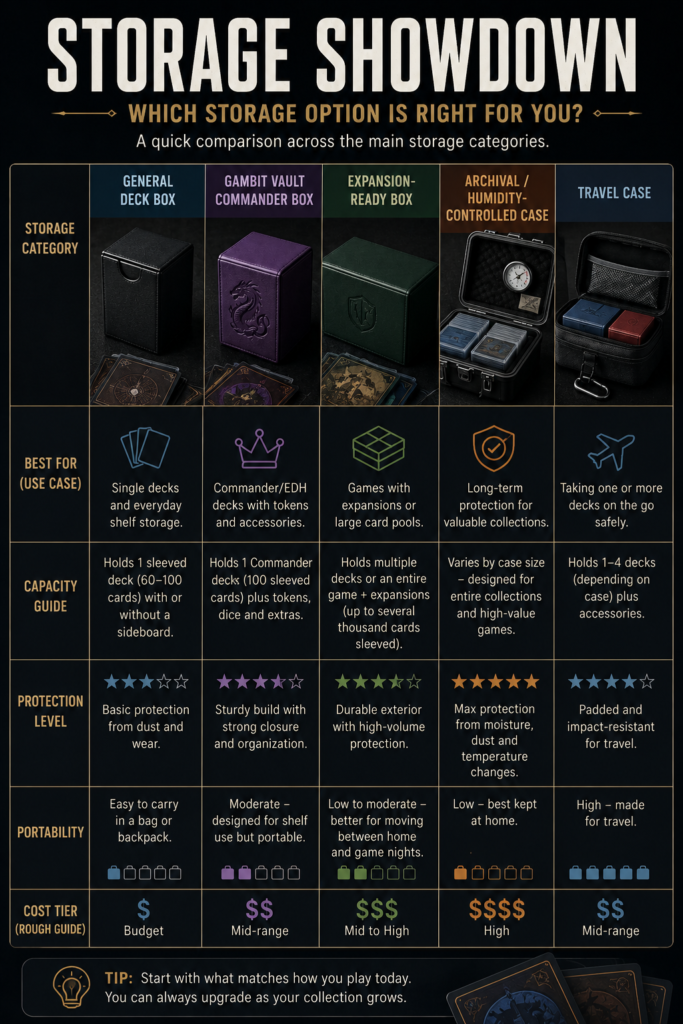
Most general deck boxes are sized around a single 60 to 100 card constructed deck, but Commander/EDH decks come with a different storage problem. A singleton 100-card deck plus tokens, dice, and a full set of basic lands rarely fits comfortably in a box built for a standard Magic deck. Gambit Vault‘s Commander box is built specifically around that problem, sized to hold a full sleeved Commander deck and its extras in one container rather than splitting it across two boxes.
It’s worth being clear on what a Commander box solves and what it doesn’t. It’s the right pick if you’re building or maintaining a dedicated Commander deck and want a single home for it. It isn’t a general-purpose solution for a growing multi-deck collection, since it’s shaped around one format specifically rather than offering the stacking or volume options a wider collection eventually needs.
Other Specialist Storage Worth Knowing About
Beyond Commander-specific boxes, a few other specialist storage categories are worth knowing about once a collection stops fitting the “one deck, one box” model. Expansion-ready boxes with add-on modules suit legacy or campaign games like Gloomhaven, where the component count grows with every expansion instead of staying fixed from day one. Archival-grade or humidity-controlled cases are worth the extra cost for genuinely valuable or out-of-print collections, since standard plastic totes don’t manage moisture the way purpose-built cases do. Travel cases with reinforced corners and secure latches matter more than shelf boxes for anyone regularly carrying a collection to game nights or tournaments, where a dropped box is a real risk rather than a hypothetical one.
None of these is a universal answer. Match the box to what you’re actually storing and how often you move it, rather than buying the most feature-heavy option on the shelf.
🗄️ Storing the Rest of the Collection
Deck boxes solve card storage, but a growing collection also means boxes, expansions, and miscellaneous components that need a home. Open shelving works better than closed cabinets for board games specifically, since airflow matters more than most players realise. Sealed, humid environments are a bigger long-term risk to cardboard components than the occasional dusty shelf. Our solo gaming storage and setup guide covers shelving layouts in more depth if you’re setting up a dedicated space.
Insert organisers are worth the cost once you own more than a handful of games with loose components. A proper insert stops small tokens from migrating between boxes during transport and cuts setup time at game night, which matters more the more often you actually play. Broken Token and Meeple Realty both make well-regarded inserts for popular titles, and our Gloomhaven storage guide walks through insert options for that collection specifically.
Light and humidity deserve more attention than most collectors give them. Direct sunlight fades box art and can warp cardboard over months, not years, and basements or garages with fluctuating humidity are genuinely risky for long-term storage. A climate-stable room with indirect light is a low-effort fix that prevents most of the damage collectors eventually notice too late.
💰 Budget vs Premium: Where to Actually Spend
Not every part of a storage setup deserves the same budget. Sleeves are worth spending on for any deck you shuffle often, since cheap sleeves shred faster and change shuffle feel noticeably. A mid-tier matte sleeve from a known brand is a better use of money than the cheapest option on a listing page.
Deck boxes are a reasonable place to spend more once you know your collection is staying long-term. A box that survives five years of regular handling costs less over time than replacing a cracked budget box every season. Shelving and insert organisers are where budget options genuinely hold up fine, since the job (structural support, component separation) doesn’t change much between a £15 insert and a £40 one.
The short version: spend on what you touch every session, save on what just sits there.
🔍 Signs It’s Time to Upgrade Your Storage
A few signals reliably show up before a collection outgrows its current setup. Sleeves that feel gritty or show visible wear at the edges have already done their job and need replacing. A deck box that won’t close flush anymore, or that’s started cracking at the hinge, is close to failing outright rather than just looking worn.
If game night regularly involves searching multiple boxes for pieces that should live together, that’s an organisation problem, not a space problem, and inserts usually fix it faster than more shelving does. And if a collection has outgrown a single shelf entirely, it’s usually the moment to move from a “collect boxes as they come” approach to a deliberate storage system, rather than adding one more overflow box.
The Quick Answer
Protecting a growing board game collection comes down to three practical decisions: sleeve cards sized correctly for the games you own, choose a deck box matched to how much you actually carry rather than how much shelf space you have, and store the rest with open shelving, insert organisers, and stable humidity rather than sealed boxes in a closet. Spend more on what gets handled every session (sleeves, a reliable deck box) and less on what just needs to hold its shape (general shelving). If you’re storing a dedicated Commander deck, Gambit Vault’s Commander box is a genuinely useful specialist pick, but for everything else, match the box to the collection rather than reaching for the first one you see.