
As an Amazon Associate I earn from qualifying purchases and sometimes recommend products from other sellers at no extra cost you. For more details see my disclosure policy and privacy policy.
You draw a ticket from Seattle to Miami on turn two. The temptation to start building that long route immediately is strong—but should you? While your opponents are quietly claiming shorter routes and hoarding cards, you’re committing to a path that telegraphs your entire strategy. Three turns later, someone blocks your only connection through Dallas, and that 20-point ticket becomes a crushing penalty.
This scenario plays out in countless Ticket to Ride games. Players treat it as a simple route-building race, missing the strategic depth hidden beneath its family-friendly surface. The difference between consistently losing and winning isn’t luck—it’s understanding when to build, which routes to prioritize, and how to read your opponents’ intentions.
This guide breaks down the strategic principles that separate casual players from consistent winners. You’ll learn how to evaluate tickets mathematically, time your route claims for maximum efficiency, and deploy blocking tactics that don’t backfire. Whether you’re playing casually with family or competing in tournament settings, these techniques will transform how you approach every decision.
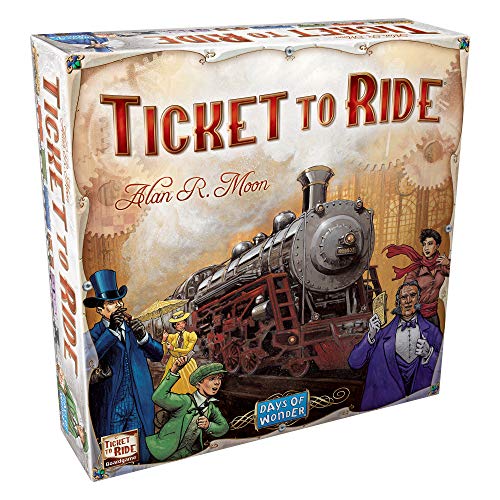
Build Your Card Engine Before Your Routes
The single biggest mistake new players make happens in the first three turns. They draw a high-point ticket, get excited, and immediately start claiming routes. Meanwhile, experienced players spend those early turns collecting cards, building the resources they need to execute flexible strategies later.
Why early card collection beats early building:
- Each route claimed in the first few turns uses cards you could spend more efficiently later
- A six-train route on turn three limits your flexibility when better opportunities appear
- Strong hands let you pivot based on tickets drawn or opponent actions
- You maintain the element of surprise about your true destinations
The math supports patience. Those same six cards saved give you options to respond to the board state rather than committing to a predetermined path.
Wild cards create a strategic tension in these early turns. Drawing from the face-up display when two or three wilds appear is tempting, but you can only take one. Compare this to drawing blind—you get two cards, and roughly one in seven will be wild anyway. The numbers shift when three wilds appear face-up, but even then, consider whether that single wild is worth passing up two card draws.
Reading the board during card collection reveals future opportunities. Notice which colors appear most frequently on short routes near starting positions. If you’re building a network in the eastern United States, gray routes between major cities give you flexibility later. Players who focus exclusively on one color often find themselves stuck when key routes get blocked.
The rule about early commitment has exceptions. If your starting tickets align perfectly—say you drew Portland to Nashville and Denver to Pittsburgh—claiming the Denver to Kansas City route makes sense. Both tickets use it, and it’s a common connection point that opponents might want. But these situations are rare. Most of the time, patience pays off.
Choose Tickets That Work Together, Not Just High Points
Point values deceive players into poor decisions. A 22-point ticket from Los Angeles to New York looks attractive until you count the trains required—at least 15, possibly more if someone blocks your optimal path. Compare this to two 11-point tickets that share seven trains of track. The overlapping routes make the shorter tickets more efficient.
The efficiency principle matters more than raw points. Calculate points earned per train placed:
- Route network requiring 20 trains to complete 25 points = 1.25 points per train
- Route network completing 22 points with 15 trains = 1.47 points per train
- That seemingly small difference compounds over the entire game
Geography determines ticket value more than the number printed on the card. Tickets connecting the same regions overlap naturally. If you have Nashville to Atlanta and Miami to New Orleans, most of your southern routes serve both tickets. The moment you add a third ticket in the same region, your efficiency skyrockets.
🎯 Route Efficiency: The Key to Winning
Why overlapping regional tickets beat long-distance routes
The cross-country ticket trap catches players who can’t resist high numbers. That 20+ point connection across the entire map requires perfect execution. One blocked route forces a lengthy detour that eats into your efficiency. Meanwhile, opponents complete three or four shorter tickets in the time it takes you to fulfill one ambitious connection.
Mid-game ticket draws require careful evaluation. You’re holding three tickets and considering drawing more. Ask yourself: do my incomplete tickets share geography with potential new draws? If you have loose ends in California and Texas, drawing more tickets might give you connections that use existing partial routes. But if your network spreads thin across the map already, new tickets likely hurt more than help.
When evaluating ticket draws, keep low-point tickets that fit your network over high-point tickets that don’t. An 8-point ticket from Chicago to New Orleans is gold if you already claimed half those routes. A 17-point ticket from Seattle to Miami is deadweight if it shares nothing with your current network and requires 12 new train placements.
When to Build: Reading Game State and Opponent Intentions
Every route you claim telegraphs information to observant opponents. The question isn’t whether to build—you must eventually—but when to reveal your intentions. Timing these decisions correctly separates good players from great ones.
Critical routes face competition from multiple players. Common choke points include:
- Phoenix to El Paso (southern route gateway)
- Atlanta to Nashville (southeast connector)
- Kansas City to Oklahoma City (central hub)
- Denver to Kansas City (east-west bridge)
Claiming these early protects your options, even if you’re not sure which ticket you’ll pursue.
Player count changes the timing equation dramatically. In two-player games, double routes mean you can usually build your network without immediate pressure. Three and four-player games create moderate competition for key connections. Five-player games turn the map into a battlefield where hesitation costs you routes.
Route pressure—the concept that multiple players need the same connection—should guide your claiming sequence. When you see opponents collecting orange cards, assume they need the Los Angeles to Miami southern route. The smart move? Claim the Phoenix to El Paso section before they do. Even if you don’t need it yourself, blocking their most efficient path forces costly detours.
Use early route claims to obscure your true destinations. If you need to connect Portland to Nashville, claiming the Denver to Kansas City route first makes sense—it serves your ticket while suggesting you might be going west to east instead of northwest to southeast. The longer opponents misread your intentions, the more likely your crucial routes stay open.
The risk-reward calculation of waiting depends on your hand:
- Holding 12 cards with perfect colors? Wait and watch opponents
- Holding 6 cards with poor distribution? Claim routes now
- Cards in hand determine how much time you can afford to scout
Late in the game, obvious routes become liabilities. When you need just two more connections to complete your network, claiming the first one signals exactly where you’re going next. Opponents with even marginal blocking opportunities will take them. Consider whether you can claim both routes in succession—save cards for both, then execute your plan in two consecutive turns.
Strategic Blocking: When and How to Disrupt Opponents
Blocking carries an opportunity cost that many players ignore. Every turn spent claiming a route to block an opponent is a turn not spent advancing your own network. The question isn’t whether blocking is good or bad—it’s whether the specific block is worth more than your alternative action.
Three conditions must align for offensive blocking to work:
- You’re certain the opponent needs that specific route
- Blocking it significantly harms their position
- You can afford the tempo loss from not building your network
Failing any of these tests means you’re hurting yourself more than your opponent.
🚂 Should I Block This Route?
A strategic decision framework for blocking opponents
Defensive blocking protects your routes from being cut. When you need the Duluth to Omaha route and an opponent starts collecting pink cards, claiming it yourself makes sense. This isn’t pure blocking—you’re securing a route you need while preventing a potential problem. These blocks almost always pay off.
Choke points on the map create natural blocking opportunities. The connection between Denver and Kansas City serves numerous long-distance tickets. So does the Atlanta to Charleston route, the Vancouver to Calgary connection, and the Phoenix to Santa Fe link. Claiming these routes—even if you don’t strictly need them—can be defensive gold.
Reading opponent ticket cards through their route claims is an advanced skill. When someone claims Houston to New Orleans, then immediately follows with New Orleans to Atlanta, you can deduce they’re building something that runs through the south. The Miami connection becomes a likely next move. If you need it yourself, claim it now. If you want to block them, claim it now. Either way, the information tells you where the conflict will occur.
Consider these blocking scenarios:
- Double routes in 2-3 player games: Usually don’t claim both sides—the cost rarely justifies completely blocking when alternatives exist
- Single choke points: Block only when you know the opponent has no reasonable alternative path
- Late game blocks: More valuable when you’re ahead and can afford tempo loss
The psychology of blocking matters more than players admit. Aggressive blocking creates enemies who will specifically target your routes later, even at cost to themselves. If you block someone early, expect retaliation. Sometimes this works in your favor—if they’re spending turns blocking you instead of building their network, you might come out ahead. But vendetta blocking rarely helps anyone except the players not involved in the conflict.
Sacrificial blocking means claiming a route you don’t need to force opponents into longer alternatives. This works best when you’re ahead and can afford the tempo loss. If you’re winning by 15 points and an opponent needs a specific six-train route, claiming it yourself can be worth it even though it doesn’t serve your tickets. They’ll have to take a longer path, using more cards and trains they might not have.
For players interested in more strategic blocking mechanics in different contexts, the principles here apply broadly to territorial control games.
Endgame Timing and Point Maximization
Someone claiming a six-train route when they started the turn with eight trains remaining signals the endgame. You have one or two turns before the game ends. Your decisions in these final rounds often determine winners and losers by narrow margins.
Watch for these endgame triggers:
- Any player dropping below 10 trains remaining
- Multiple players claiming longer routes (5+ trains) consecutively
- The draw deck running low on cards
- Players suddenly switching from card collection to aggressive claiming
Recognizing these signs prevents getting caught with incomplete tickets. Plan your remaining claims to ensure you complete at least your most valuable tickets. That 20-point cross-country connection probably isn’t happening if you still need 12 more trains.
Drawing additional tickets in the final turns is tempting—three more cards means potential bonus points. But the math rarely works out. You’d need to draw tickets you can complete with available routes, which becomes less likely as the board fills up. The risk of taking penalty points usually outweighs the potential reward unless you have obvious short routes available.
Emergency route completion priorities:
- Complete highest value tickets first? Only if feasible
- Actually prioritize completable tickets over high-value impossibilities
- Calculate: 13 points secured beats 17 points risked
Emergency route completion requires prioritizing tickets by point value and feasibility. You have two tickets: one worth 17 points needing five more trains, another worth 13 points needing three more trains. The 13-point ticket should take priority—you can complete it this turn, securing those points. The 17-point ticket might get done if you have another turn, but completion isn’t certain.
The longest route bonus creates interesting endgame calculations. Ten points for longest route can swing close games. If you’re tied with an opponent for longest route at 18 trains, extending yours to 19 is worth 10 points—you gain 10, they lose 10, a 20-point swing. But if you’re building longest route specifically for this bonus, make sure completing the route doesn’t prevent you from finishing more valuable tickets.
Train count management in the final rounds comes down to counting. You have seven trains left, three tickets to complete. The first needs three trains, the second needs two, the third needs four. You can complete two of the three tickets, so choose the two with the highest combined value. The math sounds simple, but in the pressure of the final turns, players often miscalculate and strand themselves with incomplete tickets.
Endgame strategy adjustments based on position:
- Leading: Focus on ticket completion and denial blocking
- Tied: Complete tickets, then extend longest route if possible
- Trailing: Take calculated risks on ticket draws or aggressive longest route building
When you’re leading in the final turns, your strategy shifts to ticket completion and denial. Complete your tickets, then use remaining trains to claim routes that block opponents rather than extending your longest route. When you’re trailing, aggressive longest route building or hoping for a lucky ticket draw become necessary risks. Understanding when to take calculated risks separates good endgame play from great endgame play.
Player Count Adjustments
Two-player Ticket to Ride plays fundamentally differently than games with more opponents. Double routes between cities mean you rarely face direct blocking. The strategy shifts from route competition to ticket efficiency—can you complete more valuable tickets with fewer trains than your opponent?
🎲 Strategy Adjustments by Player Count
How to adapt your gameplay based on the number of players
| Player Count | Blocking Intensity | Card Collection Phase | Priority Focus |
|---|---|---|---|
|
2 Players
|
🟢 Minimal | 3-4 turns | Longest Route + Efficiency |
|
3 Players
|
🟡 Moderate | 3 turns | Balanced Strategy |
|
4 Players
|
🟠 High | 2-3 turns | Secure Choke Points Early |
|
5 Players
|
🔴 Intense | 2 turns max | Aggressive Quick Claiming |
Strategic focus by player count:
2 Players:
- Blocking is minimal due to double routes
- Focus on longest route bonus (often decides close games)
- Build connected networks spanning the map
- Ticket efficiency becomes paramount
3 Players:
- Sweet spot for strategic depth
- Enough competition for blocking to matter
- Not so much that game becomes purely defensive
- Read opponents carefully and pivot to less contested regions
4-5 Players:
- Aggressive, competitive gameplay
- Critical routes face competition from multiple players
- Shorter card collection phase (start claiming by turn 3-4)
- Choke point control determines success
In two-player games, focus on the longest route bonus. Since blocking is minimal, both players can build extensive networks. The 10-point longest route bonus often decides close games. Build your network with this in mind, creating connected paths that span the map rather than isolated ticket completions.
Three-player games create the sweet spot for Ticket to Ride strategy. Enough competition exists for blocking to matter, but not so much that the game becomes purely about blocking. Read your opponents’ builds carefully. If both opponents move toward the same region, consider pivoting to a less contested area where you can complete tickets without interference.
Four and five-player games turn aggressive. Critical routes face competition from multiple players. The player who identifies and secures choke points early gains enormous advantages. Your early game card collection phase should be shorter in high player-count games—by turn three or four, start claiming the routes everyone needs before someone else does.
Five-player games specifically introduce more chaos. Double routes fill quickly, forcing players into single-route connections where blocking becomes devastating. Long-term planning becomes less reliable because any route you’ve scouted might disappear before you claim it. Adaptability matters more than perfect efficiency in five-player games.
Map-Specific Strategy Notes
The standard USA map rewards southern and central route strategies. The dense network of cities in Texas, the Southeast, and the Midwest provides numerous short routes that connect efficiently. Players building networks in these regions tend to score consistently because tickets in these areas overlap naturally.
Regional strategy considerations:
Southern/Central USA:
- Dense city networks with many short connections
- Tickets overlap naturally in Texas, Southeast, and Midwest
- Consistently high scoring potential
- Multiple path options reduce blocking vulnerability
Western USA:
- Longer connections with fewer alternatives
- Vancouver to Calgary has no backup route
- Denver to Santa Fe is another single-option route
- Claim critical western routes early
- Always have contingency plans for blocked paths
Western routes often require longer connections with fewer alternatives. The Vancouver to Calgary route has no backup if someone blocks it. Same with the Denver to Santa Fe connection. When your tickets force you west, claim critical routes early and keep contingency plans for blocked paths.
The Europe map introduces stations and tunnels that change strategic calculations. Stations let you use one of an opponent’s routes to complete your ticket—powerful when someone blocks your critical connection. Save your three stations for genuine emergencies rather than using them early for convenience. Tunnels add randomness because you might need to pay extra cards, so hold more cards in reserve when planning tunnel-heavy routes.
Other map variants introduce unique mechanics, but the core strategic principles remain: efficient ticket selection, timing your claims based on competition, and reading opponents to predict conflicts. Players who master the fundamentals on the USA map adapt quickly to other Ticket to Ride versions.
Competitive Play Considerations
Tournament-level Ticket to Ride involves subtle card counting that most casual players ignore. Knowing roughly how many cards of each color remain in the deck helps you evaluate risk. If you’re holding seven blue cards waiting for the Duluth to Omaha route, but you’ve seen 20 blue cards played already, the deck is running low on blues. Claim your route before someone else draws the remaining blue cards.
Advanced competitive techniques:
- Card counting: Track colors played to estimate remaining deck composition
- Opponent sequencing: Notice the order of claims to predict future moves
- Route patterns: East-to-west building suggests directional tickets
- Disconnected claims: Either unusual tickets or longest route pursuit
- Table talk management: Decide whether to reveal or conceal based on opponents
Advanced opponent reading goes beyond watching what colors they collect. Notice the order of their claims. Someone building from east to west suggests tickets that connect those regions. Someone bouncing around the map claiming disconnected routes either has unusual ticket luck or is pursuing longest route. Both patterns tell you where conflicts will occur.
Table talk creates interesting psychological dynamics. Some players announce their tickets, either bluffing or playing honestly. Others stay silent, trying to obscure their plans. The optimal strategy depends on your opponents—if they’re reactive blockers, hiding your intentions helps. If they’re focused on their own network, talking doesn’t hurt you.
Reading your opponents becomes easier as games progress. Mid-game, someone suddenly collecting specific colors reveals their next moves. Late game, train counts tell you whether someone can complete their network or is likely holding penalty tickets. Use this information to decide whether blocking them matters or whether you should focus on your own position.
Key Strategy Takeaways
Build your card engine first. Spend the opening turns collecting cards, not claiming routes. The flexibility you gain from a strong hand outweighs the minor tempo advantage of early building.
Prioritize ticket efficiency over point values. Calculate points earned per train placed. Overlapping routes that serve multiple tickets create the efficiency you need to win consistently.
Claim critical routes based on competition, not just your needs. Choke points between regions serve numerous tickets. Secure these connections before opponents block you out.
Block strategically, not emotionally. Every blocking move costs you tempo. Make sure the block hurts your opponent more than it hurts you, or don’t bother.
Plan your endgame before trains run low. Know which tickets you can complete and which you can’t. Prioritize high-value completable tickets over risky long routes.
Your Path to Improvement
First 5 games: Focus exclusively on ticket efficiency and basic card management. Practice calculating points per train for different ticket combinations. Notice which regions on the map have dense networks versus sparse connections.
Next 10 games: Add opponent reading to your skillset. Watch what colors they collect and try to predict their tickets. Practice timing your route claims—claim competing routes earlier, less contested routes later. Experiment with defensive blocking to protect your critical connections.
Beyond that: Master the psychological game. Use your early route claims to disguise your true destinations. Practice card counting to evaluate risk better. Develop the instinct for when aggressive blocking pays off versus when focusing on your own network is superior.
If you’re looking to expand beyond Ticket to Ride, try these other route-building and network games that build on similar strategic concepts with added complexity.
Ready to put these strategies into practice? You can find Ticket to Ride on Amazon and start testing these techniques in your next game night.
What’s your go-to Ticket to Ride strategy? Do you prioritize long routes for big points or focus on efficient ticket completion? Have you pulled off any memorable blocking moves that turned the game around? Let us know in the comments below!
Related Strategy Content:
- Best Gateway Strategy Games for New Players
- How to Teach Strategy Games to Casual Players
- Family Board Games That Reward Strategic Thinking
Updated: September 2025