
As an Amazon Associate I earn from qualifying purchases and sometimes recommend products from other sellers at no extra cost you. For more details see my disclosure policy and privacy policy.
You and your partner want to settle Catan tonight, but the base game needs 3-4 players to create the competitive resource trading that makes the island come alive. While standard Catan works best with multiple settlers competing for prime real estate, several excellent variants let two players enjoy the strategic depth and satisfying progression that made this game a modern classic.
If you’re new to strategy gaming as a couple, Catan represents an excellent bridge from party games to more complex strategic thinking. For experienced players, these variants offer a different but equally engaging way to enjoy one of the best strategy games for beginners.
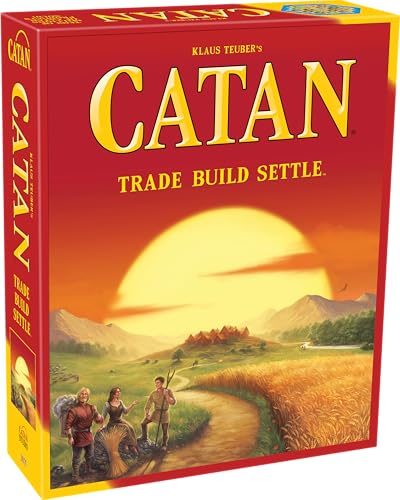
Playing Catan with just two people requires more than reducing the player count. The trading mechanics that define standard play become limited, and the natural competition for resources needs artificial enhancement. Without these adjustments, two-player games often feel like parallel solo experiences rather than the interactive strategic battle that makes Catan engaging.
This guide covers the official two-player variant alongside proven community alternatives, then explores how your strategy must adapt when the island has fewer settlers. You’ll learn which variant works best for different types of players, understand the strategic shifts required for two-player success, and discover why some of your standard Catan tactics need complete rethinking.

Understanding Two-Player Catan Variants
The Official Two-Player Variant
The official Catan two-player rules introduce neutral players to maintain competitive pressure and resource scarcity. Here’s how it works:
Setup Changes:
- Use the standard 3-4 player board setup
- Each player chooses a color and takes a neutral player set (typically white pieces)
- Players alternate placing two settlements and two roads for themselves
- After personal placement, players alternate placing neutral settlements and roads
- Neutral players get two settlements each, placed on remaining good spots
Turn Structure:
- Roll dice as normal – neutral settlements collect resources that go to a supply
- On your turn, you may move the robber and steal from neutral player supplies
- Build normally for yourself using standard costs
- Neutral players never build – they only occupy territory and collect resources
Victory Conditions:
- First player to 10 victory points wins (standard rules)
- Development cards and longest road work normally
- Largest army can still be earned and contested
The genius of this system lies in preserving resource competition. Neutral settlements collect resources you want while blocking expansion routes you need. The robber gains new strategic importance since you can target neutral player stockpiles for specific resources. You can find the complete official rules in the Catan rulebook published by Catan Studio.
Community Variant: The Dummy Player
BoardGameGeek’s community developed an alternative that feels more interactive:
Modified Rules:
- Set up for three players but control two colors between yourselves
- The third player (dummy) gets random initial placement using dice rolls
- On dummy turns, roll dice and follow simple building priorities
- Dummy builds roads toward high-number hexes, settlements on 6s and 8s when possible
- Dummy never trades but provides trading competition through building
This variant requires more management but creates more dynamic gameplay. The dummy player actively competes for longest road and prime building spots rather than sitting passively. The BoardGameGeek community has refined this approach through extensive playtesting and offers several modifications for different skill levels.
Quick-Start Variant
For experienced players wanting faster games:
Streamlined Setup:
- Start with 3 resources of each type instead of standard initial collection
- Begin with one city instead of second settlement for each player
- Play to 8 victory points instead of 10
- Use smaller player board setup (remove outer ocean hexes)
This variant maintains strategic depth while reducing game length to 45-60 minutes.
Catan Two-Player Setup Guide
Compare different variants to find your perfect two-player experience
Standard Game
Play Time: 60-90 minutes
Official Two-Player
Play Time: 60-75 minutes
Dummy Player
Play Time: 75-90 minutes
Quick Start
Play Time: 45-60 minutes
Legend
Choosing Your Variant
For New Catan Players: Start with the official variant. It requires minimal rule changes while preserving core game balance. The neutral player mechanics are straightforward to manage and maintain proper resource scarcity.
For Experienced Players: Try the dummy player variant if you enjoy more complex decision-making. Managing a semi-autonomous third player adds interesting tactical considerations without overwhelming complexity.
For Quick Games: Use the quick-start variant when you want Catan’s strategic satisfaction in under an hour. Perfect for weeknight gaming or when you want to play multiple rounds.
For Competitive Play: Stick with official rules for consistency and balance. Most tournament players who practice two-player games use this variant.
Understanding these variant strengths helps you choose the right approach for your gaming goals. The same way different engine building games appeal to different strategic preferences, each Catan variant emphasizes different aspects of the core gameplay.
How Strategy Changes in Two-Player Catan
Settlement Placement Becomes Critical
Without 3-4 players competing for prime real estate, your initial settlement placement carries more weight. Every good spot you don’t claim remains available for neutral players or your opponent’s expansion.
New Placement Priorities:
- Claim the best statistical spots (6-8 combinations) early
- Control entire resource types when possible – monopolizing brick or lumber becomes viable
- Block opponent expansion more aggressively
- Consider port access more carefully since trading options are limited
Standard Catan wisdom suggests spreading across different numbers to ensure consistent resource flow. In two-player games, specialization often beats diversification. If you can monopolize brick and lumber, your opponent struggles to build roads regardless of their other resources.
This strategic shift parallels concepts found in other area control games where controlling key resources or territories often trumps balanced development.
Resource Trading Dynamics Shift
Standard Catan’s trading economy collapses with only two players. Neither player wants to help their opponent, and beneficial trades become rare after the early game.
Strategic Adaptations:
- Ports become significantly more valuable – plan settlement placement around 2:1 trades
- Stockpiling becomes riskier with more targeted robber use
- Development cards gain importance as alternative resource access
- Resource production balance matters more than trading relationships
Focus on achieving resource independence through smart settlement placement and port control. The generic 3:1 port that seems overpriced in standard games becomes a valuable lifeline when your opponent won’t trade wheat for your excess sheep.
The Robber Becomes a Precision Weapon
With fewer players, robber placement becomes more targeted and impactful. Every move directly affects your opponent or cuts off neutral player resources you want to steal.
Advanced Robber Strategy:
- Target your opponent’s best hex when they have large hand sizes
- Use robber to harvest neutral player stockpiles for specific resources
- Block opponent’s key resource flow at critical moments
- Consider robber placement as setup for future turns
The robber also becomes less random. In 4-player games, the robber moves frequently and unpredictably. With just two players rolling, it stays put longer, making your placement decisions more consequential.
Development Cards Replace Trading
Without reliable trading partners, development cards become your primary source of resource flexibility and strategic options.
Development Card Priority Changes:
- Knights matter more for robber control in focused games
- Resource monopoly cards become devastatingly effective
- Road building cards can secure longest road more easily
- Victory point cards are harder to hide with focused attention
Buy development cards more aggressively in two-player games. The resource investment pays off through increased tactical flexibility and victory point accumulation. This mirrors the strategic importance of card-based resources in deck building games, where timing and resource conversion create competitive advantages.
Two-Player Specific Strategies
Early Game: Foundation Building
Turn 1-5 Focus: Your opening moves set the strategic tone for the entire game. Unlike multiplayer Catan where you can adapt to other players’ strategies, two-player games often favor the player who establishes early advantages.
Claim your resource specialization early. If your initial settlements give you strong lumber and brick production, lean into longest road strategy immediately. Don’t hedge by building cities first – commit to your strength and force your opponent to respond.
Port Control Strategy: Identify which 2:1 ports align with your resource production and plan expansion around them. A wheat port becomes incredibly valuable if you control two good wheat hexes. Your opponent can’t easily trade their excess wheat, giving you both monopoly power and conversion flexibility.
Mid-Game: Building Momentum
Turn 6-12 Execution: The middle game in two-player Catan feels more like a race than standard multiplayer. Without multiple opponents to slow progress through competition, games accelerate quickly once someone gains momentum.
Push your advantages aggressively. If you’re ahead in development cards, buy more to maintain the lead. If you control longest road, extend it faster than your opponent can catch up. Two-player games punish cautious play.
Neutral Player Manipulation: Use neutral settlements strategically. Move the robber to neutral settlements when you need specific resources, not just to hurt your opponent. Those neutral stockpiles become shared resource pools that smart players exploit.
Late Game: Closing Victory
Turn 13+ Finish: Two-player endgames arrive faster and with less warning. Hidden victory points become harder to accumulate secretly, and final victory pushes happen over 2-3 turns instead of being drawn out.
Watch for opponent victory point accumulation obsessively. With only one opponent, you can track their visible points and estimate hidden development cards more accurately. Plan your robber moves to delay their final push while accelerating your own.
Resource Denial: In the final turns, focus on denying your opponent key resources rather than optimizing your own production. If they need ore for their final city, put the robber on their ore hex even if it doesn’t benefit you directly.
Common Two-Player Mistakes
Playing Too Defensively
Many players approach two-player Catan like a multiplayer game, building conservatively and waiting for opportunities. This passive approach fails because there are fewer random events and opponent interactions to create openings.
Solution: Commit to an aggressive strategy early and execute it relentlessly. If you’re going for longest road, build roads every turn. If you’re focusing on cities, prioritize ore and wheat production above everything else.
This aggressive approach works in two-player Catan the same way it succeeds in other solo board games – without multiple opponents creating unpredictable interactions, consistent execution of a focused strategy tends to win.
Ignoring Neutral Players
The official variant includes neutral players for good reason – they’re not just space-fillers but strategic resources you should actively manage.
Solution: Treat neutral settlements like communal resource banks. Plan robber moves around harvesting their stockpiles. Factor their positions into your expansion planning since they represent permanent obstacles.
Undervaluing Ports
Standard Catan players often view ports as backup plans when trading fails. In two-player games, ports become primary resource conversion methods since opponent trading is minimal.
Solution: Plan settlement placement around port access from the beginning. A player controlling two different 2:1 ports holds a massive advantage in resource flexibility.
Poor Development Card Timing
Without multiple opponents providing distraction, development card usage becomes more transparent and predictable.
Solution: Time your development card plays for maximum impact. Save knights until you can use them to secure largest army or make crucial robber moves. Hold victory point cards until you can win immediately.
Variant Recommendations by Player Type
For Couples and Casual Players
Recommended Variant: Official two-player rules Why It Works: Minimal rule changes, maintains game balance, familiar feel Strategy Focus: Enjoy the building and development aspects without intense competition Expected Game Time: 60-75 minutes
The official variant provides the most accessible entry point for players who want to experience Catan together without mastering complex rule modifications or managing additional game components.
For Competitive Strategy Gamers
Recommended Variant: Dummy player variant
Why It Works: Creates more dynamic competition and strategic decision-making Strategy Focus: Optimize building decisions while managing third player actions Expected Game Time: 75-90 minutes
Experienced players who enjoy the strategic depth of full Catan will appreciate the added complexity of managing a semi-autonomous third player while competing directly with their opponent.
For Quick Gaming Sessions
Recommended Variant: Quick-start variant Why It Works: Faster setup, shorter games, maintains strategic elements Strategy Focus: Accelerated decision-making and resource management Expected Game Time: 45-60 minutes
Perfect for players who love Catan’s gameplay but need shorter sessions. Works well for multiple consecutive games or weeknight gaming.
If you enjoy this streamlined approach, you might also appreciate other budget-friendly strategy games that deliver solid strategic depth in shorter time frames.
Advanced Two-Player Considerations
Tournament and Competitive Play
Some Catan tournaments include two-player brackets using official variant rules. The strategic considerations differ significantly from multiplayer tournament play:
- Preparation: Study your opponent’s preferred strategies since you can’t rely on other players to apply pressure
- Information Tracking: Monitor opponent resources and development cards more precisely
- Risk Assessment: Calculate probabilities more carefully since variance has bigger impact with fewer dice rolls
Teaching New Players
Two-player Catan works excellently for introducing new players to strategy gaming:
- Reduced Complexity: New players don’t need to track multiple opponents simultaneously
- Clear Feedback: Strategic mistakes have obvious consequences without confusion from multiple player interactions
- Patient Learning: Experienced players can guide newcomers without disrupting larger groups
Start new players with the official variant and focus on basic resource management before introducing advanced concepts like port strategy or development card timing. This teaching approach works well alongside other introductory games from our complete beginner’s guide.
When Two-Player Works Better Than Standard Catan
Skill Matching: When players have similar experience levels, two-player games create more balanced competition than multiplayer games where one experienced player might dominate newer players.
Time Constraints: Two-player sessions finish more predictably than 3-4 player games that can run long due to extended negotiations and analysis paralysis.
Strategic Focus: Players who prefer optimization over social interaction often enjoy two-player Catan’s emphasis on efficient building and resource management.
Learning Environment: New players learn faster in two-player games where they receive immediate feedback on their strategic decisions without waiting through multiple opponent turns.
Conclusion and Next Steps
The official two-player variant provides the best starting point for most players, preserving Catan’s strategic balance while accommodating smaller groups. The neutral player mechanics maintain resource competition and territorial pressure that make the game engaging.
For your first two-player session, use the official rules and focus on aggressive settlement placement around ports. Don’t try to replicate multiplayer trading strategies – instead, build resource independence through smart expansion and development card usage.
Two-player Catan rewards different skills than the standard game. Master these variants and you’ll discover a more focused, strategic experience that highlights Catan’s brilliant resource management systems without the chaos of multiplayer negotiations.
Ready to settle the island with just two players? Try the official variant this weekend and experience how Catan’s strategic depth shines even when the island has fewer settlers competing for its riches.
You Might Also Like:
- Best Two-Player Strategy Games for Couples
- Complete Catan Strategy Guide
- Resource Management Games That Work for Two
- Quick Strategy Games for Date Night
Which two-player variant appeals to you most – the structured official rules or the dynamic dummy player approach? Share your experience with couples gaming in the comments below!