
As an Amazon Associate I earn from qualifying purchases and sometimes recommend products from other sellers at no extra cost you. For more details see my disclosure policy and privacy policy.
September brings textbook expenses, dorm supplies, and tight budgets – but that doesn’t mean your game nights have to suffer. These strategy games prove that brilliant gameplay doesn’t require a premium price tag. Every game on this list delivers genuine strategic depth, meaningful decisions, and exceptional replayability while staying well within a student-friendly budget.
Finding quality strategy games under $30 requires careful evaluation. We’ve focused on games that offer the same level of strategic thinking and replay value as their more expensive counterparts. These aren’t simplified versions or basic family games – they’re legitimate strategy experiences that happen to come at budget-friendly prices.
Whether you’re building your first game collection, looking for dorm-friendly options, or simply want to maximize your gaming budget, these picks deliver outstanding value. From quick-playing card games perfect for study breaks to medium-weight euros that satisfy serious strategy cravings, there’s something here for every type of strategic thinker.
| Game | Price | Players | Time | Best For |
|---|---|---|---|---|
| Red7 | $10 | 2-4 | 5-30 min | Quick strategic thinking |
| Lost Cities | $15 | 2 | 30 min | Pure two-player strategy |
| Jaipur | $20 | 2 | 30 min | Trading & set collection |
| Splendor | $25 | 2-4 | 30 min | Engine building basics |
| King of Tokyo | $25 | 2-6 | 30 min | Larger groups & parties |
| Hive | $25 | 2 | 20 min | Abstract strategy |
| Patchwork | $25 | 2 | 30 min | Spatial puzzles |
| Targi | $25 | 2 | 60 min | Deep two-player strategy |
| Azul | $30 | 2-4 | 30-45 min | Beautiful tile laying |
| 7 Wonders Duel | $30 | 2 | 30 min | Civilization building |
Gateway Strategy: Perfect Entry Points
Splendor ($25)
Players: 2-4 | Time: 30 minutes | Complexity: 6/10
Splendor transforms the simple act of collecting gems into an elegant engine-building experience. You’ll start by purchasing low-cost gem cards using poker-chip tokens, but each card you buy provides permanent gem bonuses for future purchases. This creates a satisfying progression where expensive cards become affordable as your gem production grows.

The strategy emerges from timing and efficiency. Should you grab cheap cards for their permanent bonuses, or save for expensive cards that provide more points? The tension between building your engine and racing for victory points creates engaging decisions throughout the game. For fans of our engine building games guide, this represents one of the purest examples of the mechanic at an accessible price point.
Perfect for players who enjoy watching their capabilities grow stronger with each turn while maintaining strategic pressure throughout the game.
Azul ($30)
Players: 2-4 | Time: 30-45 minutes | Complexity: 6/10
Azul disguises deep tactical thinking behind beautiful tile-laying mechanics. Each round, you’ll draft colorful tiles from circular displays, but the catch is that taking tiles often forces unwanted extras on your opponents. This creates a delicious tension between getting what you need and avoiding what hurts.

The scoring system rewards completed rows and sets while heavily penalizing excess tiles you can’t place. This means every decision involves risk assessment – that perfect tile might come with costly baggage. The game scales beautifully from two to four players, with increased chaos and interaction at higher counts.
Azul offers the kind of strategic depth typically found in heavier games while remaining completely approachable for newcomers. The tactile pleasure of handling the thick, colorful tiles enhances the experience beyond pure strategy.
King of Tokyo ($25)
Players: 2-6 | Time: 30 minutes | Complexity: 5/10
Don’t let the dice fool you – King of Tokyo offers more strategic choices than most euro games. Yes, you’re rolling chunky dice to attack other monsters, but the real strategy lies in risk management and knowing when to push your luck. Each roll gives you three chances to get the combination you want, but deciding what to keep and when to stop requires careful calculation.

The energy system adds another layer of planning. Spending energy on power cards can dramatically shift your strategy, but energy is precious and opportunities are limited. Some cards provide ongoing benefits, others are one-time effects, and timing their use often determines victory.
King of Tokyo succeeds because it makes you feel like a giant monster while exercising genuine strategic thinking. The game accommodates both casual fun and serious competition, making it ideal for mixed groups or anyone wanting strategy games that work for parties.
Medium-Weight Gems: Serious Strategy
Lost Cities ($15)
Players: 2 | Time: 30 minutes | Complexity: 6/10
Lost Cities proves that profound strategic depth doesn’t require complex rules or elaborate components. This Reiner Knizia design uses just a deck of cards to create one of the most tense and rewarding two-player experiences in gaming.

Each turn, you’ll either play a card to one of five expedition routes or discard a card to a central pile. The catch is that cards must be played in ascending order, and starting an expedition commits you to scoring at least 20 points or face penalties. This creates agonizing decisions about when to start routes, which cards to hold, and whether to risk drawing from the discard piles.
The game punishes indecision while rewarding calculated risks. Should you wait for lower numbers to start efficiently, or begin immediately to prevent your opponent from blocking you? Lost Cities consistently delivers nail-biting finishes where a single card can swing victory. For those interested in pure strategy without complexity, few games match its elegance.
Jaipur ($20)
Players: 2 | Time: 30 minutes | Complexity: 6/10
Jaipur captures the essence of trading and market manipulation in a fast-paced card game. You’ll collect sets of goods cards to sell for rupees, but the twist is that prices decrease as goods are sold. This creates urgency and timing decisions – sell small sets quickly for guaranteed points, or risk waiting to build larger sets for bigger payoffs.

The camel mechanics add another strategic layer. Camels don’t provide immediate points but allow you to make larger trades and claim all remaining goods of one type. Managing your hand size while planning for future opportunities requires constant adaptation.
Jaipur rewards both short-term tactical thinking and long-term planning. The game includes multiple rounds with varying bonus tokens, ensuring that no single strategy dominates. It’s perfect for couples or anyone wanting a strategic game that plays quickly enough for multiple sessions.
Hive ($25)
Players: 2 | Time: 20 minutes | Complexity: 7/10
Hive eliminates luck entirely, creating a pure strategy experience reminiscent of chess but with unique mechanics. Each piece type moves differently – beetles climb on top of other pieces, grasshoppers jump in straight lines, spiders move exactly three spaces. Your goal is to surround your opponent’s queen bee while keeping your own free.
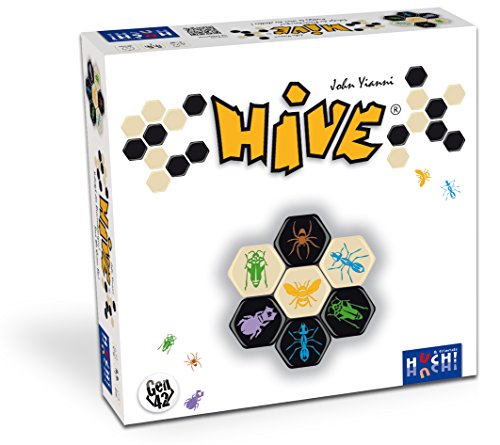
The game builds organically without a board. Pieces must remain connected to the main group, creating spatial puzzles alongside tactical considerations. Early piece placement affects the entire game, but the puzzle shifts constantly as pieces move and the hive expands.
Hive rewards deep thinking and pattern recognition while remaining portable enough for travel. The pieces are thick, durable bakelite that feels premium despite the modest price. For players who enjoy abstract strategy or want a game that improves with repeated play, Hive offers incredible depth.
Red7 ($10)
Players: 2-4 | Time: 5-30 minutes | Complexity: 7/10
Red7 packs surprising strategic depth into a tiny card game. The rules are simple – at the end of each turn, you must be winning according to the current rule, or you’re eliminated. The brilliant twist is that you can change the rule by playing cards, creating a dynamic puzzle where the victory conditions shift constantly.

Each color represents a different rule: highest card wins, most cards of one color wins, most even cards wins, and so on. Planning requires thinking several moves ahead while adapting to opponents’ rule changes. Do you build toward a specific victory condition or remain flexible to exploit whatever rule emerges?
The advanced variant adds canvas cards that provide ongoing benefits, creating multiple levels of strategic depth from the same small deck. Red7 scales from quick filler to serious strategic exercise depending on the variant used. For the price of a fast-food meal, you get a game that challenges experienced strategy gamers.
Two-Player Specialists: Head-to-Head Excellence
Patchwork ($25)
Players: 2 | Time: 30 minutes | Complexity: 6/10
Patchwork transforms quilting into an engaging spatial and economic puzzle. You’ll purchase fabric pieces using buttons (currency) and place them on your personal board, trying to fill spaces efficiently while earning more buttons for future purchases.
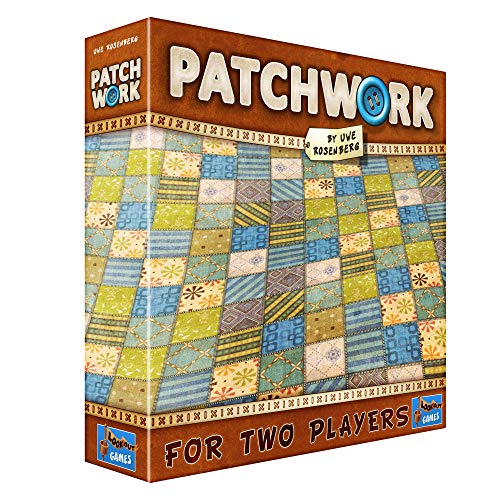
The time track creates fascinating decisions. Smaller pieces cost less time but might be inefficient, while larger pieces provide better coverage but advance you further on the track. Since players alternate taking turns based on position, sometimes advancing quickly gives you multiple consecutive turns.
Special leather patches provide free pieces and buttons, but claiming them requires precise timing. The game rewards both spatial reasoning and economic efficiency. Patchwork often comes down to a few crucial decisions about which pieces to prioritize and when to sacrifice immediate efficiency for long-term gain.
This game appeals to fans of solo board games since it includes a single-player mode, making it versatile for different gaming situations.
7 Wonders Duel ($30)
Players: 2 | Time: 30 minutes | Complexity: 7/10
7 Wonders Duel adapts the acclaimed civilization-building game perfectly for two players. You’ll draft cards from a unique pyramid structure where some cards are face-down until others are removed. This creates information puzzles alongside traditional card selection decisions.

The game offers three paths to victory: military supremacy, scientific advancement, or most points after three ages. This creates constant tension as you balance pursuing your own strategy while preventing your opponent from achieving their victory condition.
Wonder construction adds another strategic layer. Each wonder provides unique benefits and requires specific resources to build. Timing wonder construction while maintaining card flow requires careful planning. The interaction is intense but never mean-spirited, focusing on smart play rather than direct attack.
7 Wonders Duel consistently delivers close, engaging games with meaningful choices from start to finish. It’s ideal for couples or serious strategy gamers wanting concentrated two-player experiences.
Targi ($25)
Players: 2 | Time: 60 minutes | Complexity: 7/10
Targi brings worker placement to the Sahara desert with a unique crossing mechanism. You’ll place your Targi figures around the border of a 5×5 grid, but the intersection points of your placements also become available actions. This creates spatial puzzles alongside resource management.

The game revolves around collecting goods to purchase tribe cards that provide ongoing benefits and victory points. Each tribe card has specific costs and many provide discounts or bonuses for future purchases. Building an effective combination of tribe cards while managing limited actions creates engaging optimization puzzles.
Random border cards change available actions each game, while robber movement adds timing pressure. You can’t place workers adjacent to the robber, forcing adaptation to shifting constraints. Targi rewards long-term planning while requiring tactical flexibility.
The theme integrates well with mechanics – you really feel like a desert trader managing scarce resources and navigating tribal politics. For players wanting deeper strategy in a two-player format, Targi delivers excellent value.
Quick Decision Guide
If you want the easiest to learn: Start with Splendor or King of Tokyo. Both offer immediate engagement with strategic depth that reveals itself over multiple plays.
If you want maximum replayability: Choose Hive or 7 Wonders Duel. These games reward mastery and never feel solved.
If you want the most strategy per dollar: Red7 and Lost Cities provide incredible depth for minimal investment.
If you need something portable: Hive, Red7, and Lost Cities travel easily and don’t require table space.
If you prefer cooperative experiences: While not in our budget range, consider checking our guide to single player board games for solo-friendly options that often include cooperative variants.
Budget Optimization Tips
Where to find the best prices: Target and Barnes & Noble often match or beat online prices, especially during back-to-school sales. Local game stores sometimes offer used copies in excellent condition at significant discounts.
Bundle opportunities: Lost Cities and Jaipur pair perfectly for two-player game nights. Red7 and King of Tokyo cover different group sizes and complexity levels.
Seasonal considerations: September and January typically offer the best sales as retailers clear inventory. Black Friday deals often include board games, making it perfect timing for building your collection.
Future expansion: These games provide excellent foundations for understanding different mechanics. Once you know whether you prefer engine building (Splendor), worker placement (Targi), or hand management (Lost Cities), you can target similar but more complex games for your next purchases.
Start Building Your Collection
These budget-friendly games prove that exceptional strategy gaming doesn’t require premium pricing. Each title on this list competes directly with games costing twice as much, offering the same level of strategic thinking and replay value that makes board gaming such a rewarding hobby.
Begin with games that match your preferred complexity level and group size. Gateway options like Splendor and Azul provide immediate satisfaction while teaching fundamental strategy concepts. Medium-weight choices like Targi and 7 Wonders Duel satisfy experienced players without overwhelming newcomers.
The beauty of starting with quality budget games is that they remain enjoyable even as your collection grows. These aren’t stepping stones to “real” games – they’re legitimate strategy experiences that continue providing entertainment regardless of how many expensive titles you later acquire.
For more strategic gaming options, explore our comprehensive guide to strategy games or discover budget-friendly strategy options we’ve previously covered.
Which of these budget gems catches your eye for your next game night? Have you discovered any amazing strategy games under $30 that we missed? Let us know in the comments below!