
As an Amazon Associate I earn from qualifying purchases and sometimes recommend products from other sellers at no extra cost you. For more details see my disclosure policy and privacy policy.
You’ve decided to move beyond Monopoly and Scrabble into the world of strategy board games. After some research, you’ve narrowed it down to two classics that everyone recommends: Catan and Ticket to Ride. Both are called “gateway games,” both have won awards, and both seem perfect for your game night. So which one deserves a spot on your shelf first?
This is one of the most common dilemmas facing new board game enthusiasts. Walk into any game store or browse online forums, and these two titles appear on every “best first strategy game” list. Both have earned their reputation as perfect bridges between casual family games and deeper strategy experiences.
Catan Vs Ticket to Ride
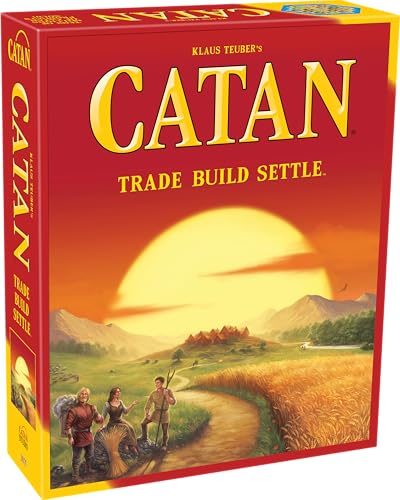
Catan puts you in the role of settlers building civilization on a resource-rich island. You’ll collect wheat, wood, brick, ore, and sheep to construct roads, settlements, and cities while trading with other players and managing the robber that blocks resource production.
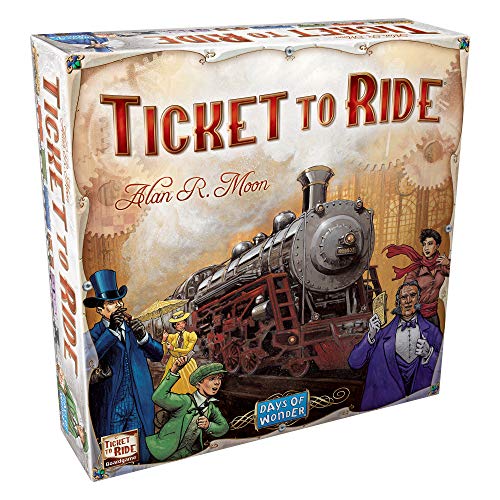
Ticket to Ride transforms you into a railroad baron claiming train routes across various maps. Your goal is to connect cities by collecting colored train cards and claiming routes, all while completing destination tickets that span the continent.
Catan vs. Ticket to Ride: At a Glance
| Category | Catan | Ticket to Ride |
|---|---|---|
| Players | 3-4 (5-6 with expansion) | 2-5 |
| Play Time | 60-90 minutes | 30-60 minutes |
| Age Range | 10+ | 8+ |
| Price Range | $50-60 | $40-50 |
| BGG Rating | ||
| Learning Curve | 15-20 min teach time Complex setup Multiple systems to learn |
10 min teach time Simple setup Intuitive actions Winner |
| Strategic Depth | Multiple victory paths Resource management Social strategy Winner |
Route optimization Risk/reward decisions Tactical blocking |
| Player Interaction | Heavy trading Negotiation required Direct targeting If you like negotiation |
Route blocking Indirect competition Lower conflict If you prefer less conflict |
| Game Length | Variable timing Can run long Dice-dependent pacing |
Consistent 30-60 min Predictable end Steady pacing Winner |
| Component Quality | Good wooden pieces Functional cards Basic organization |
Premium train pieces Beautiful board Great box insert Winner |
| Group Appeal | Best with 3-4 players Competitive groups Social gamers |
Works 2-5 players Family-friendly Broader appeal Winner |
| Overall Winner | Great for social groups | Better first purchase Ticket to Ride |
Both games share important qualities that make them gateway game champions. They’re accessible enough for families but strategic enough to satisfy serious gamers. They feature beautiful components and engaging themes. Most importantly, they teach fundamental strategy concepts without overwhelming newcomers.
We’ll compare these games across six key categories: learning curve, strategic depth, player interaction, game length, production quality, and group appeal. By the end, you’ll know exactly which game fits your needs and gaming group.
Learning Curve and Setup
Catan’s Learning Process
Setting up Catan requires assembling a randomized board from hexagonal tiles, placing numbered tokens, and shuffling development cards. This variable setup means you’ll need to explain different starting positions each game. The rules explanation typically takes 15-20 minutes because players need to understand resource collection, the trading system, building costs, and victory conditions.
What New Players Need to Learn:
- How dice rolls generate specific resources
- Why trading with opponents creates efficiency gains
- How building placement affects future expansion options
- When to use development cards for maximum impact
- Basic probability (why 6s and 8s are more valuable than 2s and 12s)
The Catan strategy guide shows just how many layers exist beneath the surface, but don’t let that intimidate you – most players pick up the basics within their first game.
Ticket to Ride’s Accessibility
Ticket to Ride setup takes about two minutes. Lay out the board, give each player colored trains and destination tickets, shuffle the train cards, and you’re ready. Rules explanation rarely exceeds 10 minutes because the core mechanics are intuitive: collect cards, claim routes, complete tickets.
Simple Turn Structure:
- Draw two train cards from the deck or face-up display
- Claim a route by playing matching colored cards
- Draw new destination tickets (risky but potentially rewarding)
The learning curve is gentler because actions are straightforward and the consequences of each choice are clear. There’s no resource conversion, no trading negotiations, and no complex timing decisions early on. This simplicity makes it accessible to ages 8 and up without feeling childish.
Winner: Ticket to Ride
While both games are considered gateway-friendly, Ticket to Ride gets players into their first game faster. The setup simplicity and streamlined rules explanation mean you spend more time playing and less time explaining. For groups that include reluctant gamers or children, this accessibility advantage is significant.
Strategic Depth and Replayability
Catan’s Strategic Variety
Catan offers multiple paths to victory and meaningful decisions from turn one. The randomized board setup ensures no two games feel identical, even with the same group. You might focus on the longest road one game, pivot to largest army the next, or pursue a city-heavy development strategy.
Multiple Victory Paths:
- Longest road strategy (connecting distant settlements)
- Largest army approach (buying development cards for knights)
- City-building focus (upgrading settlements for double resources)
- Balanced expansion (mixing all approaches based on opportunities)
Resource scarcity creates interesting risk/reward decisions. Do you settle on that great wheat spot knowing it makes you a robber target? Should you trade away needed resources to prevent an opponent from winning? The dice probability system adds another strategic layer – understanding that 6 and 8 are rolled more frequently than 2 and 12 affects optimal placement decisions.
Development cards introduce tactical flexibility with knights, victory points, and special abilities. The trading system means your success partly depends on negotiation skills and reading other players’ intentions.
Ticket to Ride’s Route Puzzles
Ticket to Ride presents route efficiency puzzles that satisfy different strategic minds. Each destination ticket requires finding optimal paths while adapting to blocked routes and changing board conditions. Longer routes score more points but consume more resources and time.
Strategic Decision Points:
- Route selection (longer routes vs. multiple shorter connections)
- Card collection timing (when to switch from drawing to claiming)
- Destination ticket management (which tickets to keep vs. discard)
- Blocking tactics (claiming routes to disrupt opponents)
The tension comes from incomplete information. You don’t know opponents’ destination tickets, so every route claim might block someone’s critical connection. Advanced players develop sophisticated card-counting skills and route-blocking strategies.
Different map versions provide significant replay value. The Europe map adds stations and tunnels, while other versions introduce ferries, technology, or completely different geographic challenges.
Winner: Catan
Both games offer solid strategic depth for gateway games, but Catan edges ahead with more decision variety and strategic paths. The resource management, building placement, and social interaction elements create more complex decision trees. However, serious strategy gamers should consider area control games for even deeper experiences.
Player Interaction and Social Elements
Catan’s Social Dynamics
Catan thrives on player interaction. The trading system encourages negotiation, deal-making, and social reading of opponents. These interactions often become the game’s most memorable moments – convincing someone to trade you the ore you need, or forming temporary alliances against the leading player.
Types of Social Interaction:
- Resource trading (the heart of most negotiations)
- Robber placement decisions (choosing who to target and why)
- Development card timing (when to reveal that surprise road or army)
- Alliance formation (temporary partnerships against leading players)
The robber mechanic adds direct but not overly aggressive interaction. When you roll a 7, you choose which opponent loses resources and which hex gets blocked. This creates tension without feeling mean-spirited, though some groups find any targeting uncomfortable.
Resource production depends partly on other players’ rolls, keeping everyone engaged during every turn. You might get sheep when another player rolls an 8, creating natural investment in the entire table’s actions.
Ticket to Ride’s Indirect Competition
Ticket to Ride features more subtle player interaction. The primary interaction comes from route blocking – claiming routes that opponents might need. This creates tension without direct confrontation, as you’re making moves that benefit you while potentially hindering others.
Subtle Competitive Elements:
- Route blocking (claiming paths others might need)
- Card hoarding (collecting specific colors to limit opponent access)
- Timing pressure (rushing to complete routes before others block you)
- Information warfare (hiding your destination tickets’ requirements)
The shared pool of train cards creates indirect competition. When someone draws three red cards, fewer red cards remain for other players. Advanced players track card distribution and make educated guesses about opponents’ needs.
Most gameplay focuses on individual puzzle-solving rather than direct player engagement. Some groups prefer this lower-conflict approach, especially when including players who dislike confrontation or negotiation.
Winner: Depends on Your Group
This category reveals the biggest difference between these games. Choose Catan if your group enjoys negotiation, trading, and social interaction as core gameplay elements. Choose Ticket to Ride if you prefer strategic competition without direct conflict. Neither approach is superior – they appeal to different social preferences.
Game Length and Pacing
Catan’s Variable Timing
Catan games typically run 60-90 minutes, but this can vary significantly based on dice luck and player decision speed. Games can extend when players overthink trades or when dice rolls don’t cooperate with anyone’s strategy. The randomness that creates excitement can occasionally create frustrating stretches where little progress happens.
The trading phase can slow games considerably if players spend too long negotiating every exchange. Some groups house-rule time limits for trade discussions to maintain pacing.
However, Catan maintains engagement throughout because every dice roll affects multiple players. Even when it’s not your turn, you might collect resources or need to discard cards.
Ticket to Ride’s Consistent Experience
Ticket to Ride delivers remarkably consistent game length. Most games finish between 30-60 minutes regardless of player count or experience level. The game naturally builds tension as the train supply dwindles and players rush to complete their routes.
Turns move quickly since actions are straightforward. Draw cards, claim a route, or draw destination tickets – rarely do players agonize over decisions for long periods. This keeps the game moving and maintains engagement for all player types.
The endgame trigger is predictable and fair. When someone drops to two or fewer trains, everyone gets one final turn. This eliminates the frustration of games ending abruptly or dragging on too long.
Winner: Ticket to Ride
For groups that value predictable game length and consistent pacing, Ticket to Ride wins clearly. The reliable 30-60 minute experience makes it easier to fit into game nights and more likely to get repeat plays. This consistency is especially valuable for family gaming situations.
Production Quality and Value
Catan’s Component Assessment
Catan comes with wooden settlements, cities, and roads that feel substantial and appealing. The hexagonal tiles are thick cardboard that holds up well over time. The resource cards are functional but not exceptional – they’ll show wear with heavy play but remain usable for years.
At around $50-60, Catan offers solid value considering its replay potential and expansion ecosystem. The base game provides dozens of plays before feeling repetitive, and expansions like Seafarers and Cities & Knights dramatically extend the experience.
Component organization could be better. The box doesn’t include great storage solutions for the various tokens and cards, leading many players to invest in organizers or storage solutions.
Ticket to Ride’s Premium Feel
Ticket to Ride impresses immediately with its component quality. The plastic train pieces feel substantial and satisfying to place. The board features beautiful artwork and clear route markings that make gameplay intuitive. The destination ticket cards use quality cardstock that shuffles well and resists wear.
The game typically retails for $40-50, making it slightly more affordable than Catan while offering superior component quality. The box includes a well-designed insert that keeps components organized between plays.
Different map versions maintain consistent quality standards while offering varied experiences. Whether you choose the original USA map, Europe, or other versions, the production quality remains excellent.
Winner: Ticket to Ride
While both games offer good value, Ticket to Ride provides better components at a lower price point. The trains feel premium, the board is gorgeous, and everything stays organized in the box. For newcomers building their first collection, this combination of quality and value is hard to beat.
Family and Group Appeal
Catan’s Social Requirements
Catan works best with 3-4 players, though expansions enable 5-6 player games. The trading system relies on multiple players to create interesting decisions and negotiations. With only two players, the social dynamics that make Catan special largely disappear.
The game appeals strongly to competitive players who enjoy the social maneuvering and strategic depth. However, it can create tension in groups where players take the robber placement or trade refusals personally. Some families find these interactions enhance the experience, while others find them divisive.
Age recommendations typically start at 10+, though bright younger players can certainly learn. The mathematical concepts and strategic thinking required might challenge some children initially.
Ticket to Ride’s Inclusive Design
Ticket to Ride accommodates 2-5 players equally well. The two-player game feels nearly as engaging as the full player count version, making it excellent for couples or small groups. This flexibility makes it more likely to hit the table regularly.
The theme is universally appealing and educational. Players naturally learn geography while claiming routes between familiar cities. The train theme appeals across age ranges without feeling childish or overly complex.
Conflict is minimal and indirect, making it suitable for groups that prefer cooperative or low-conflict experiences. Even when someone blocks your route, it feels more like a puzzle challenge than personal targeting.
Winner: Ticket to Ride
Ticket to Ride’s broader appeal and flexible player count make it more versatile for various gaming situations. It works well with couples, families, and mixed groups of gamers and non-gamers. This versatility increases the likelihood of regular play, which matters more than theoretical appeal.
The Final Verdict
After comparing both games across six key categories, Ticket to Ride emerges as the better first strategy game purchase for most people. Here’s the scorecard:
Category Winners:
- Learning Curve: Ticket to Ride
- Strategic Depth: Catan
- Player Interaction: Depends on preference
- Game Length: Ticket to Ride
- Production Quality: Ticket to Ride
- Group Appeal: Ticket to Ride
Ticket to Ride wins in learning curve, game length consistency, production quality, and group appeal. It ties in strategic depth when considered as a gateway game. Only in player interaction does Catan clearly excel, and only for groups that specifically want negotiation-heavy gameplay.
Choose Ticket to Ride if you:
- Want something easy to teach to anyone
- Value predictable game length for planning purposes
- Prefer strategic competition without direct confrontation
- Need a game that works well with 2 players
- Appreciate high-quality components and organization
- Want broader appeal across different age groups and gaming preferences
Choose Catan if you:
- Enjoy negotiation and social interaction as core gameplay
- Want deeper strategic variety and multiple paths to victory
- Don’t mind longer, variable game length
- Primarily play with 3-4 consistent players who enjoy competitive interaction
- Are interested in expanding with additional maps and rules modules
- Want to learn fundamental resource management concepts
Consider buying both if: Your budget allows for two games and you want variety in your collection. They complement each other perfectly – Ticket to Ride for casual sessions and mixed groups, Catan for your core gaming group’s strategic sessions.
Alternative recommendations: If both games seem too simple, consider Azul or Splendor instead. If both seem too complex, start with King of Tokyo or Sushi Go!
Your Next Steps
Before making your final decision, consider these key questions:
Group Assessment Questions:
- Who will you typically play with, and what’s their comfort level with games?
- Do you prefer games that encourage table talk and negotiation?
- How important is consistent game length for your group?
- Are you looking for just one game or building a collection?
Research Recommendations:
- Watch gameplay videos for both games to see them in action
- Check BoardGameGeek for player reviews and current ratings
- Read strategy guides to understand the depth each game offers
- Consider your local game store’s demo policy
Our recommendation: Start with Ticket to Ride, then add Catan as your second strategy game purchase. This gives you two different game experiences that work for various groups and moods. Ticket to Ride handles your casual gaming needs while Catan satisfies when you want deeper strategy and social interaction.
Both games have earned their places as gateway classics for good reason. You really can’t go wrong with either choice – but for most first-time strategy game buyers, Ticket to Ride offers the smoother path into this amazing hobby.
Check current prices on Amazon: Ticket to Ride | Catan
Which game catches your eye more – the railroad building of Ticket to Ride or the settlement building of Catan? Have you tried either of these classics yet? Let us know your thoughts in the comments below!
You Might Also Like
- Complete Catan Strategy Guide: Advanced Tips for Winning
- Best 2-Player Strategy Games for Couples
- How to Choose Your First Strategy Board Game
- Gateway Games That Lead to Heavier Strategy
Updated: September 2025