
As an Amazon Associate I earn from qualifying purchases and sometimes recommend products from other sellers at no extra cost you. For more details see my disclosure policy and privacy policy.
The thrill of cunning, the suspense of uncertainty, and the joy of unmasking – welcome to the riveting world of imposter board games. These games, designed around the premise of deception and deduction, have taken the gaming community by storm. They challenge your ability to lie convincingly, detect subtle clues, and outsmart your friends. Whether you’re the imposter attempting to blend in or a crewmate trying to root out the traitor, each game is a thrilling test of wit and strategy. Let’s dive into this guide to the best imposter board games, where every turn could spell triumph or treachery.
Why Play Imposter Board Games?
Imposter board games are experiencing a significant surge in popularity, and there are several reasons for this trend. These games involve strategy, social deduction, betrayal, and intense player interaction, making them extremely engaging and appealing to a wide range of players.
One of the key features of imposter games is the element of social deduction. It’s a game mechanic where players must use their observational skills, reasoning, and social intuition to figure out who among them is not who they claim to be. Games like Among Us have popularized this concept, leading to a rise in both digital and physical imposter-themed games.
The thrill of discovering the imposter’s identity also plays a significant role in the appeal of these games. The suspense and unpredictability that come with each round make the gameplay experience exciting and different each time.

Additionally, the success of imposter games can be attributed to the increased interaction they require. Unlike many traditional board games, imposter games often require continuous communication and cooperation among players, leading to a more immersive and social experience.
Moreover, the rise in popularity of board games in general could be contributing to the success of imposter games. According to market research, board game sales have increased by 28% compared to the same period in 2019. This resurgence can be attributed to people seeking offline entertainment and social interaction in today’s tech-dominated culture.
In conclusion, the rising popularity of imposter board games can be attributed to their unique blend of social interaction, strategy, suspense, and the thrill of uncovering the truth. Whether you’re a fan of board games or new to the world of tabletop gaming, imposter games offer an exciting and engaging experience worth exploring.
Understanding Imposter Board Games
Imposter board games are a genre of social deduction games where players work together to complete tasks but among them are imposters trying to sabotage the group’s efforts. The key objective for non-imposter players is to identify and vote out the imposters before they can take control, while the imposters’ goal is to remain undetected and hinder the team’s progress.
Features of Imposter Board Games:
- Deception and Bluffing: These games involve a lot of trickery. Imposters must convincingly lie to avoid suspicion, while other players must deduce who’s telling the truth.
- Communication: Players discuss their suspicions and share information, making communication a crucial aspect of these games.
- Tasks and Missions: To add complexity, these games often involve tasks or missions that players must complete. Imposters may pretend to do these tasks to blend in.
- Voting Mechanism: Players vote on who they suspect is an imposter. The player with the most votes is eliminated from the game.
- Player Roles: Apart from imposters and regular crewmembers, some games also feature additional roles with special abilities or objectives.
Imposter board games are fun and engaging for several reasons:
- Social Interaction: These games heavily rely on social interaction and discussion, making them a great way to connect with others.
- Strategy and Skill: Winning requires strategic thinking and good judgement skills, adding an intellectual challenge.
- Suspense and Excitement: The element of uncertainty creates tension and excitement that keeps players engaged.
- Replayability: Since the imposter(s) is randomly chosen in each round, every game is different, giving these games high replay value.
- Accessible: Most imposter games have simple rules and quick play times, making them easy to pick up and enjoy.
The Art of Deception in Board Games
Deception and deduction play a crucial role in social deduction or imposter games. These games encourage players to adopt hidden roles or team alliances, which are not known to all players of the game. The ultimate goal is to uncover these hidden roles through reasoning and observation.
In games like “Among Us,” most players are innocent crew members who must identify the imposters among them. This requires a high level of deception from the imposters and sharp deduction skills from the crew members. It’s a dynamic that invites players to engage in a subtle dance of lies, misdirection, and keen observation.
Interestingly, these games can have an educational aspect. Although we don’t typically promote the idea of training people to be deceptive, these games provide a safe environment where players can develop critical thinking, problem-solving, and communication skills. They compel players to think on their feet, read other people’s behavior, and make informed decisions based on the information they gather.
But it’s not just about lying. Players must also learn when to reveal information and when to withhold it, how to build trust with others, and how to break it for strategic purposes. In essence, social deduction games become an exercise in understanding human behavior under uncertain circumstances.
It’s important to note that while deception is a key component of these games, it’s a consensual deception agreed upon by all players. Much like actors on a stage, everyone involved understands and accepts the premise of the game.
So, while the art of deception might not be a quality we value in everyday life, in the context of social deduction games, it becomes a tool for entertainment, learning, and understanding the nuances of human behavior.
Top Five Imposter Board Games
Secret Hitler
Secret Hitler is a social deduction game that was released in 2016. The game was created by Mike Boxleiter, Tommy Maranges, and Max Temkin, who were known to obsess over the intricacies of deception games. The game simulates the rise of fascism in a hypothetical scenario set in 1930s Germany.
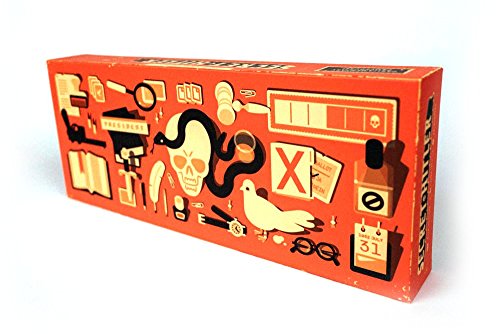
In Secret Hitler, players are secretly divided into two teams: liberals and fascists. The fascists know who each other are but the liberals do not. The game is about political intrigue and betrayal, with players randomly and secretly assigned to be a liberal or a fascist.
The goal of the game varies depending on the team you are on. For the liberals, the aim is to maintain control and prevent the fascists (including Secret Hitler) from taking over. On the other hand, the fascists aim to sow discord and protect the identity of Secret Hitler until they can seize power.
When it comes to gameplay, players take turns to enact policies while trying to deduce who among them is Secret Hitler. It’s a game that requires strategic thinking, deception, and the ability to convincingly lie or tell the truth.
Tips for winning in Secret Hitler heavily depend on your assigned team. If you’re a liberal, it’s crucial to keep a keen eye on the actions of other players, communicate effectively, and make informed decisions based on the information you gather. For the fascists, the key is to sow confusion, misdirect suspicion, and protect the identity of Secret Hitler at all costs.
The Resistance: Avalon
The Resistance: Avalon is a social role-playing card-based party game that came into existence as an intriguing spin-off of the original game, The Resistance. The game’s concept revolves around a battle between government and resistance groups. However, Avalon shifts the stage from a dystopian sci-fi future to the world of Arthurian legend, adding some new twists.
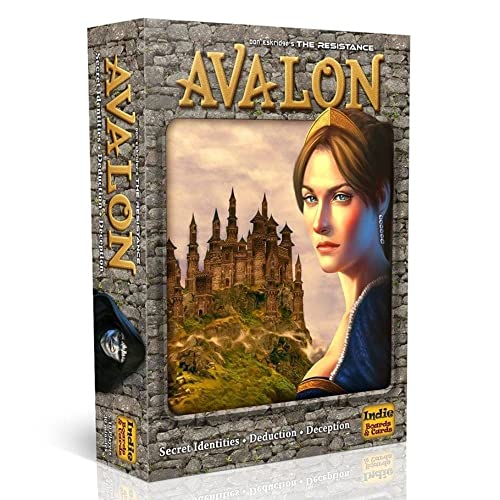
In this game, players are either loyal servants of Arthur or minions of Mordred. The game pits these two sides against each other in a battle to control the future of civilization. Avalon introduces special characters, which set it apart from the original game and provide more replay value.
The gameplay involves deception, deduction, and secret identities. Each player is given a player card, and the challenge lies in deducing one another’s identities. It’s a game that encourages strategic thinking and can be seen as a perfect icebreaker, even though it starts with lying.
To win at Avalon, strategic analysis becomes crucial. Understanding the roles of the characters and how they interact within the game can provide an edge. Moreover, being able to effectively lie and detect lies can turn the tide in your favor.
One Night Ultimate Werewolf
One Night Ultimate Werewolf is a social deduction game that was first published by Bezier Games in 2014. It’s a quick and simplified version of the classic games Werewolf (1997) and Mafia. The game was created by Ted Alspach and Akihisa Okui.
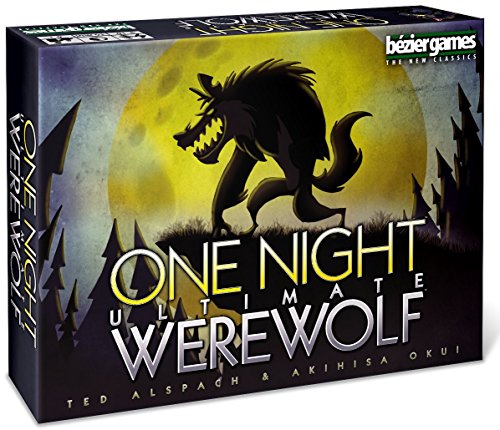
In this fast-paced game, each player takes on a unique role, such as a villager, werewolf, or a special character. The roles are distributed randomly and secretly. The game unfolds over the course of one “night” and the following “morning”. The objective for the villagers is to figure out who among them is a werewolf, while the werewolves’ goal is to remain undetected.
The gameplay begins with everyone closing their eyes. Then, the werewolves will open their eyes and recognize each other. Various characters have special abilities that come into play during the night. For instance, the Seer can peek at another player’s card, the Robber can switch cards with another player, and the Troublemaker can swap two other players’ cards without looking at them.
The game requires strategic thinking, bluffing, and the ability to convince others. To win, you must understand the strengths and weaknesses of your assigned role, read the behavior of other players, and adapt your strategy based on the unfolding events.
Overall, One Night Ultimate Werewolf offers a unique and thrilling gaming experience that tests your social deduction skills and strategic planning.
Deception: Murder in Hong Kong
Deception: Murder in Hong Kong is a popular board game designed by Tobey Ho and published by Grey Fox Games in 2015. The game accommodates between 4 to 12 players, making it ideal for larger social gatherings or parties. It’s a cross between a traditional hidden role game and a collaborative deduction game such as Codenames.
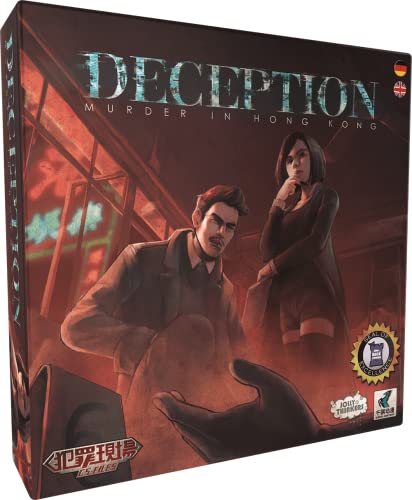
In the game, players find themselves in a scenario where a grisly murder has taken place in the neon-bathed city of Hong Kong. The players, acting as investigators, arrive at the scene of the crime and are presented with various clues. However, amongst them hides the murderer, creating an atmosphere of suspense and intrigue.
The gameplay involves each player being handed a role and then trying to solve the murder case. The roles include investigators, the murderer, and special roles like the Forensic Scientist, Witness, Accomplice, and Protector. The Forensic Scientist provides hints to guide the investigators, but they can’t directly communicate with them.
The game is seasoned with elements of other popular games like Dixit and Mysterium. The goal for the investigators is to correctly identify the “Means of Murder” and the “Key Evidence” from the murderer’s chosen clues before time runs out. On the other hand, the murderer and their accomplice try to mislead the investigators and avoid detection.
As for strategies, effective communication and deduction are key. Investigators should pay close attention to the Forensic Scientist’s hints and discuss their interpretations with the team. Bluffing and deception are crucial for the murderer and their accomplice, who must convincingly lie about their innocence and cast suspicion on others.
Spyfall
Spyfall is a popular card game that originated in 2014. It was designed by Alexandr Ushan and published by Hobby World. The game quickly gained popularity, leading to the release of a sequel, Spyfall 2, in 2017.
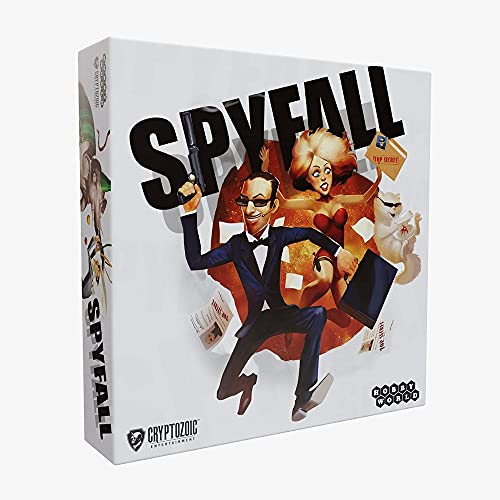
The gameplay of Spyfall is centered around intrigue and deception. You play as an FBI detective, and the catch is that one person in your department is an enemy spy. Important information is concealed from some or all players, which must be discovered over the course of the game. This makes it an information game, where probing questions, clever answers, and bluffing are key elements.
Based on the social party game Spyfall, DC Spyfall is an easy-to-learn party game variant that introduces characters from the DC universe into the mix. Another variation takes players through different moments in human history, adding another layer of complexity to the game.
To win at Spyfall, players must either correctly guess who the spy is or figure out their location by asking questions. It’s a game that requires quick thinking, keen observation, and strategic questioning. Remember, the game isn’t just about finding the spy – if you’re the spy, you’ll need to stay undetected while figuring out the location of your fellow players.
Spyfall has been recognized as an outstanding party game by The Dice Tower, Major Fun, and Shut Up and Sit Down. Its blend of social deduction, strategy, and fun makes it a hit at parties and gatherings.
Family-Friendly Imposter Board Games
Family-friendly games are critical because they allow all members of the family, regardless of age, to participate and enjoy together. They promote bonding, communication, and create shared memories. Moreover, they also help children develop strategic thinking and social skills in a fun and engaging manner.
Imposter-style games, where one or more players secretly work against the others, can be particularly exciting and enjoyable for families. They add elements of mystery, deduction, and bluffing that can be thrilling and engaging.
Here are some family-friendly imposter board games:
- Clue: Clue is a classic mystery game that keeps players on their edge as they try to uncover who is responsible for a murder, where it occurred, and what weapon was used. This popular board game develops kids’ deductive reasoning skills and is equally entertaining for adults.
- Shadows in the Forest: Shadows in the Forest is a unique game that’s played in the dark. One player moves a LED lantern around in search of Shadowlings, the mysterious creatures who reside in the forest. The other players work together, strategically moving their Shadowlings to stay out of the light.
- Ticket to Ride: Ticket to Ride is an award-winning board game that tasks players with building the longest railway routes across North America. The game is easy to learn, fun for all ages, and helps children develop their strategic thinking and planning skills.
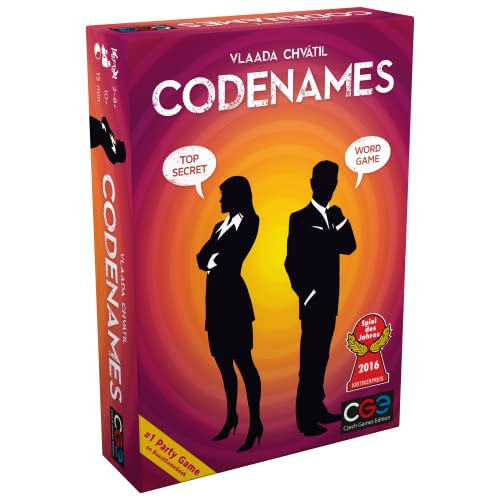
- Codenames: Duet: Codenames: Duet is a cooperative version of the popular game Codenames. Players work together to contact all their agents without running into the assassin. This game promotes teamwork and communication and is suitable for players aged 11 and up.
How to Choose the Right Imposter Board Game
Choosing the right imposter board game can be a fun and exciting task. Whether you’re planning a game night with friends or looking for a new addition to your family game collection, there are several factors to consider.
1. Group Size
Consider the number of people who will be playing. Some games are designed for small groups, while others work best with larger crowds. For example, “Among Us: The Board Game” is perfect for 4-10 players, making it suitable for both small gatherings and larger parties.
2. Age of Players
Not all imposter board games are suitable for all ages. Look at the recommended age range on the game box. Games like “Werewolf” might be too complex for younger players, while others like “Hare and Tortoise” are more kid-friendly.
3. Game Duration
Some games can last for hours, while others can be played in a matter of minutes. Consider how much time you and your group want to spend playing. If you’re looking for a quick game to play, consider something like “Coup”. For longer, more involved games, “Battlestar Galactica: The Board Game” might be a good choice.
4. Complexity
Some imposter games require strategic thinking and planning, while others are more about luck and bluffing. Consider the preferences and abilities of your group. If you’re playing with a group of beginners, choose a game with simpler rules.
5. Theme and Preferences
Some people might prefer a game with a particular theme or style. There are imposter games with sci-fi themes, fantasy themes, and even historical themes. Consider the interests of your group when choosing a game.
6. Reviews and Ratings
Lastly, look at reviews and ratings online. These can provide valuable insights into how enjoyable and engaging a game is. Websites like BoardGameGeek can be a great resource for this.
Enhancing Your Imposter Game Experience
Creating the perfect setting for an imposter game night can be a blend of several elements. The most important part is to create a suspenseful atmosphere with rules and settings that keep everyone on their toes while maintaining fun and engagement.
- Game Settings: According to Sportskeeda, fewer than nine players are recommended for a more thrilling game. Similarly, IGN suggests setting long tasks for the Impostor, making it harder for them to win and forcing crewmates to travel to different locations, which makes grouping up more challenging.
- Variations: Metro Detroit Mommy suggests trying the Hide & Seek version of Among Us for an innovative twist. You could also consider creating an imposter-style RPG game, as discussed on Reddit, where you set a unique environment like a haberdashery during a blizzard.
- Real-Life Adaptation: Grip Room and The Aloha Hut provide guides on how to play Among Us in real life, which could add a whole new level of excitement to your game night.
- Sabotages: Indie Game Culture suggests taking advantage of sabotages like lights and communications to make it harder for crewmates to complete tasks.
- Party Ideas: If you want to take the experience to another level, Peerspace has some fun-filled Among Us party ideas that could help you throw the perfect themed party.
Conclusion
In this blog post, we’ve taken a deep dive into the captivating world of imposter board games. These games not only provide hours of entertainment but also help in honing strategic thinking and social skills.
We’ve discussed how these games are designed to stimulate your mind, challenge your decision-making abilities, and enhance your capacity to read others. By playing imposter games, you step into an intriguing world of mystery, strategy, and bluffing.
Remember, the beauty of these games lies in their unpredictability and the thrill of unmasking the imposter before it’s too late. So, whether you’re a seasoned gamer or a novice, there’s an imposter game out there waiting to test your wits.
So, why wait? Dive into the thrilling world of imposter board games. Experience the rush of adrenaline, the joy of victory, and the thrill of the chase. Your next adventure is just a game away.
In conclusion, imposter board games are more than just a source of fun. They are a tool for enhancing critical thinking, improving social interaction, and providing a unique form of entertainment. So, embrace the challenge, enjoy the game, and let the best strategist win!