
As an Amazon Associate I earn from qualifying purchases and sometimes recommend products from other sellers at no extra cost you. For more details see my disclosure policy and privacy policy.
As the lights dim and the room fills with an eerie silence, you feel a chilly shiver run down your spine. This isn’t your ordinary family game night; it’s an evening of suspense, fear, and thrilling challenges. Welcome to the world where the joy of strategy and camaraderie in board games collides head-on with the bone-chilling elements of the horror genre.
From haunted mansions to zombie-infested towns, these are not just games; they are immersive experiences that will test your courage. Brace yourself as we delve into some of the scariest board games ever created, guaranteed to provide a terrifyingly fun time.
Why Play Scary Board Games?
Board games have been a popular form of entertainment for centuries, bringing together friends and family in a shared experience of fun and competition. In recent years, there has been a resurgence in the popularity of board games, with an estimated global market value of $12 billion in 2023, according to Statista.
Scary board games, in particular, have a unique appeal. They offer a unique blend of storytelling, strategy, and suspense that can’t be found in other types of games. Here are a few reasons why they are so popular:
- Immersive Storytelling: Scary board games often come with rich narratives and lore that draw players into their eerie worlds. These narratives, combined with atmospheric artwork and components, create immersive experiences that transport players into the game’s universe.
- Tension and Excitement: The element of fear adds a layer of tension and excitement to the gameplay. The uncertainty and anticipation of what might happen next keep players on the edge of their seats, making the experience thrilling and memorable.
- Social Interaction: Playing a scary board game is a social event. It encourages communication, collaboration, and sometimes deception among players. This interaction can create lasting memories and strengthen bonds between players.
- Challenge and Strategy: Like all board games, scary board games require strategic thinking and decision-making skills. The added element of fear and suspense can make these challenges even more engaging and satisfying to overcome.
In conclusion, scary board games provide an immersive, thrilling, and social gaming experience that many players find appealing. They offer a unique way to enjoy a scary story, test your strategic skills, and have fun with friends and family.
Classic Horror Games
Arkham Horror
Arkham Horror is a thrilling board game based on the works of renowned horror writer H.P. Lovecraft. Set in the fictional town of Arkham, Massachusetts during the 1920s, players take on the roles of investigators who must work together to stop the awakening of an Ancient One – an elder being from another dimension that threatens to engulf the world in chaos and madness.
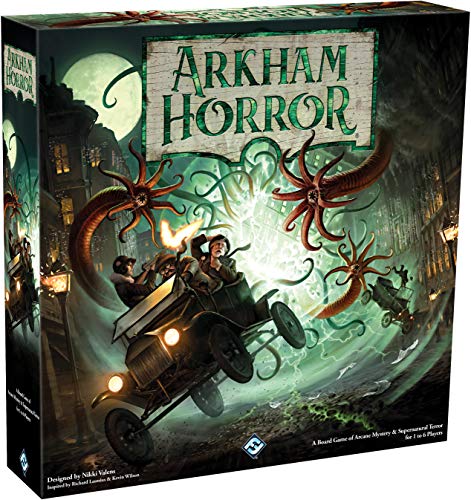
Game Mechanics and Setting: The mechanics of Arkham Horror are complex and immersive, requiring strategic cooperation among players. The game is played on a board depicting different locations in Arkham. Each turn, players move through these locations, gathering clues, fighting monsters, and experiencing strange events, all while trying to prevent the doom track – a counter of the impending arrival of the Ancient One – from reaching its end.
Players have different abilities and resources, such as spells, items, and allies, which they can use to their advantage. However, they also have sanity and stamina meters, which deplete when encountering various horrors or physical trials. If a player’s sanity or stamina falls to zero, they are incapacitated until they recover, adding a layer of tension and urgency to the gameplay.
Lovecraftian Horror Elements: Arkham Horror thrives on its Lovecraftian elements. The game’s artwork, characters, monsters, and events are all inspired by Lovecraft’s mythos, creating an atmosphere of creeping dread and cosmic horror. From otherworldly creatures to sanity-shattering encounters, the game encapsulates Lovecraft’s unique brand of horror.
Cooperative Gameplay and Tension: The cooperative nature of Arkham Horror is one of its standout features. Players must work together, sharing resources and information, to stand a chance against the cosmic horrors. This cooperation creates a sense of camaraderie but also ramps up the tension, as the fate of the world depends on collective success or failure.
Challenging Difficulty Level: Arkham Horror is notorious for its challenging difficulty level. The game is unpredictable, with random event cards and monster spawns keeping players on their toes. The ever-ticking doom track adds constant pressure, and the various Ancient Ones players may face each offer unique challenges. This high difficulty level contributes to the game’s reputation for delivering tense, edge-of-your-seat gameplay experiences.
In conclusion, Arkham Horror is a masterful blend of Lovecraftian horror, strategic gameplay, and cooperative tension. Its challenging difficulty keeps players engaged and on edge, making each victory feel like a real triumph against the encroaching darkness.
Betrayal at House on the Hill
Betrayal at House on the Hill is a unique board game that begins as a cooperative adventure and ends in a thrilling, unpredictable showdown.
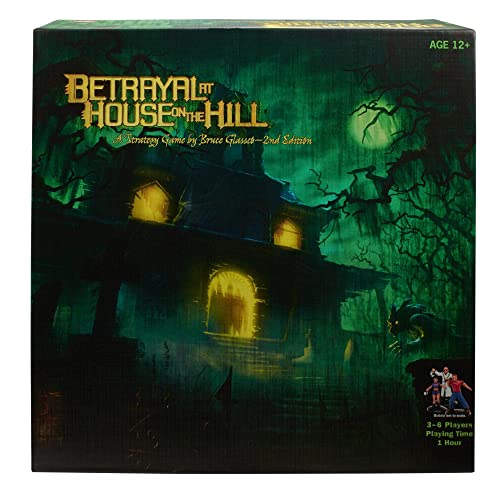
At the start of the game, players work together, exploring a haunted house by placing room tiles as they progress. This tile-based exploration mechanic means that every game is different, as the layout of the mansion changes with each playthrough. Players uncover new rooms, find items, and encounter events that can help or harm them.
As the explorers delve deeper into the house, the tension builds with the roll of the haunt roll. This roll is triggered every time an omen card is drawn, and if the result is lower than the number of omens drawn so far, the haunt phase begins. The haunt is where the game takes a dramatic turn. Depending on the specific omen and the room it was found in, one of fifty unique scenarios (the “haunts”) begins.
At this point, one player typically becomes a traitor, turning against the other players who remain as a team of survivors. The identity of the traitor and the specific goals of both the traitor and the survivors are determined by the haunt. This could mean anything from summoning eldritch horrors, to escaping the house, to defeating the traitor. The random nature of the haunts ensures that players never know what to expect, creating a sense of fear and unpredictability that adds to the suspense.
In Betrayal at House on the Hill, the cooperative exploration transforms into a tense battle because players spend the first half of the game unknowingly preparing for a conflict they know nothing about. When the haunt is revealed, alliances shift and the house becomes a battleground. It’s this blend of cooperation, exploration, and betrayal that makes Betrayal at House on the Hill a uniquely thrilling gaming experience.
Psychological Horror Games
Mansions of Madness
Mansions of Madness is a game that masterfully blends elements of mystery, investigation, and Lovecraftian horror. In this game, players take on the role of investigators delving into eerie locales filled with unspeakable horrors inspired by the works of H.P. Lovecraft. The game’s narrative-driven gameplay requires players to solve intricate puzzles and unravel mysteries, all while battling against time and their sanity.
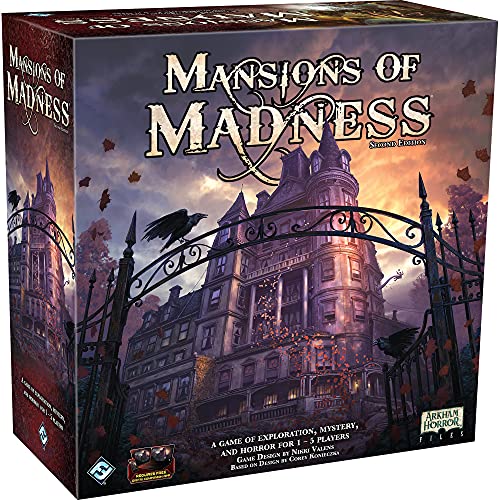
One of the standout features of Mansions of Madness, particularly in its second edition, is its app integration. The game is app-assisted, meaning it uses a companion app to control the unfolding story, providing an immersive experience for the players. The app not only guides the gameplay but also enhances the ambiance with atmospheric sounds and visuals, further drawing players into the Lovecraftian world.
The game focuses significantly on psychological horror, true to the essence of Lovecraftian fiction. The sense of dread and impending doom is enhanced by the game’s mind-bending puzzles and hidden secrets. Players are kept on edge as they traverse through the game, never knowing what horror might lurk around the corner.
The game’s emphasis on investigation and mystery is evident in its gameplay mechanics. Players are required to explore, gather clues, and solve puzzles to progress in the game. The sense of mystery is further heightened by the game’s unpredictable nature, where no two games are ever the same, thanks to the app’s random generation of game scenarios.
In conclusion, Mansions of Madness successfully incorporates elements of mystery, investigation, and Lovecraftian horror, offering a truly immersive and thrilling board game experience. Its app integration enhances the game’s ambiance and controls the unfolding story, keeping players engrossed in the game’s narrative and on their toes throughout the gameplay.
Dead of Winter
“Dead of Winter” is an innovative board game that brilliantly blends survival horror with cooperative gameplay and the element of deception. Set in a post-apocalyptic, zombie-infested world, players must work together to achieve a common goal. However, each player also has a secret personal objective, which can sometimes conflict with the group’s interests.
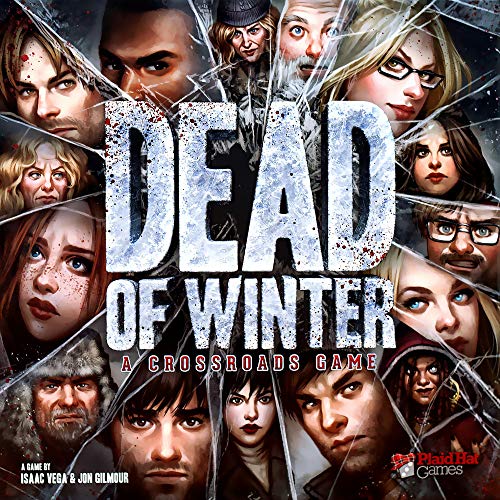
The game creates an atmosphere of tension and suspense through its intense decision-making process. Players are constantly faced with tough choices, such as whether to share resources, when to risk exposure to the elements or zombies, and whom to trust. These decisions not only affect the individual player but also have implications for the overall success of the group.
One of the unique aspects of “Dead of Winter” is the potential for a traitor within the group. While it’s possible for all players to solely have the colony’s best interest at heart, there’s always the possibility that one player might be working against the group, further adding to the suspense and paranoia.
Furthermore, every turn features a “crisis” – an event that requires certain resources or actions from the players. If the crisis isn’t resolved, negative consequences affect the whole group, making cooperation essential. However, the potential presence of a traitor makes every contribution suspicious, ramping up the tension.
In “Dead of Winter”, survival isn’t just about fighting off zombies. It’s about navigating the complex interpersonal relationships between players, managing scarce resources, and making hard decisions for the greater good – even if it means sacrificing personal objectives. The blend of cooperative gameplay, potential deception, and high-stakes decision making creates a unique and thrilling gaming experience.
Paranormal and Supernatural Games
Fury of Dracula
“Fury of Dracula” is a thrilling board game that plunges players into the dark world of Bram Stoker’s renowned character, Count Dracula. In this game, one player takes on the role of the infamous count, while others form a team of hunters tasked with tracking him down and eliminating him. The game is set across Europe, encapsulating the Victorian era’s ambiance and aesthetic.
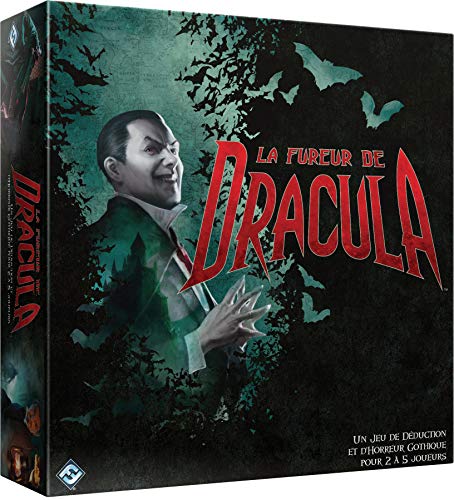
The most compelling aspect of “Fury of Dracula” lies in its hidden movement mechanic. As Dracula, a player moves in secret, leaving a trail of clues (and occasionally, encounters) for the hunters to discover. This stealthy approach creates an intense cat-and-mouse chase, immersing players in a suspenseful game of hide-and-seek. The hidden movement mechanic incites a palpable sense of fear and tension, as Dracula’s whereabouts remain unknown until the hunters come across a clue or unwittingly stumble upon the count himself.
“Fury of Dracula” is not just a game; it’s a journey back in time. The game’s rich theming and beautifully illustrated components truly transport players to the Victorian era. From the meticulously designed game board depicting a map of 19th-century Europe to the detailed character cards and tokens, every component adds to the immersive experience. Players can almost feel the chilling wind of the Transylvanian mountains or hear the bustling streets of Victorian London as they strategize their next move.
In essence, “Fury of Dracula” is a masterful blend of strategy, suspense, and storytelling. With its intriguing premise, innovative mechanics, and stunning artwork, it offers an unforgettable gaming experience that transcends the boundaries of time and reality.
Ghost Stories
“Ghost Stories” is a popular cooperative board game designed by Antoine Bauza and published by Repos Production. The game sets players in a distinctive universe where they become Taoist monks united against the supernatural forces of Wu-Feng, the lord of hell.
In the game, players are tasked with defending a small village from a relentless onslaught of ghosts and demons. Each player takes on the role of one of the four Taoist monks, each with unique abilities and powers. The game board is divided into nine tiles, representing the village, and each tile provides a different benefit to the players.
The challenging nature of “Ghost Stories” is one of its most celebrated features. The game is notoriously difficult, with a high level of complexity that requires careful coordination between players and strategic planning. It’s not just about battling the supernatural forces; it’s also about managing resources, such as Qi (life points) and Yin-Yang tokens, which are used to activate special abilities or to bring destroyed village tiles back into play.
The ghosts themselves present a variety of challenges, each with different abilities and effects that can disrupt the players’ plans. Some ghosts block the use of certain tiles until they are defeated, while others force players to roll a curse die that can result in various negative effects. Wu-Feng himself appears as the final adversary and must be defeated to win the game.
Victory in “Ghost Stories” requires a high degree of cooperation and teamwork. Players must work together to make the best use of their characters’ abilities, village tiles, and limited resources. They must plan their actions carefully, deciding when to fight, when to use tiles, and when to take advantage of their special abilities. This intense level of strategy and cooperation, coupled with the relentless pressure of the ghost deck, makes “Ghost Stories” a thrilling and challenging cooperative board game experience.
Conclusion
In conclusion, we’ve taken a spine-chilling journey through some of the scariest board games out there. From the haunting mysteries of “Betrayal at House on the Hill” to the Lovecraftian horrors of “Eldritch Horror”, and the relentless tension in “Dead of Winter”. Each of these games offers its unique brand of fear, with atmospheric game design and nail-biting mechanics that are sure to make your heartbeat quicken.
If you’re a thrill-seeker looking for an adrenaline rush or a horror enthusiast eager to test your mettle, these games could provide the perfect challenge. Will you keep your cool when faced with the unknown, or will you succumb to the terror? Only one way to find out – gather your courage and dive right in!
Board games offer an immersive and interactive way to experience the horror genre. Unlike movies or books, they put you right in the heart of the action, giving you control over your character’s fate. It’s this element of participation and unpredictability that makes playing these games such a uniquely terrifying delight.
So next time you’re planning a game night, why not turn down the lights, set the mood, and embark on a horrifying adventure? Just remember: it’s all in good fun… or is it?