
As an Amazon Associate I earn from qualifying purchases and sometimes recommend products from other sellers at no extra cost you. For more details see my disclosure policy and privacy policy.
You’ve conquered your friend group’s favorite games and mastered the local game night rotation. Now you’re staring at your shelf, craving that next strategic challenge but not wanting to break the bank or wait for others to join you. Sound familiar?
Advanced solo board gaming offers the perfect solution. These games demand tactical thinking, reward careful planning, and provide that satisfying mental workout you’re seeking. Better yet, you can play them whenever inspiration strikes, pushing your strategic skills without coordinating schedules or teaching rules to newcomers.
This guide focuses specifically on advanced strategy games under $50 that excel in solo play. Whether you’re drawn to complex deck builders, tactical miniature-style combat, or brain-burning puzzles, these 15 recommendations will challenge your skills without emptying your wallet.
What Makes a Great Advanced Solo Game?
The best solo strategy games share several key characteristics that separate them from simple time-killers or basic puzzle games.
Strategic Depth matters most. These games offer layered decision-making where every choice impacts future options. You’re not just following obvious moves but weighing trade-offs, managing multiple systems, and adapting to changing conditions.
Meaningful Opposition creates the tension that makes solo gaming engaging. Whether through clever AI systems, escalating difficulty, or puzzle-like challenges that fight back, great solo games make you earn every victory.
Replay Value ensures your investment pays off. The best advanced solo games use variable setups, multiple difficulty levels, or campaign progression to keep each session fresh and challenging.
Selection Criteria for This Guide
Every game on this list meets strict requirements. They’re widely available for under $50, feature robust solo modes (not afterthought variants), and demand advanced strategic thinking. I’ve prioritized games that reward skill development and offer genuine mastery curves.
The selection spans multiple mechanics and themes but focuses on titles that serious strategy gamers will appreciate. These aren’t casual games with solo modes tacked on—they’re designed to challenge experienced players who want depth and complexity in their solo sessions.
The Complete List: 15 Advanced Solo Games Under $50
Pure Solo Experiences
Under Falling Skies (~$25) This dice placement masterpiece was designed specifically for solo play, featuring a campaign mode that escalates in difficulty as you progress. You’re defending Earth from alien invasion, placing dice to power different city systems while managing an increasingly desperate situation.
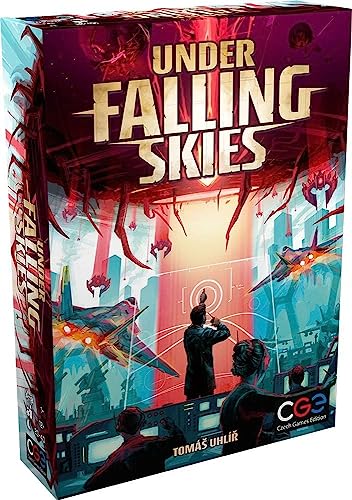
The genius lies in how your dice rolls create restrictions rather than just determining outcomes. Low rolls might be perfect for research but terrible for weapons, forcing you to think several moves ahead. Each campaign game builds on previous sessions, creating a satisfying progression of challenge and mastery.
Perfect for players who enjoy spatial puzzles, resource management, and games that punish poor planning. The difficulty curve is expertly calibrated—you’ll lose plenty of games while learning, but victories feel genuinely earned.
Friday (~$20) Robinson Crusoe meets deck building in this solo-only survival game. You play as Friday, helping Robinson overcome hazards and eventually defeat pirates. The brilliance lies in how the deck building mirrors Robinson’s learning process.
Early hazards are gentle, letting you add useful cards to your deck while removing weak starting cards. Later challenges demand careful deck curation and tactical card play. The aging process adds urgency—Robinson gets weaker over time, creating natural tension as you race against inevitable decline.
Strategy revolves around knowing when to take hits to improve your deck versus when to fight tooth and nail for victory. Advanced players will appreciate the subtle timing decisions and the way seemingly small early choices cascade into major late-game advantages.
Final Girl (~$20) This horror-themed puzzle game puts you in the shoes of the final survivor in a slasher movie scenario. Each session presents a unique survival puzzle where you must eliminate the killer while protecting potential victims.

The core mechanics are elegantly simple—move, search, attack, or hide—but the execution creates genuine tension. The killer moves predictably but relentlessly, forcing you to think ahead while managing limited resources and mounting panic.
Advanced strategy emerges from understanding each killer’s patterns and optimizing your action economy. Expert players learn to manipulate the killer’s behavior, using victims as bait while setting up decisive confrontations. The various scenarios provide distinct tactical challenges.
Deck Building Excellence
Star Realms (~$15) Don’t let the low price fool you—Star Realms delivers surprisingly deep strategic gameplay. The base game includes a solo campaign mode that teaches advanced deck building concepts through escalating challenges.
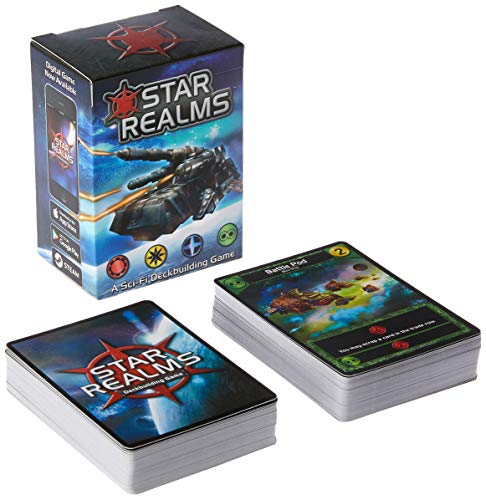
Combat focuses on engine building and opponent disruption. You’re constructing a deck that generates resources efficiently while deploying enough offense to overcome increasingly difficult opponents. The faction synergies reward focused strategies, but adaptability remains crucial as new cards enter the trade row.
Advanced players will appreciate how the game teaches key deck building principles: deck thinning, curve management, and combo recognition. The solo campaign introduces new mechanics gradually, making this an excellent entry point for complex deck builders while still challenging experienced players.
Maquis (~$30) This worker placement game disguised as a deck builder puts you in the role of a French resistance fighter during WWII. Each round represents a dangerous mission where placement order and timing mean the difference between success and capture.
The tension comes from the ever-present threat of exposure. Place workers carelessly and you’ll trigger alarm conditions that make future rounds more dangerous. Advanced strategy revolves around balancing immediate objectives with long-term safety, often requiring you to sacrifice efficiency for survival.
What sets Maquis apart is how thematically integrated the mechanics feel. Every placement represents real danger, every resource gathered could save lives, and every mission completion feels like a small victory against overwhelming odds. The difficulty scales naturally as you attempt more ambitious objectives.
Strategic Puzzles and Brain Burners
Gloomhaven: Buttons & Bugs (~$25) This distilled version of the Gloomhaven experience focuses on tactical combat and character progression. You control a single character navigating scenario-based challenges that demand careful resource management and tactical positioning.

Combat uses a hand management system where every card represents both an action and potential damage absorption. Advanced play requires balancing aggressive tactics with defensive positioning, timing your most powerful abilities for maximum impact while conserving resources for future encounters.
The campaign structure provides meaningful progression. Your character gains experience and new abilities, but scenarios increase in difficulty to match. This creates a satisfying learning curve where mechanical mastery and character power growth reinforce each other.
Spirit Island (~$45) Widely considered one of the most complex and rewarding solo board games available. You play as spirits defending your island home from colonial invaders, using unique powers that grow stronger throughout the game.
Each spirit feels completely different, with asymmetric abilities that demand distinct strategies. Advanced play requires understanding how your powers synergize, how to manipulate invader movement patterns, and when to prioritize fear generation versus direct action.
The learning curve is steep but incredibly rewarding. Early games will challenge you just to prevent the island from being overrun. Expert play involves elegant combinations that clear multiple areas simultaneously while setting up devastating future turns.
Cascadia (~$35) This tile placement game combines habitat building with wildlife management in an elegant puzzle system. Solo play tasks you with optimizing your ecosystem across multiple scoring criteria while adapting to randomly drawn tiles and animals.

Strategic depth emerges from the interaction between habitat shapes and animal placement requirements. Advanced players learn to build flexible habitat foundations that accommodate multiple animal types while maximizing scoring opportunities.
The solo mode includes achievement-style challenges that push you beyond basic competency. These range from scenario-specific constraints to scoring thresholds that demand near-perfect play. Each session feels like a geometric puzzle with ecological constraints.
Tactical Combat and Miniature-Style Games
One Deck Dungeon (~$25) This dice-rolling dungeon crawler condensed an entire adventure into a single deck of cards. Each dungeon level presents tactical challenges that test your resource management and risk assessment skills.

Combat resolution uses a clever dice placement system where you assign dice to overcome various challenge requirements. Advanced play requires understanding probability management—when to push your luck versus when to accept partial success and preserve resources.
The progression system rewards both successful encounters and intelligent failure recovery. Characters gain experience and items that open new tactical options, while the dungeon’s difficulty scales to maintain challenge throughout your adventure.
Warp’s Edge (~$35) This bag-building space combat game puts you in command of a lone starfighter defending against overwhelming odds. Each playthrough represents a desperate battle where tactical decisions and resource management determine survival.
The bag-building mechanic creates natural tension as powerful upgrades compete with basic movement and attack tokens. Advanced strategy involves curating your token mix to maximize effective combinations while maintaining tactical flexibility.
Campaign mode connects individual battles into larger narratives with persistent consequences. Ship damage carries forward, but so do upgrades and pilot experience. This creates meaningful stakes where every engagement matters beyond immediate victory or defeat.
Quick Strategy Sessions
Cartographers (~$25) This roll-and-write game challenges you to map optimal territories while adapting to changing scoring conditions and monster threats. Each season brings new objectives that require completely different mapping strategies.

Advanced play requires understanding how terrain types interact with scoring cards and anticipating future requirements when making current placements. Expert players learn to build flexible foundations that adapt to various scoring combinations.
The ambush cards add tactical consideration to what could otherwise be a pure optimization puzzle. These monster attacks force you to balance efficient mapping with defensive preparation, creating engaging risk-reward decisions.
Railroad Ink (~$20) Route-building meets puzzle-solving in this accessible but strategically deep roll-and-write game. You’re connecting routes across your personal game board while maximizing network efficiency and minimizing dead ends.
The genius lies in how simple rules create complex decisions. Every die placement affects future options, and the special route tokens provide powerful but limited flexibility. Advanced players learn to think several rounds ahead, building networks that adapt to various die combinations.
Multiple challenge modes and expansion dice keep the basic concept fresh. Each variant introduces new strategic considerations while maintaining the core satisfaction of building optimal transportation networks.
Strategic Depth Games
Targi (~$25) This worker placement game for two includes an excellent solo variant that maintains the tactical positioning and resource management of the full game. You’re competing against an automated opponent while building your tribal development.

The cross-shaped board creates unique positioning puzzles where blocking opponent access becomes as important as claiming resources for yourself. Advanced play requires anticipating the automation’s moves while optimizing your own tribal development strategy.
Resource conversion chains reward long-term planning, but flexible adaptation remains crucial as the automation disrupts your preferred strategies. This creates engaging gameplay where efficiency and adaptability must balance.
The White Castle (~$40) This Japanese-themed Euro game offers tight resource management and combo-driven gameplay. The solo mode features an automated opponent that competes for limited action spaces while pursuing its own development strategy.
Strategic depth comes from the interaction between different action types and the timing of powerful combo turns. Advanced players learn to sequence their actions for maximum efficiency while denying critical opportunities to the automation.
The multiple scoring paths and variable setup ensure high replay value. Each game presents different optimization challenges based on available buildings and the automation’s specific behavior patterns.
Unique Mechanics
Boss Monster (~$25) This retro-styled dungeon building game flips traditional adventure gaming on its head. You’re the boss monster building a dungeon to lure and destroy hapless heroes while competing against rival dungeon lords.

Strategic depth emerges from understanding hero movement patterns and timing your dungeon’s development to maximize treasure acquisition while maintaining lethal efficiency. Advanced play requires balancing immediate hero elimination with long-term dungeon optimization.
The solo mode provides escalating challenges that test different aspects of dungeon management. Each scenario introduces new constraints that force you to explore alternative strategies and card combinations.
Quick Comparison Guide
| Game | Complexity | Session Length | Replay Value | Best For |
|---|---|---|---|---|
| Under Falling Skies | Medium-High | 45-60 min | High (Campaign) | Dice puzzle fans |
| Friday | Medium | 30-45 min | High | Deck building newcomers |
| Final Girl | Medium | 45-60 min | High (Multiple scenarios) | Horror theme lovers |
| Star Realms | Medium | 20-30 min | High | Quick deck building |
| Maquis | Medium-High | 60-90 min | Medium-High | Thematic experiences |
| Gloomhaven: B&B | High | 60-90 min | High (Campaign) | Tactical combat |
| Spirit Island | Very High | 90-120 min | Very High | Complex puzzle solving |
| Cascadia | Medium | 30-45 min | High | Spatial puzzlers |
| One Deck Dungeon | Medium | 30-45 min | Medium-High | Quick adventures |
| Warp’s Edge | Medium-High | 45-75 min | High (Campaign) | Space combat |
| Cartographers | Low-Medium | 30-45 min | Medium-High | Map building |
| Railroad Ink | Low-Medium | 20-30 min | Medium | Route optimization |
| Targi | Medium-High | 45-60 min | Medium-High | Worker placement |
| The White Castle | High | 60-90 min | High | Euro game mechanics |
| Boss Monster | Medium | 45-60 min | Medium | Retro gaming themes |
Advanced Strategy Tips for Solo Gaming
Start with difficulty progression. Most of these games offer variable difficulty settings or campaign modes that introduce complexity gradually. Don’t jump to expert level immediately—master the core systems first, then add complexity.
Track your performance. Keep notes about strategies that work and mistakes that cost you games. Advanced solo gaming rewards analytical improvement as much as intuitive play.
Embrace failure as learning. The best solo games will defeat you regularly while you’re developing mastery. Each loss should teach you something about optimal play or reveal strategic options you hadn’t considered.
Focus on process improvement. Rather than just trying to win, analyze your decision-making process. Advanced solo games reward systematic thinking and careful resource management more than lucky draws or intuitive plays.
Building Your Solo Collection
Start with versatility. Games like Cascadia and Railroad Ink offer quick setup and multiple play modes, making them excellent for testing your interest in different mechanical approaches.
Add campaign experiences. Under Falling Skies and Gloomhaven: Buttons & Bugs provide progression systems that reward continued play and skill development.
Include quick options. Star Realms and Friday work perfectly for shorter gaming sessions when you want strategic depth without major time commitment.
Invest in complexity. Spirit Island represents the pinnacle of solo strategic gaming—complex enough to provide months of mastery pursuit while remaining elegantly designed.
Which Game Should You Choose First?
For deck building newcomers: Start with Friday or Star Realms. Both teach essential deck building concepts while providing engaging solo experiences.
For tactical combat fans: Gloomhaven: Buttons & Bugs offers the most satisfying combat system with meaningful character progression.
For puzzle enthusiasts: Under Falling Skies combines dice placement with spatial reasoning in uniquely satisfying ways.
For Euro game lovers: The White Castle or Targi provide familiar worker placement mechanics with solo-optimized gameplay.
For thematic experiences: Maquis or Final Girl deliver narrative-driven gameplay where mechanics serve story rather than abstract optimization.
Advanced solo board gaming offers unique rewards for strategy enthusiasts willing to invest time in mastering complex systems. These 15 games provide hundreds of hours of challenging gameplay while developing skills that transfer to multiplayer gaming and competitive play.
Each title on this list earned its place through excellent solo design, strategic depth, and proven replay value. Whether you’re seeking quick tactical challenges or campaign-length strategic development, you’ll find options that respect your intelligence while providing genuine entertainment value.
The solo gaming community continues growing as more players discover the satisfaction of mastering complex games at their own pace. These budget-friendly options prove that excellent strategic gaming doesn’t require premium pricing or multiplayer coordination.
Which of these solo challenges appeals to you most? Are you drawn to the deck building mastery of Friday, the tactical puzzles of Under Falling Skies, or the complex asymmetric gameplay of Spirit Island? Let us know in the comments below what solo games have captured your attention!
Related Content:
- Best Strategy Board Games for Beginners
- Deck Building Games: Complete Strategy Guide
- Solo Board Gaming: Getting Started Guide
External Sources:
15 pages on the best solo strategy games, setup tips, and how to build a solo shelf worth playing. Free when you join the newsletter.
- ✓ Advanced strategy breakdowns for new releases
- ✓ Monthly buying guides for different budgets
- ✓ First access to in-depth game reviews
- ✓ Exclusive tips from experienced players