
As an Amazon Associate I earn from qualifying purchases and sometimes recommend products from other sellers at no extra cost you. For more details see my disclosure policy and privacy policy.
You’re six turns into Ticket to Ride, watching an opponent claim the critical Seattle-Portland route you needed. Your carefully hoarded train cards suddenly feel worthless. We’ve all been there—that sinking feeling when your perfect strategy crumbles because someone blocked your path or you ran out of time to complete your tickets.
The difference between winning and losing at Ticket to Ride isn’t random luck. It comes down to two interconnected skills that separate casual players from consistent winners: card management and risk assessment. While beginners focus on simply completing routes, advanced players think several turns ahead, balancing the cards they collect against the routes they need to claim before opponents can interfere.
This guide breaks down the strategic framework that top players use to maximize their scores. You’ll learn when to hoard cards and when to claim routes, how to read your opponents’ intentions, and how to calculate risk versus reward in every decision.
Understanding the Card Economy
The core tension in Ticket to Ride revolves around card collection versus route claiming. Every turn you spend collecting cards is a turn you’re not claiming routes—and vice versa. Advanced players master this balance by understanding the mathematical realities of the game.

You need an average of 4-6 cards to claim most valuable routes. Building up a hand of 12-15 cards before claiming any routes gives you flexibility and options, but it also telegraphs your intentions and gives opponents time to block you. The sweet spot for most players is maintaining 8-10 cards in hand while claiming routes opportunistically.
Think of your card hand as currency that’s constantly inflating. The longer you hold cards without claiming routes, the more vulnerable you become to blocking. Cards sitting in your hand aren’t earning points, and every turn brings your opponents closer to the routes you need.
🎯 Card Collection Timeline
Optimal Strategy Phases for Ticket to Ride
- Take 2 cards every turn from face-up display
- Build color diversity for flexibility
- Avoid taking face-up locomotives (signals intentions)
- Target: 12-15 cards before first route claim
- Claim single-route connections first
- Secure gateway city access (Chicago, Denver, NY)
- Alternate between collecting and claiming
- Watch for opponent blocking opportunities
- Triggers when ANY player reaches 15 trains
- Claim any route that completes tickets
- Stop optimizing—start finishing
- Calculate if you can mathematically finish remaining tickets
Early Game Foundation Building
Your first five turns set up everything that follows. This is when you establish which routes you’ll pursue and begin assembling the cards you’ll need. Most importantly, it’s when you’re least likely to face blocking from other players who are still working out their own strategies.
Start by evaluating your initial tickets for overlap. Routes that share track segments are exponentially more valuable than isolated routes. If you have Seattle to Los Angeles and Portland to Phoenix, you can use the Seattle-Portland segment for both tickets. This overlap principle should guide every ticket you keep or discard throughout the game.
Collect cards aggressively in your first 3-4 turns. You want enough flexibility to pivot if an opponent claims a route you were eyeing. Taking colored cards from the face-up display is generally better than blind draws unless you need locomotives or have already committed to a specific route. However, avoid grabbing face-up locomotives early—you’re advertising exactly what you’re planning.
Watch for double routes in high-traffic areas. Cities like Chicago, Denver, and New York typically have two parallel routes between them. If you need one of these connections, claiming it early prevents you from being completely blocked, even if an opponent takes the parallel route later.
Strategic Card Collection Tactics
The cards you take each turn send signals to observant opponents. Smart collection means getting what you need while minimizing what you reveal about your intentions.
When collecting from the face-up display, take your most needed color last if possible. If you need three orange cards and two are showing, take other useful colors first (greens for a different route, locomotives, etc.) before grabbing the orange. This delays revealing your specific route plans.
Locomotives are the most valuable cards in the game because they work as wildcards. However, taking them from the face-up display costs you a full turn for just one card. Only take face-up locomotives when you’re preparing to claim a long route soon (within 1-2 turns) or when you already have a strong hand and can afford the inefficiency.
Mix blind draws strategically. Taking two cards from the deck prevents opponents from reading your intentions, but it’s less efficient than targeted face-up draws. Use blind draws when you have enough of your primary colors and want to build depth in other colors for flexibility.
Consider color scarcity when deciding which routes to pursue. Orange, white, and black cards tend to be more contested because many valuable routes use these colors. Pink, green, and yellow routes often face less competition. If you’re choosing between two equal-value tickets, the one using less common colors may be easier to complete.
Route Claiming Decision Framework
Knowing when to shift from collecting cards to claiming routes is the most consequential decision in Ticket to Ride. Claim too early and you’ll run out of cards for longer routes. Wait too long and opponents will block your critical connections.
Watch your opponents’ train piece counts. When anyone drops below 15 trains, the endgame has begun and you need to accelerate your claims. When the first player hits 10 trains, you typically have only 3-4 turns left. Calculate whether you can complete your remaining tickets in that timeframe.
Claim routes in this priority order: First, secure routes where there’s only one connection available (no parallel routes). Second, claim your longest remaining route to maximize point efficiency. Third, fill in shorter connections that complete tickets. This sequence balances blocking prevention with point optimization.
The value of a route isn’t just its point value—it’s how many tickets it completes. A 6-point route that completes two tickets is worth far more than a 15-point route that doesn’t finish any tickets. Always calculate total value (route points + potential completed ticket points) before deciding which route to claim.
Create “option plays” when possible. If you have two potential routes to complete a ticket (say, a northern path or southern path to connect cities), claim one segment of each path before committing fully to either. This protects you if an opponent blocks one option while you’re collecting cards for it.
Reading Opponents and Blocking Strategically
The routes your opponents take tell a story about their tickets. Learning to read these signals helps you anticipate blocking opportunities and avoid routes that will become contested.
Track which colors each opponent collects. If someone keeps taking red cards, they’re building toward red routes. Check the map for valuable red connections and consider whether blocking them helps your position. Don’t block just to be mean—only block when it actively helps you win.
Major gateway cities reveal ticket destinations. If an opponent claims multiple routes converging on Los Angeles, they almost certainly have a ticket ending there. Blocking the final connection into LA becomes strategically valuable, especially if you’re in a close score race.
Double routes create interesting blocking dynamics. In 2-3 player games, taking one track of a double route doesn’t fully block opponents—it just makes their route slightly more expensive. However, claiming the shorter of two parallel routes can force opponents to spend extra cards on the longer one, which strains their hand.
The most effective blocks target bottleneck routes. Connections like Seattle-Portland, Miami-New Orleans, or Pittsburgh-New York funnel multiple potential tickets through a single track. Claiming these early can devastate opponents’ plans while securing valuable points for yourself.
Risk Management and Mitigation
Every ticket you keep is a gamble. Learning to assess and manage these risks separates good players from great ones.
Evaluate new tickets through this lens: Can I complete this with routes I’m already planning to claim? If yes, it’s low-risk and you should keep it. If it requires entirely new routes, does it overlap with my existing tickets enough to justify the investment? If no to both, discard it.
The 10-point threshold is a useful heuristic. Tickets worth 10+ points are generally worth the risk of keeping, even if they require new routes, because the payoff justifies the investment. Tickets worth 6 or fewer points should only be kept if they heavily overlap with your existing plans.
Failed tickets hurt more than completed tickets help. A completed 20-point ticket nets you 20 points, but a failed 20-point ticket costs you 20 points—a 40-point swing. This asymmetry means you should be conservative about keeping tickets you’re not confident you can complete.
Calculate your “margin for error” throughout the game. If you have 18 trains left and need to claim 22 trains worth of routes to complete your tickets, you’re in trouble. Leave yourself buffer room—aim to have 3-5 more trains than you strictly need for your planned routes to handle being blocked or drawing more tickets.
Advanced Endgame Planning
The game’s final rounds require different thinking than the early and middle game. Points come from completed tickets now, not from efficiently building your hand.
Start your endgame calculation when anyone reaches 15 trains. Count how many trains you need to complete each remaining ticket. If you can’t mathematically finish all of them, decide which to abandon. Focus resources on the highest-value tickets you can still complete.
🚂 Train Count Tracker
Endgame Countdown Guide for Ticket to Ride
📋 Your Actions
- Collect 8-12 cards minimum
- Keep high-value tickets
- Identify overlapping routes
- Scout opponent intentions
⚡ Your Actions
- Claim bottleneck routes NOW
- Secure gateway city access
- Count trains needed to finish
- Block critical opponent routes
🎯 Your Actions
- Claim ANY route completing tickets
- Abandon impossible tickets mentally
- Watch ALL opponent train counts
- Calculate longest route potential
🔥 Your Actions
- Finish best remaining ticket
- Claim longest route if winning
- Hate-draft opponent colors
- Accept incomplete low-value tickets
Quick Calculation: Count the trains needed for your incomplete tickets. If you need 22 trains to finish but only have 18 remaining, you’re in trouble. Always maintain a 3-5 train buffer for flexibility.
The Longest Route bonus (10 points) becomes valuable in close games. If you’re within 10 points of the leader and can claim 6+ consecutive trains in your final turns, go for it. However, don’t sacrifice completing a valuable ticket just to chase the longest route.
Sometimes you need to race rather than optimize. If you’re behind in the final rounds, you can’t afford to spend turns collecting cards for perfectly efficient claims. Take whatever routes you can claim immediately, even if they’re not your preferred color, to complete high-value tickets before the game ends.
Consider hate-drafting in the final turns. If you have the cards to finish your remaining tickets and an opponent is frantically collecting a specific color, taking those cards from the face-up display can prevent them from completing their routes. This is particularly effective in the last 2-3 turns of the game.
Common Pitfalls to Avoid
Even experienced players fall into predictable traps. Recognizing these mistakes helps you avoid them in your own games.
Over-collecting is the most common error. Players who spend 6-7 turns just drawing cards inevitably get blocked from critical routes. Start claiming routes by turn 4-5 at the latest, even if your hand isn’t perfectly optimized. Action beats perfection in Ticket to Ride.
Keeping too many low-value tickets dilutes your strategy. Those 6-point tickets require just as many card draws and train pieces as a single 13-point ticket, but they’re worth half as much. Be ruthless about discarding small tickets that don’t naturally fit your route planning.
Ignoring train count is a fatal mistake. Experienced players track not just their own trains but their opponents’ as well. If someone has 8 trains remaining and you have 20 trains worth of unclaimed routes, you’re not going to finish. Adjust your strategy based on game state, not just your ticket requirements.
Telegraphing your routes too obviously invites blocking. If you claim Seattle-Helena-Duluth in consecutive turns, everyone knows you’re headed to the eastern U.S. Vary your claims to keep opponents guessing. Claim routes in different regions of your network to make your final destination less obvious.
Putting It All Together
Mastering Ticket to Ride requires balancing all these concepts simultaneously. You’re managing card efficiency while assessing route risks, reading opponents while planning your own network, and racing the clock toward game end.
Start each game with a clear ticket completion plan. Know which routes you’ll claim and in what order. This plan should be flexible enough to adapt when opponents block you, but specific enough to guide your card collection.
Track three numbers constantly: Your remaining trains, trains needed for planned routes, and opponents’ remaining trains. When these numbers converge, shift from collection mode to claiming mode regardless of whether your hand is optimal.
Practice calculating risk ratios. For any ticket decision, estimate: “If I keep this, what’s the probability I complete it?” Multiply that probability by the ticket value. If the expected value is higher than the penalty for failure, keep it. This mathematical approach removes emotion from ticket decisions.
If you found these strategies helpful, check out our Ticket to Ride expansion guide to learn how these principles apply to different maps, or explore our comparison of Ticket to Ride alternatives if you’re looking for similar games that test these same strategic skills.
Test Your Skills
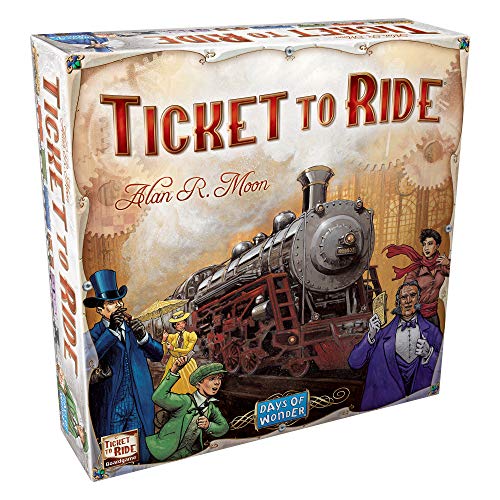
Ready to implement these strategies? Grab a copy of Ticket to Ride and start practicing these advanced techniques. Whether you’re playing the classic USA map or exploring one of the many expansions, these principles will improve your win rate and make every game more engaging.
Which of these strategies will you try first? Do you tend to over-collect cards or claim routes too early? Share your experiences and questions in the comments below!
Updated: October 28, 2025