
As an Amazon Associate I earn from qualifying purchases and sometimes recommend products from other sellers at no extra cost you. For more details see my disclosure policy and privacy policy.
Three years on MTG Arena teaches you a lot. It doesn’t teach you how to trade.
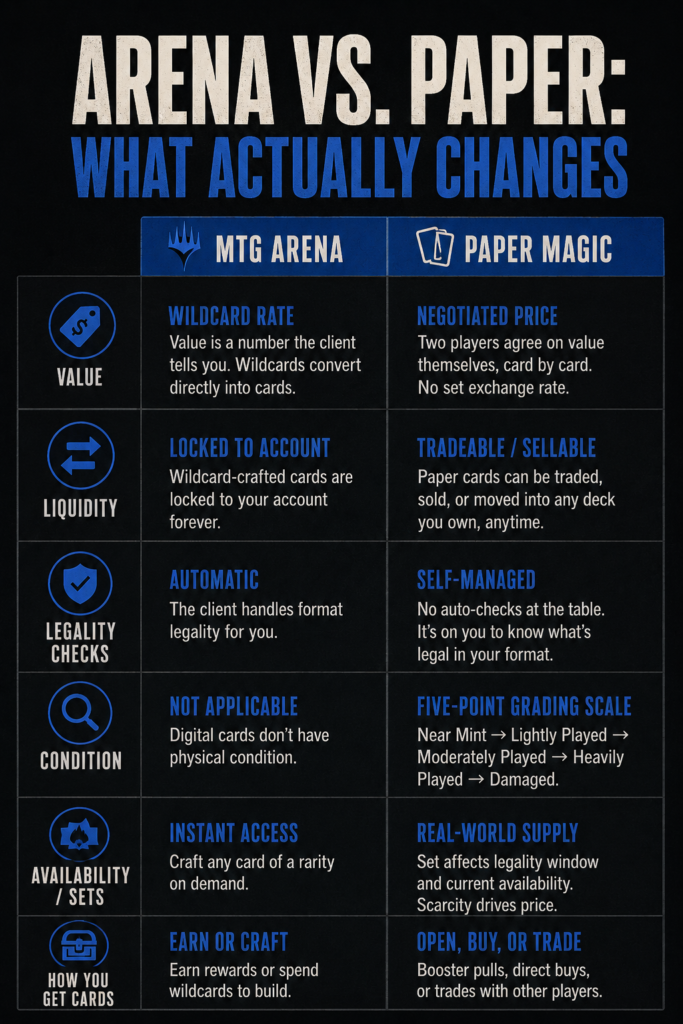
On Arena, value is a number the client tells you. Wildcards convert directly into cards, cards convert into decks, and nobody ever asks whether your rare is “played” or “near mint.” Sit down at a paper trading table for the first time and none of that machinery is there to catch you. You’re reading a person, not a menu.
This guide is for Arena players building their first real paper collection, walking through what actually changes when the algorithm disappears.
🧮 The Wildcard Economy vs. the Real Trading Table
Wildcards let you craft any card of a given rarity, on demand, with no negotiation involved. It’s a closed loop: Wizards sets the exchange rate, and every player pays it the same way. Paper trading has no such rate card. Two players agree on value themselves, card by card, and that agreement is the entire transaction.
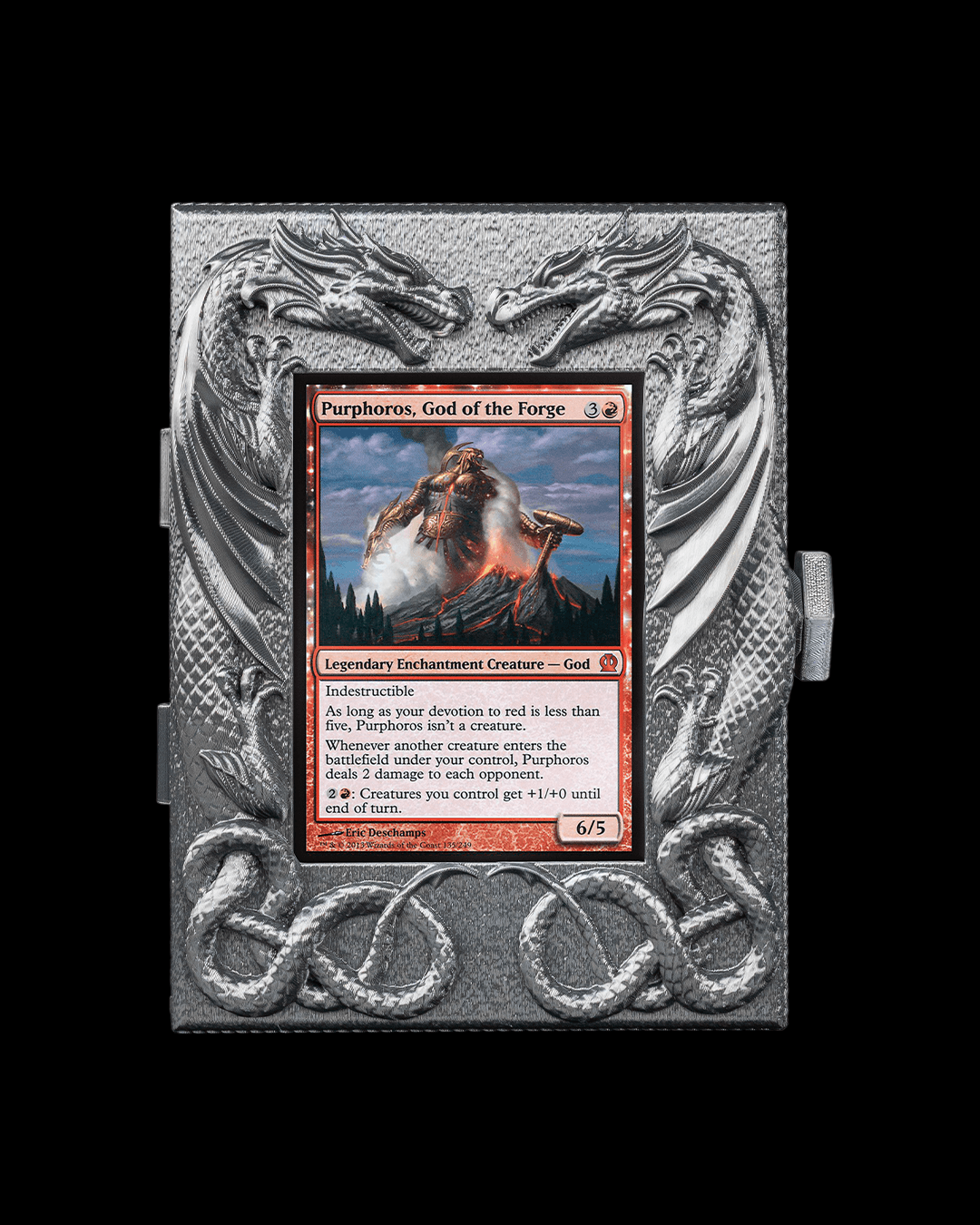
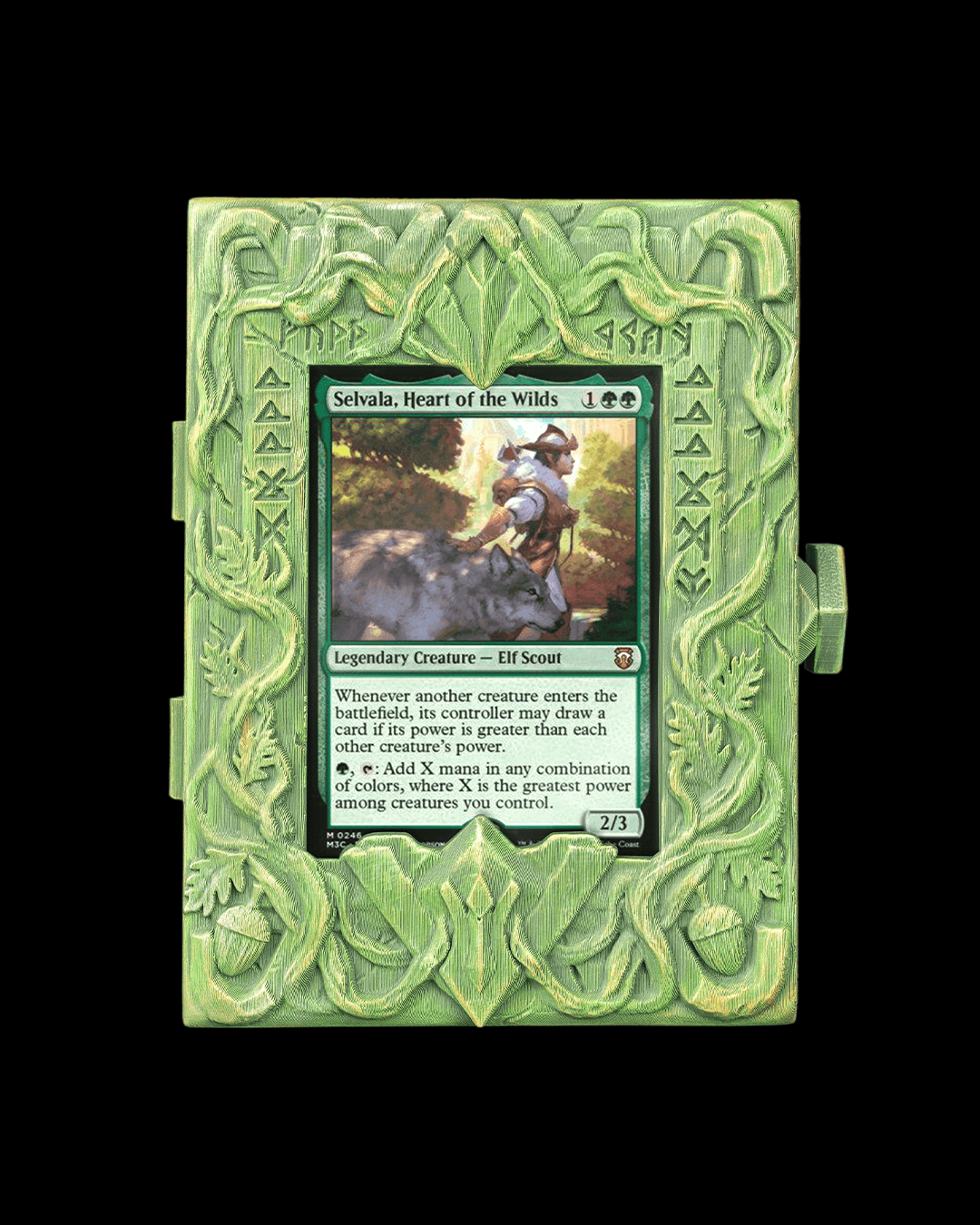
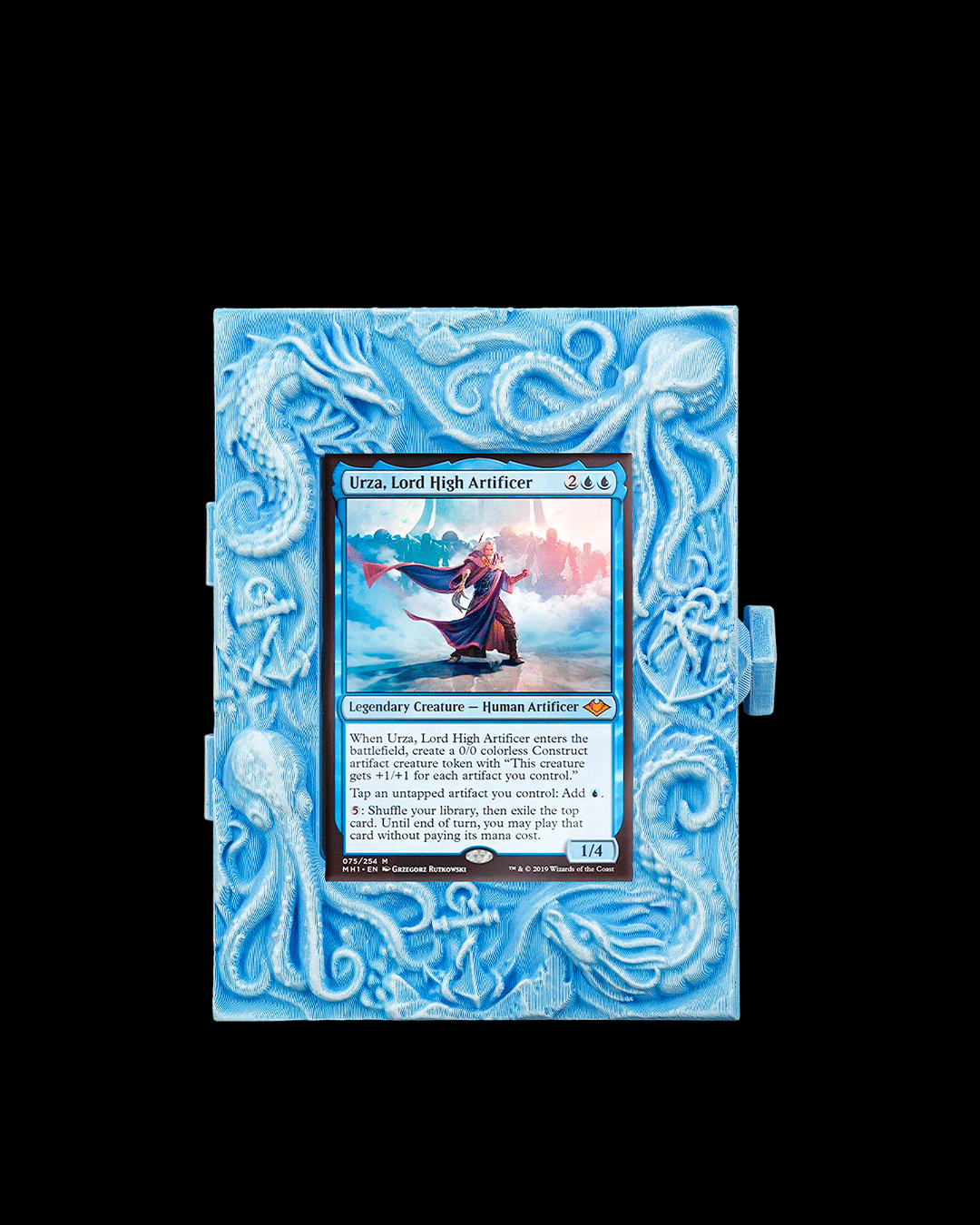
The bigger shift is liquidity. A paper card can be traded, sold, or folded into a completely different deck the moment you’re done with it. A wildcard-crafted card on Arena is locked to your account forever. If you’ve been upgrading an Arena deck without wasting wildcards, you already think carefully about crafting decisions. Paper trading rewards that same instinct, just with a much wider set of options once the card is actually in your hand.
There’s also no auto-legality check at a kitchen table. Nobody’s stopping you from trading for a card that’s rotated out of Standard, so it’s worth knowing which format you’re actually building for before you agree to anything.
🔍 Reading Rarity and Set Symbols on a Physical Card
Arena shows rarity as a coloured gem in the corner of a digital card and nothing else. Paper cards carry the same rarity information in the set symbol, but that symbol also tells you which set the card is from, which matters a lot more once you’re trading.
A card’s set affects two things you’ll care about immediately: how long it stays legal in Standard, and how available it currently is. With The Hobbit having just hit prerelease tables and Marvel Super Heroes still fresh from earlier this year, 2026 has been an unusually dense year for new paper product, and with no Standard rotation scheduled this year, cards from both sets are going to hold their competitive relevance longer than a typical release usually would.
If you’re heading to your first prerelease to pick up singles, what first-timers tend to get wrong at a paper prerelease is worth a read before you go, since a lot of it applies directly to trading too.
💰 Assessing Trade Value Without Overthinking It
This is the part that intimidates most digital-first players, and it’s simpler than it looks once you break it into two questions: what condition is the card in, and what’s it actually worth right now.
Condition runs on an informal scale that every paper player uses, from Near Mint down to Damaged. A quick way to think about it: does the card look like it just came out of a booster pack, or does it have visible wear you’d notice from across the table? Whitening on the edges, scuffing on the back, or a bend anywhere in the card all push it down a grade.
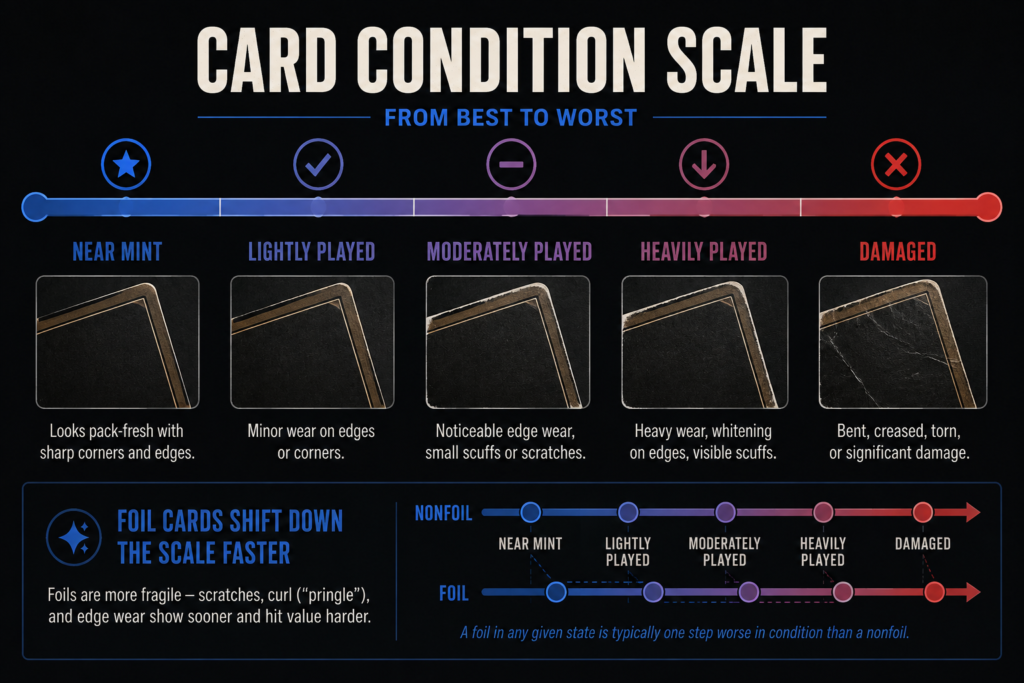
Foils need extra care. They’re more sensitive to damage than nonfoil cards, and they tend to “pringle,” curling slightly like a chip with handling and temperature changes. A little curl is normal. Curl you can see from across the table, or visible scratching on the foil surface, drops the card’s condition noticeably.
Value is where a lot of new traders either freeze up or overpay. TCGplayer’s market price is the closest thing paper Magic has to a default reference point, since it’s built from actual completed sales rather than asking prices. It’s a solid starting number, but treat any single source as a starting point rather than gospel, since prices vary by where you check and how recently the data updated, so cross-referencing a couple of sources before a high-value trade is a habit worth building. There are several price-checking apps built for exactly this, and picking one you’re comfortable pulling up mid-conversation will save you from a lot of hesitation at the table.
For a broader sense of how the current Standard metagame is shaping what’s actually in demand, it’s worth keeping an eye on what’s winning on Arena month to month, since competitively relevant cards hold trade value better than ones that have fallen out of the meta, even within the same rarity.
🤝 Reading the Person Across the Table
Arena never asked you to negotiate with anyone. Paper trading is, at its core, a conversation, and that’s the single biggest adjustment digital players describe when they start.
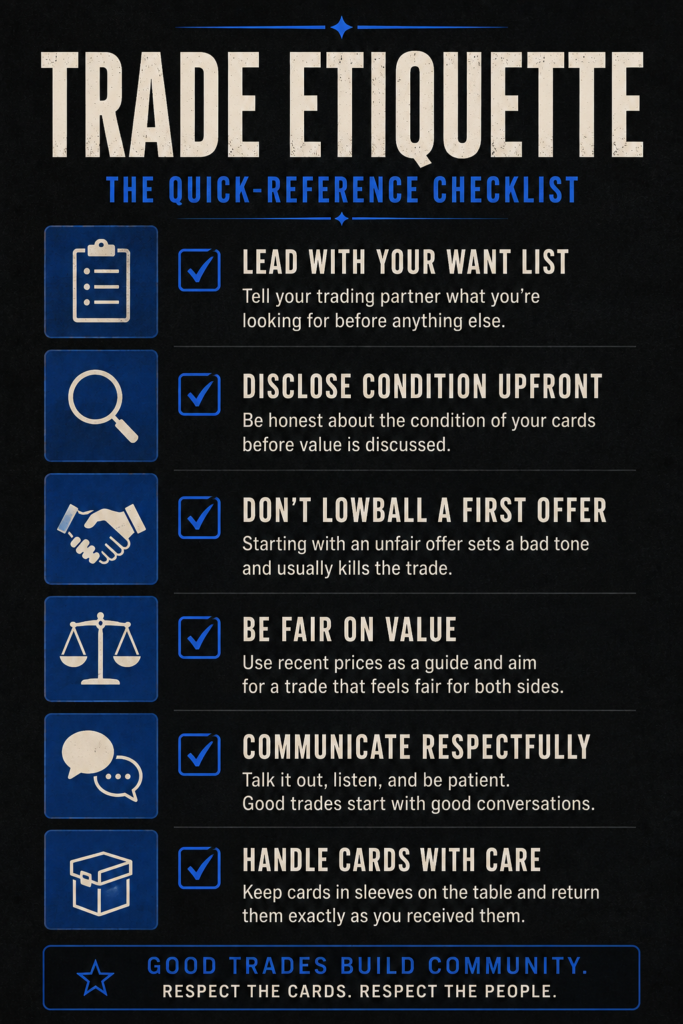
A few things make that conversation go smoothly. Lead with what you’re looking for rather than what you’re offering, so the other person can tell quickly whether they even have a match. Be upfront about a card’s condition instead of letting the other player discover a flaw after the fact. And if a trade feels lopsided in your favour, it’s worth saying so. Reputation travels fast in local playgroups, and a fair-trade reputation is worth more long-term than any single card.
Negotiation itself is a transferable skill, even if the game is different. The same principles that make trading work in Catan (reading what the other person actually values, not just what they say they want) hold up surprisingly well across a Magic trade binder.
⚠️ Common Rookie Mistakes Digital Players Make at Their First Trade
A few patterns show up constantly among players making the Arena-to-paper jump.
- Treating a first offer as final. Paper trades are a starting conversation, not a locked-in exchange rate.
- Ignoring condition until it’s brought up. Check the card yourself before offering it, not after someone else flags a flaw.
- Assuming Arena rarity maps cleanly to paper value. A mythic that’s mediocre in Standard can be worth less than a strong uncommon that sees constant play.
- Not knowing the format they’re collecting for. Trading for a card that’s about to lose Standard relevance is fine for Commander, but it’s a mismatch if you thought you were building competitively.
- Skipping the small talk. The negotiation is the point, not an obstacle in front of the “real” transaction.
🧩 Where Trading Fits Into Building Your First Collection
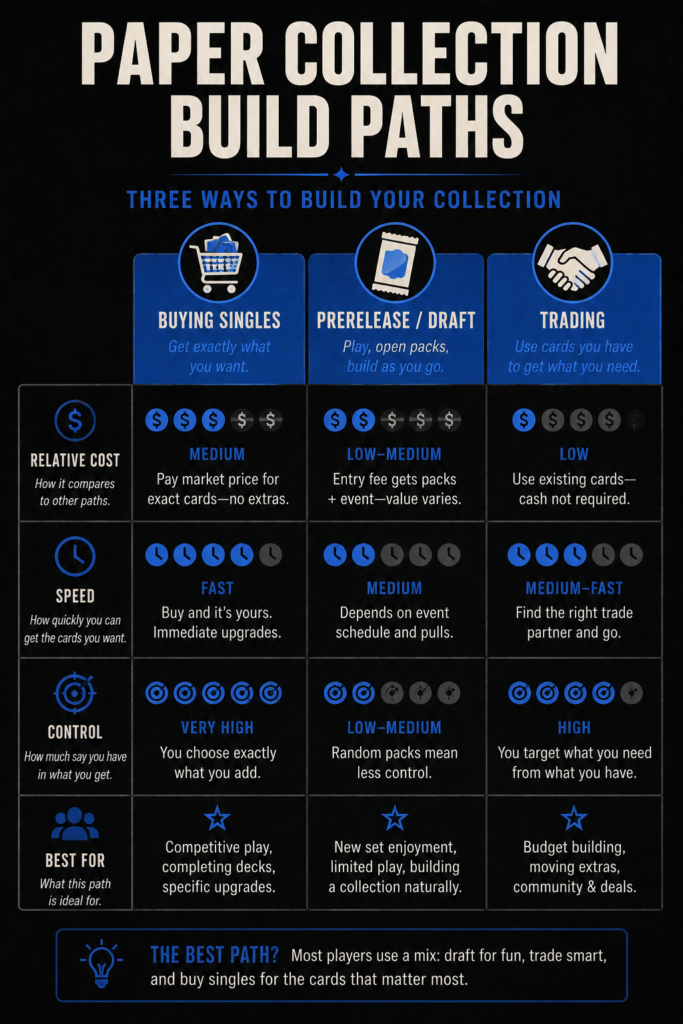
Trading isn’t the only way to build a paper collection, but it’s usually the most efficient one once you have a handful of cards to work with. Buying singles gets you exactly what you want but costs the most. Prerelease and draft product gets you volume and some upside, with more randomness. Trading lets you convert cards you’re not using into cards you are, without spending anything beyond the conversation itself.
However you build it, protecting what you’ve got matters from the very first trade. A cheap sleeve now is a lot less annoying than a devalued card later, and setting up storage that scales with a growing collection is worth doing before your binder gets out of hand rather than after.
A sturdy trading binder with side-loading pages is worth having on hand specifically for this. It keeps cards visible and protected during the actual trade, which matters more than people expect the first time someone hands a card back slightly worse than they received it.
Most players who make this jump end up building a collection that looks nothing like what they’d have crafted with wildcards, and that’s kind of the point. Nobody’s optimising your trades for you. That’s the skill Arena never taught you, and it’s one worth learning properly.