
As an Amazon Associate I earn from qualifying purchases and sometimes recommend products from other sellers at no extra cost you. For more details see my disclosure policy and privacy policy.
Think Azul turned you into a tile-drafting addict? You’re far from alone.
Azul’s beautiful resin tiles and seemingly gentle gameplay mask something darker underneath: knife-sharp decisions wrapped in a relaxing exterior. One wrong tile draft and you’re watching opponents build perfect patterns while your board descends into chaos.
That’s the magic of modern abstract strategy games. They strip away luck, hidden information, and complex themes to focus on pure tactical positioning and long-term planning. If you’ve mastered Azul and want to explore similar games that offer that same satisfying brain burn, you’re in the right place.
What Makes Abstract Strategy Games Special
Abstract strategy games minimize randomness and maximize skill expression. Unlike games with dice rolls or hidden cards, these titles put players on equal footing from the start. Victory comes down to reading the board state, anticipating opponent moves, and executing your plan with precision.
Classic abstracts like Chess, Go, and Checkers established the foundation centuries ago. Modern designs keep that core tactical DNA but add approachable themes and striking production values that make them accessible to players who might find traditional abstracts intimidating.
The best modern abstracts share three key elements: intuitive rules that teach quickly, deep tactical decisions that reward repeated play, and visible board states where both players have complete information. Pattern-building games like Azul excel at this balance.
Why Azul Stands as a Modern Classic
Azul earned its Spiel des Jahres award by doing something remarkable. It takes the fundamental concepts of abstract strategy and wraps them in gorgeous production and an elegant drafting mechanism.
Players draft colorful tiles from factory displays and place them in patterns to score adjacency and set-collection bonuses. The rules teach in five minutes. The strategic depth takes months to master.
The genius lies in the hate-drafting mechanism. You’re not just building your own patterns—you’re actively blocking opponents by taking tiles they need while forcing them to accept tiles that damage their boards. Every decision creates consequences two or three turns down the line.
When choosing tiles, you’re constantly weighing immediate scoring opportunities against long-term pattern completion. Take too many of one color early and you’ll have nothing to score in later rounds. Spread yourself too thin and opponents will lap you on completed rows. Learning when to pivot between different pattern strategies separates beginners from advanced players.
The physical components matter too. Those resin tiles feel substantial in your hands. The satisfying click as you place them on your board provides instant tactile feedback. The visual appeal draws players in; the strategic tension keeps them coming back.
Pattern Builders: Games That Scratch the Azul Itch
Abstract Strategy Games: Quick Comparison
Compare Azul with other modern abstract strategy games to find your next challenge
| Game | Players | Time | Why Include It in “Azul and Beyond” |
|---|---|---|---|
| Azul | 2–4 | 30–45m | Gorgeous tile-drafting with low randomness, high interaction, and award-winning modern classic status. The perfect gateway abstract. |
| Azul: Summer Pavilion | 2–4 | 30–45m | More flexible pattern-building and timing decisions for players who have mastered base Azul and want additional depth. |
| Sagrada | 1–4 | 30–45m | Dice-drafting stained-glass puzzle with tighter constraints and a crunchier feel than Azul. Excellent solo mode included. |
| Hive | 2 | ~20m | Portable, board-less insect tactics with chess-like depth in a short duel. Pure abstract strategy without any luck. |
| Santorini | 2–4 | ~20m | 3D tower race with optional god powers that create asymmetric abilities. Extremely visual and approachable for all ages. |
| Patchwork | 2 | 20–30m | Quick polyomino economy puzzle balancing spatial planning with resource management. Ideal for couples who enjoy Azul. |
| Nova Luna | 1–4 | 30–45m | Tile-drafting with objective-chaining puzzle mechanics. Often compared to Patchwork but with more multi-tasking depth. |
| Calico | 1–4 | 30–45m | Pattern-matching quilt builder where you’re trying to attract cats with specific color and pattern requirements. |
Sagrada
If Azul feels like building mosaics, Sagrada recreates the experience of crafting stained glass windows. Instead of tiles, you’re drafting colored dice and placing them in your window grid according to strict placement rules.
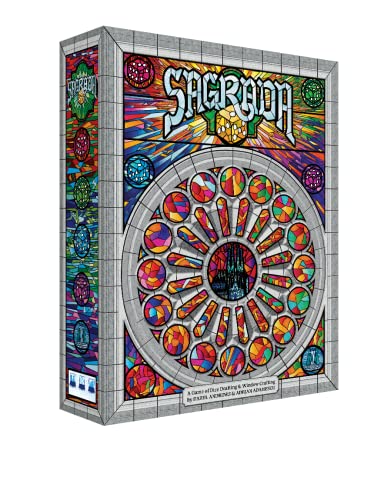
The constraint satisfaction puzzle runs deeper than Azul. Every die you place limits your future options based on color and number restrictions. You’re simultaneously trying to complete public scoring objectives, private patterns only you can see, and tool cards that bend the rules in specific ways.
Sagrada plays in 30-45 minutes with 1-4 players. The solo mode provides excellent practice for understanding pattern optimization without opponent interference. When you want a tighter, more puzzle-focused experience than Azul offers, Sagrada delivers that crunch.
Azul: Summer Pavilion
Not ready to leave Azul behind? Summer Pavilion adds depth to the base game through flexible timing and wild tiles. The core drafting remains familiar, but now you choose when to score completed sets rather than being forced to score every round.

This timing element transforms the decision space. Do you cash in a small set now for guaranteed points, or hold out for a massive combo later while risking getting cut off from the tiles you need? The risk-reward calculation becomes more nuanced than the base game.
Players who’ve “solved” base Azul often appreciate Summer Pavilion’s additional complexity without losing what made the original special. It’s the natural next step for players ready to advance their tile-drafting skills.
Calico and Nova Luna
These newer pattern builders emphasize spatial relationships over drafting tension. Calico tasks you with placing fabric patches to create color patterns and gather cats (who have specific requirements about adjacent colors and patterns).
Nova Luna uses a unique time-track mechanism. Taking more desirable tiles costs more time, pushing you further back on the track. You’re racing to complete tile combinations faster than opponents while managing your position and available actions.
Both games reward careful planning and spatial reasoning. They’re less confrontational than Azul—there’s minimal hate-drafting—but the puzzle satisfaction remains high. If you enjoy Azul’s pattern completion but want less direct interaction, these are excellent choices.
Pure Abstracts: Chess-like Tactical Depth
Hive
Strip away the board entirely and you get Hive. This two-player abstract features hexagonal tiles representing different bugs, each with unique movement patterns. Your goal: surround your opponent’s queen bee while protecting your own.
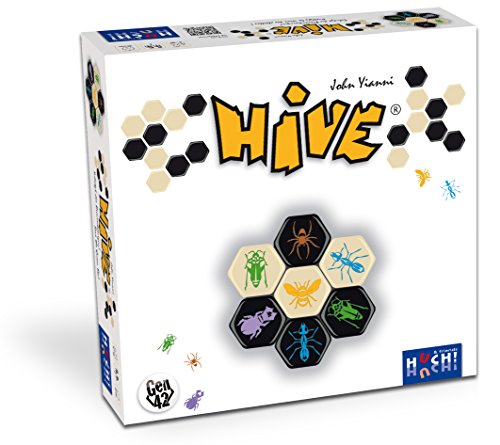
Games play quickly (20 minutes), setup is instant, and the portable nature makes it ideal for travel. The depth emerges from how pieces interact. Grasshoppers jump over lines of tiles, spiders move exactly three spaces, beetles stack on top of other pieces to immobilize them.
Unlike Chess, where the board creates the spatial constraints, Hive builds its battlefield as you play. The ever-shifting geometry creates tactical puzzles that feel fresh every game. For players who enjoy head-to-head tactical battles without luck elements, Hive delivers pure strategic confrontation.
Santorini
Three-dimensional tower building meets Greek mythology in this approachable abstract. Players move their workers around the board and build towers, trying to be the first to stand on a third-level structure.
The base game provides solid tactical gameplay accessible to ages 8+. The real depth comes from god powers—asymmetric abilities that fundamentally change how each player approaches the puzzle. Athena prevents opponents from climbing, Demeter lets you build twice, and dozens more create unique matchups every game.
That combination of accessibility and depth makes Santorini an excellent gateway abstract. The rules teach in two minutes, but the god powers ensure you’ll never solve the game. It’s tactical chess with gorgeous components and enough variety to stay fresh through hundreds of plays.
The GIPF Project
For players ready to fully commit to pure abstract strategy, the GIPF Project represents the magnum opus of modern abstract design. This series of six games (GIPF, TAMSK, ZÈRTZ, DVONN, YINSH, PÜNCT) were designed as an interconnected system with potentials adding complexity.
Each game stands alone as a tight, elegant tactical puzzle. YINSH’s ring movement and marker placement creates cascading combos. ZÈRTZ’s marble capturing on a shrinking board forces aggressive play. DVONN’s stacking mechanism rewards positional control.
These games demand serious mental investment. There’s no luck, no theme to guide intuition, just pure pattern recognition and tactical calculation. They’re not for everyone—but for players who want deep, replayable abstracts without any randomness, the GIPF series delivers exactly that experience.
Gateway Abstracts: Accessible Entry Points
Patchwork
This two-player polyomino puzzle disguises deep economic decisions beneath a quilting theme. You’re competing to build the most valuable quilt while managing button income and time track positioning.
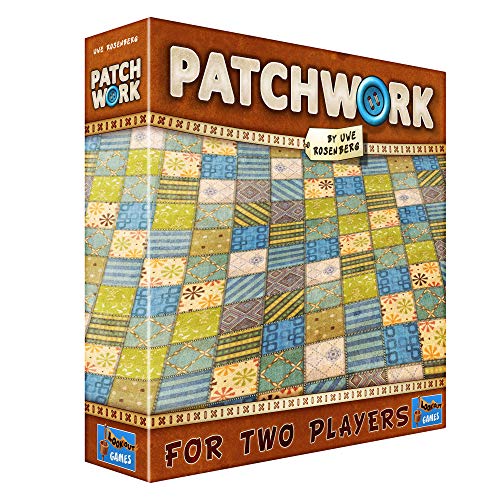
The beauty lies in the simple decision structure: which piece to take from the market? Every choice involves spatial planning (will this fit my remaining space?), economic calculation (can I afford it?), and timing (taking expensive pieces costs more time, giving my opponent more turns).
Games last 15-30 minutes, making Patchwork the perfect couples game or quick tactical battle between experienced players. The spatial satisfaction resembles Azul’s pattern building, while the economic tension creates a different flavor of strategic depth.
Qwirkle and Seikatsu
When you need abstracts that play well at family gatherings, these tile-placement games deliver. Qwirkle uses colored shapes that you play in lines, scoring for matching colors or shapes. The rules explain in 30 seconds.
Seikatsu layers multiple scoring conditions onto a hex grid. You’re creating flower gardens where each flower scores differently from different perspectives. Simple placement rules create surprisingly complex board states where every tile placement affects multiple scoring vectors.
Neither game reaches Azul’s strategic depth, but both provide the satisfaction of completing patterns while remaining accessible to non-gamers. They’re the games you pull out when introducing abstract strategy concepts to new players.
Strategy Principles Across Abstract Games
Success in abstract strategy games requires developing pattern recognition skills that transfer between titles. Start by reading the board state completely before making decisions. What tiles or pieces do opponents need? Which actions set up future combinations?
Think several moves ahead. In Azul, that means counting available tiles of each color and projecting where the round-end penalties will fall. In Hive, it means visualizing how piece movements create queen encirclement opportunities three or four moves later.
The best abstract strategy players balance offense and defense. Yes, you need to build your own position. But ignoring opponent progress leads to getting blindsided by their completed patterns or tactical strikes. Dedicate attention to disrupting opponent plans—that’s where hate-drafting and blocking moves create the most value.
Resource efficiency matters across all abstract games. In tile-drafters, this means avoiding penalty tiles. In positional games, it means not wasting movement on unnecessary actions. Every wasted opportunity is a tempo advantage gifted to opponents.
Choosing Your Next Abstract After Azul
Consider what aspects of Azul appeal most to you. Do you love the tactile components and visual satisfaction? Sagrada and Santorini deliver gorgeous production with strong table presence.
If the strategic hate-drafting drives your enjoyment, look toward more confrontational games. Hive and the GIPF series emphasize direct tactical confrontation where every move creates obstacles for opponents.
Players who enjoy Azul’s approachable rules complexity but want deeper puzzles should explore Calico or Nova Luna. These games maintain accessibility while adding layers of multi-variable optimization.
For couples or two-player households, Patchwork provides the closest experience to Azul’s pattern-building satisfaction in a dedicated two-player package. It’s become a modern classic for good reason—the design does one thing brilliantly well.
Building Your Abstract Collection
Start with what you know works. If Azul proved you enjoy abstract strategy, grab one of its variants (Summer Pavilion or Stained Glass of Sintra) to deepen that specific style of gameplay.
Then branch out to different mechanisms. Add a pure positional abstract like Hive or Santorini to develop tactical awareness. Include a constraint-satisfaction puzzle like Sagrada or Calico to challenge your pattern optimization skills.
Round out your collection with accessible gateway games like Patchwork or Qwirkle. These serve as perfect introductions when teaching new players abstract strategy concepts, while remaining satisfying for experienced gamers in quick-play sessions.
The beauty of abstract strategy games is their infinite replayability. Without luck elements or hidden information, every game comes down to player decisions. That means the games don’t grow stale—you simply develop deeper understanding of the tactical possibilities.
Competitive Abstract Gaming Communities
Most abstract strategy games support competitive communities online and in person. BoardGameArena hosts digital versions of Azul, Hive, and many classic abstracts where you can test strategies against players worldwide.
Local game stores often run abstract game nights focused on tournament play. The deterministic nature of abstracts makes them ideal for competitive formats—there’s no complaining about bad dice rolls or lucky card draws, just pure skill expression.
For players ready to dive deep into single games, most major abstracts have dedicated strategy forums and analysis communities. Chess and Go represent the most developed ecosystems, but modern abstracts like Azul and Hive have active communities sharing opening theory, position evaluation, and tactical patterns.
The Abstract Strategy Mindset
What separates abstract strategy from other board game genres is the emphasis on information mastery and forward planning. Every piece of game state is visible. Success comes from processing that information better than opponents and extrapolating future positions with greater accuracy.
This creates a distinct mental challenge compared to games with randomness or hidden information. You can’t blame luck or bad draws in abstracts. Every mistake is traceable to a decision you made with full information available.
That transparency can be intimidating for some players but deeply satisfying for others. Abstract strategy games reward study and practice in ways that luck-based games simply can’t. When you win, you know it’s because you read the board better and executed your plan more precisely than your opponent.
Your Move
Azul opened the door to modern abstract strategy gaming. Now dozens of designs offer variations on that core appeal: beautiful components, elegant rules, and deep tactical decisions where every choice matters.
Whether you crave pure positional battles like Hive, constraint-satisfaction puzzles like Sagrada, or additional tile-drafting challenges like Summer Pavilion, the modern abstract renaissance provides options for every taste.
The games listed here represent starting points rather than exhaustive coverage. Each title offers hundreds of plays worth of strategic discovery. Pick the one that calls to you, embrace the tactical challenge, and discover why abstract strategy games have captivated players for centuries.
Which of these catches your eye? Are you drawn to pure confrontation, pattern-building puzzles, or accessible gateway abstracts that maintain depth? Let us know in the comments below!
You Might Also Like:
- Best Tile Games for Adult Board Game Fans
- First Complex Board Games to Try
- Best Strategy Games Under $30
- Best 2-Player Strategy Games
Updated: December 30, 2025