
As an Amazon Associate I earn from qualifying purchases and sometimes recommend products from other sellers at no extra cost you. For more details see my disclosure policy and privacy policy.
You sit down at a paper draft table, open your first pack, and pick the most powerful card in it. Four picks later you have taken three colours’ worth of strong cards and no plan. By the end of the night you are sleeving up a deck that has a bit of everything and does very little.
If that sounds familiar, you are in good company. Most people who have drafted a few times know the rules but not the table, and reading the table is the skill that turns a pile of good cards into a deck that works. This guide covers how to read what your neighbours are passing, and why staying flexible for longer than feels natural is the real engine of a good draft.
🎯 What You Are Actually Drafting Toward
A paper draft is not a contest to collect the best cards. It is a contest to build the best 40-card deck from roughly 45 picks, and those two goals pull in different directions more often than you would expect.
In a standard booster draft, each of up to eight players opens a pack, takes one card, and passes the rest along. According to Wizards of the Coast’s booster draft rules, you pass to the left in the first pack, to the right in the second, and to the left again in the third. You finish with about 45 cards and need at least 40 for your deck, including basic lands.
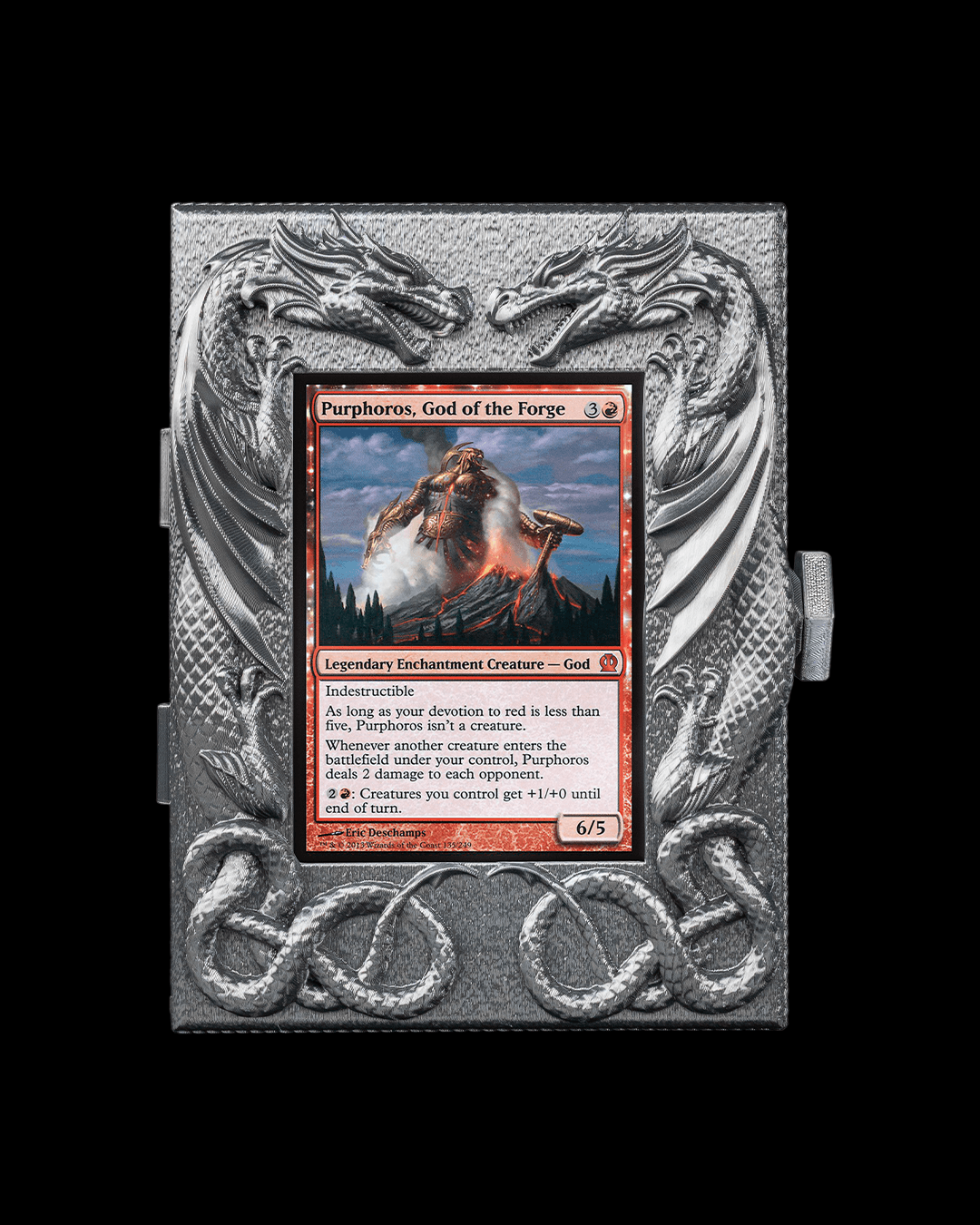
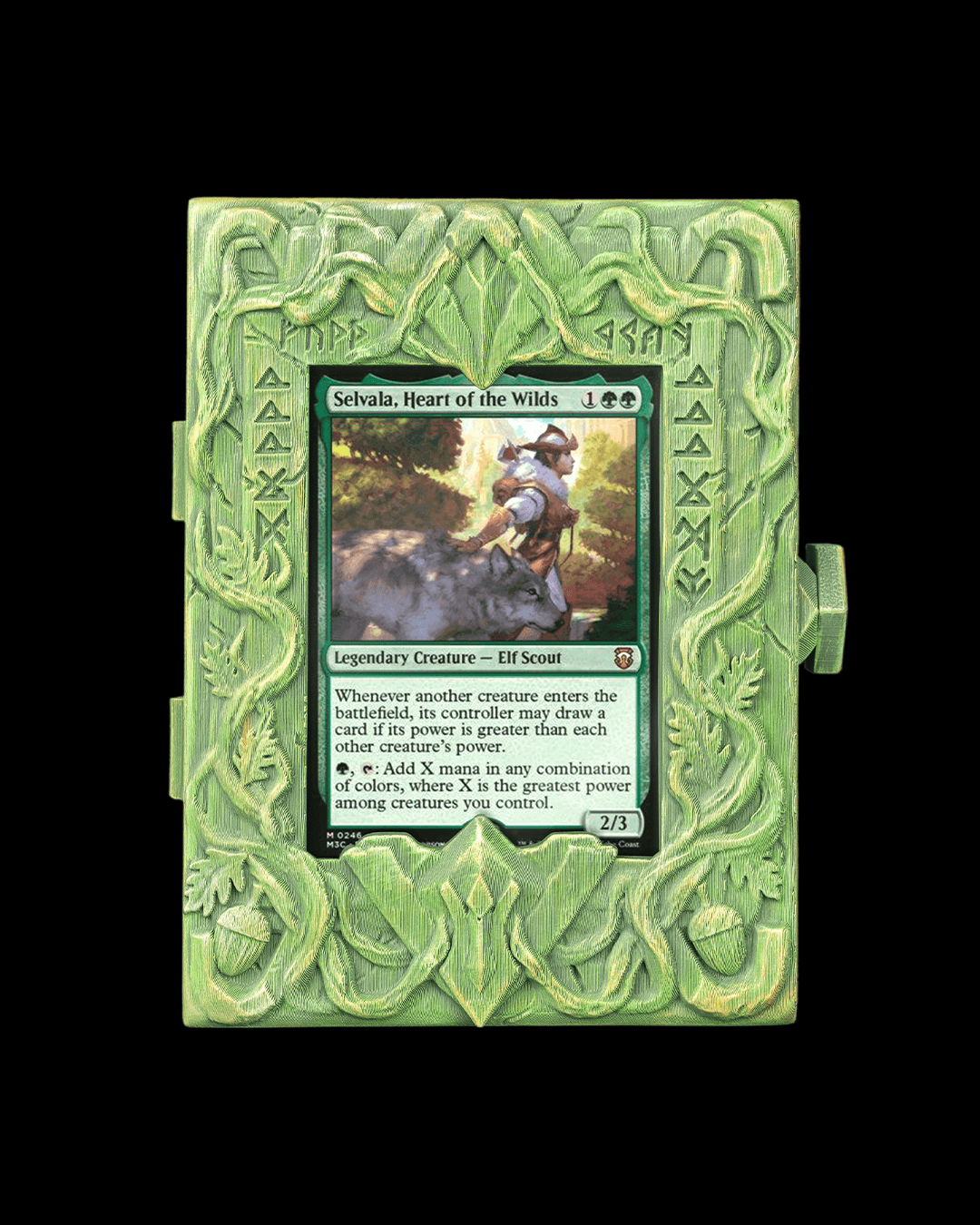
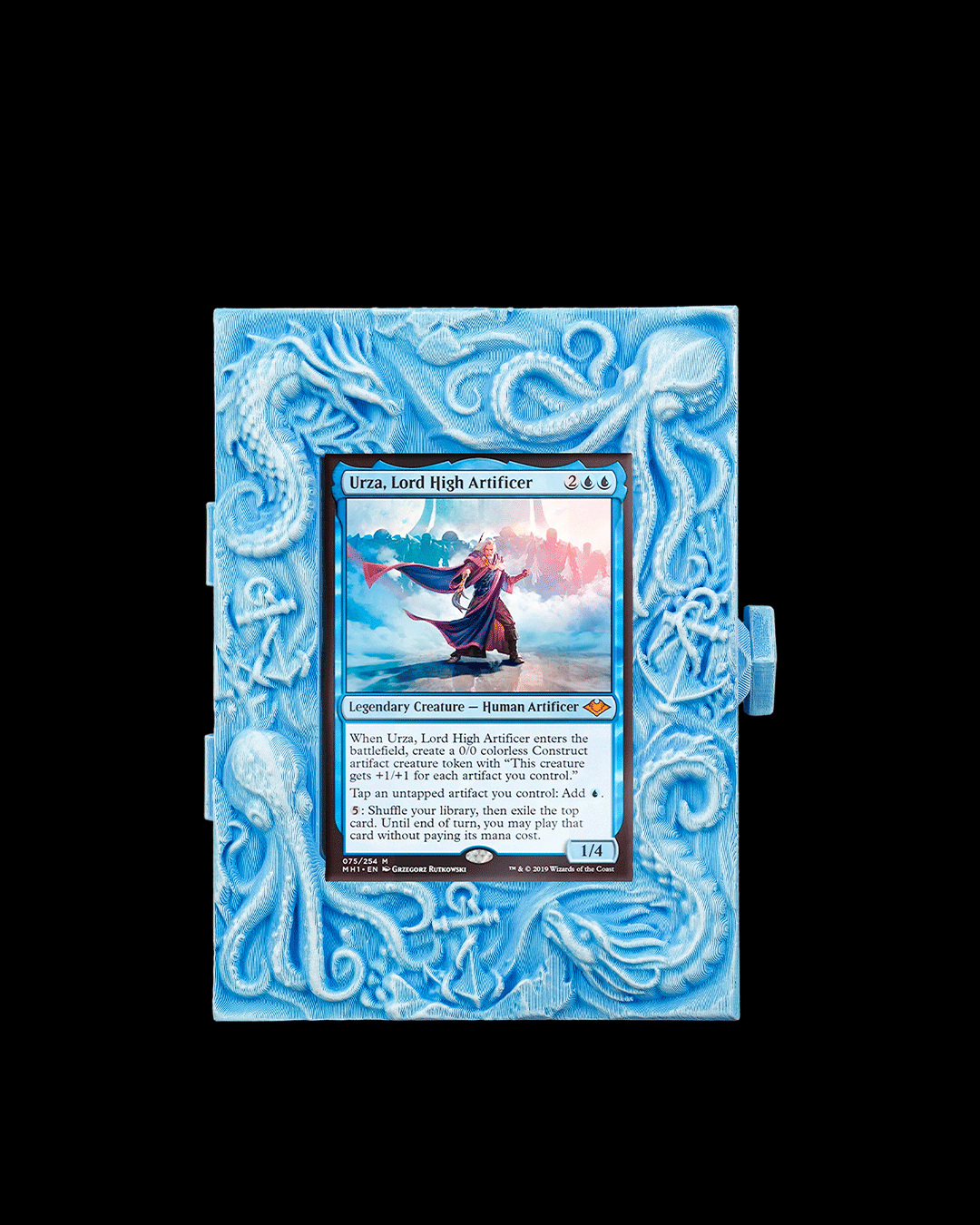
In practice, you will play around 22 to 23 spells and 17 lands, so only about half your picks make the deck. Newer products can use 14-card packs, which trims the total to 42 picks, but the maths of the whole exercise stays the same. You are hunting for around 22 or 23 cards that work together, and everything else is raw material for getting there.
That is why a pile of individually strong cards in four colours loses to a modest two-colour deck with a sensible mana curve. Coherence beats raw power at almost every table. If you want a refresher on arranging those spells once you have them, our guide to curve and tempo covers it.
🧭 Early Picks: Power and Flexibility Over Commitment
For the first few picks of pack one, you do not need a colour pair. You need options. Take the card that is strongest in a vacuum, and when two cards are close, take the one that fits more possible decks.
A bomb is worth taking whenever you see one, because it can win a game by itself. A cheap, efficient removal spell is nearly as good, since removal is playable in almost any deck of its colour. A flashy build-around that only works in one narrow shell is a much weaker early pick, however exciting it looks.
Colourless cards and flexible cards deserve extra credit early. They are guaranteed to make your deck whatever you end up playing, and that is worth a surprising amount.
The first pick of the first pack, often shortened to P1P1, is the least informative pick you will make. You have seen exactly one pack and no one has told you anything yet. Treat it as a pure power decision and move on.
👀 Reading Signals From What Gets Passed
A draft signal is information about what the people upstream of you are taking, which tells you what is likely to keep flowing. In pack one, the player on your right passes to you. In pack two, the direction reverses and the player on your left becomes your source.
The classic signal is simple. If a strong card in a given colour is still in the pack when it reaches you at pick five, six or seven, then several players before you passed it. Either they are not in that colour, or they were taking something even better.
One late good card proves very little. Three or four late good cards in the same colour is a pattern, and patterns are what you act on. The question to ask is not “was this card good?” but “how many good cards of this colour did I see after pick four?”
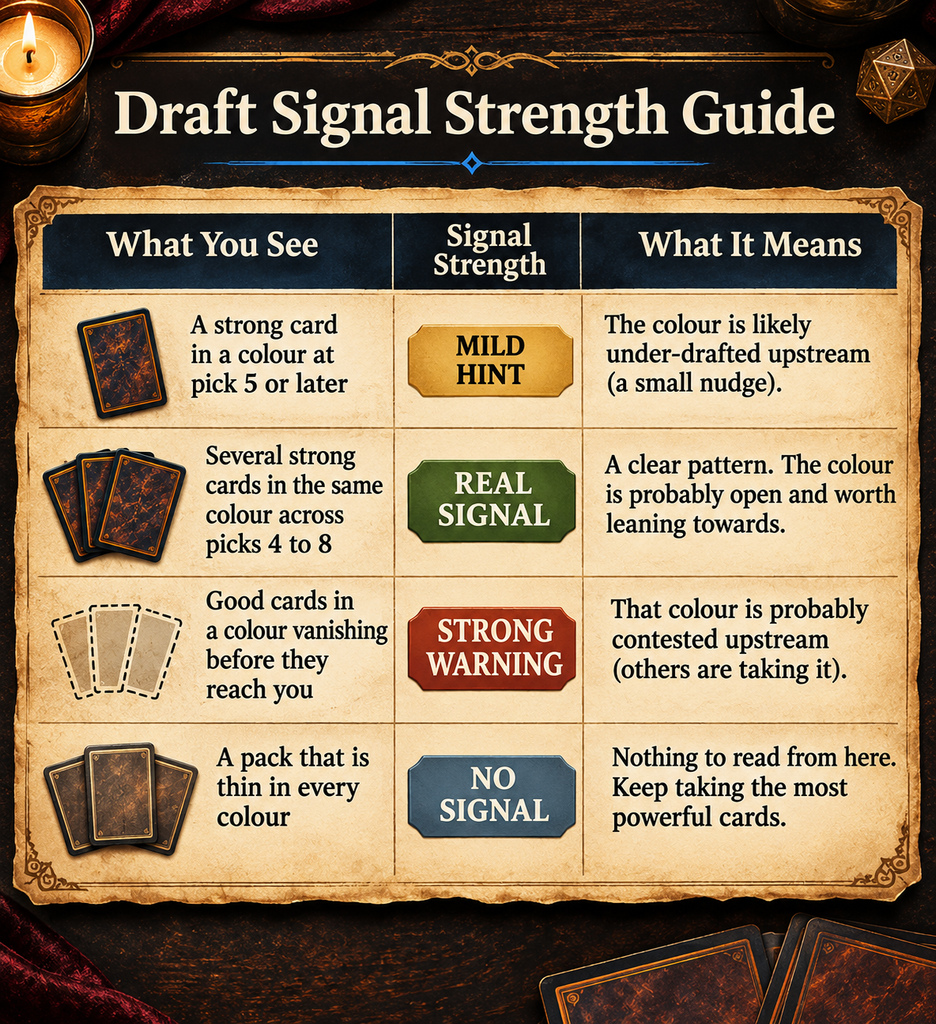
Here is a quick way to think about what you see:
- A strong card in a colour at pick 5 or later: a mild hint that the colour is under-drafted upstream
- Several strong cards in the same colour across picks 4 to 8: a real signal worth leaning towards
- Good cards in a colour vanishing before they reach you: that colour is probably contested upstream
- A pack that is thin in every colour: nothing to read, so keep taking power
🔁 The Wheel: Your Best Evidence
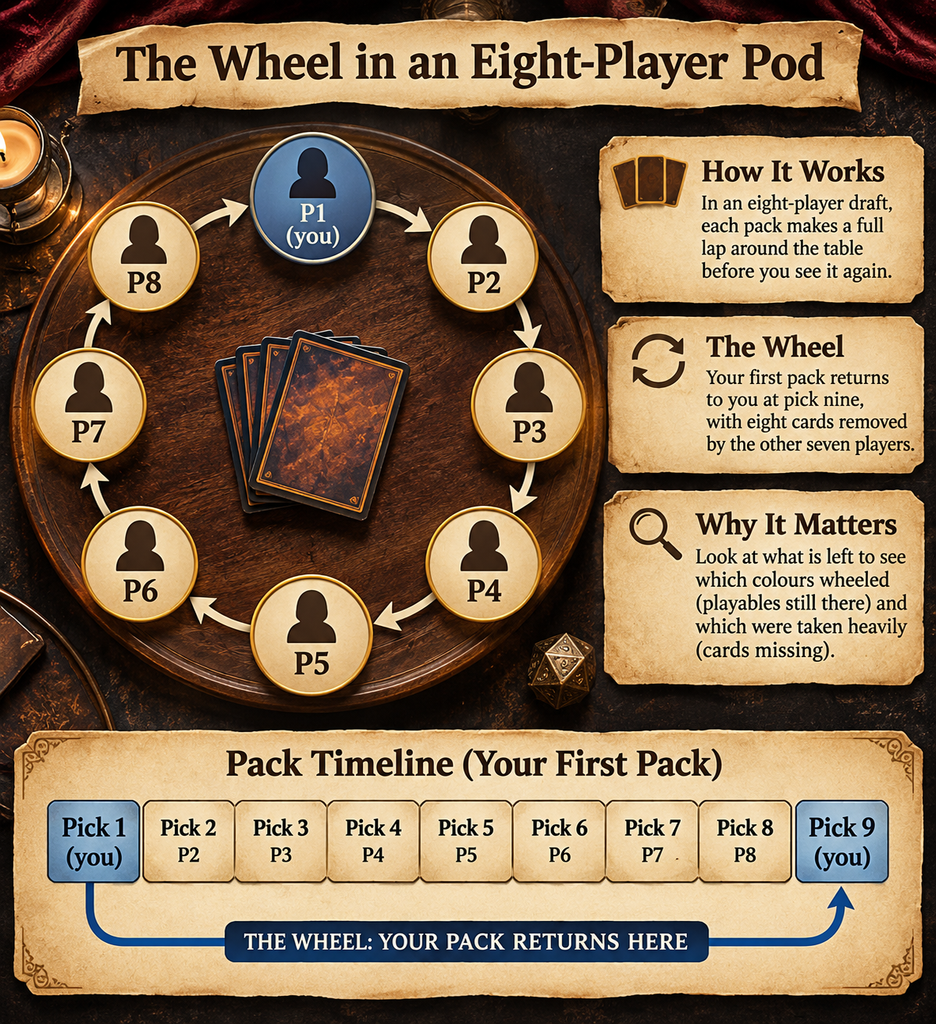
In an eight-player pod, every pack makes a full lap before you see it again. Your first pack returns at pick nine with eight cards removed, so you can see exactly what seven other people chose to take over what you left behind. This is called wheeling, and it is the cleanest signal in the game.
Before you take your pick-nine card, look at what is left. Make a mental note of the colours of the cards that disappeared, which you can work out because you remember what the pack contained when you first saw it. If playables in one colour wheeled and another colour’s cards vanished, you have just read the table with real accuracy.
This works best in a full eight-player pod. With fewer players, packs come back sooner and you see more of them, so each pick teaches you less about the whole table.
⚖️ The Limits of Signal Reading
Signals are hints, not promises, and it pays to be honest about how noisy they are. Players take cards for reasons you cannot see: they may be hedging, they may value a card differently, or they may simply have made a mistake.
Eight players is a small sample too. A single neighbour who happens to be in your favourite colour can look like a table-wide pattern when it is not. You are reading one or two people’s habits, not a market.
There is also the awkward truth that your own picks send signals to the people downstream of you. If you take the same colour three times in a row, the player on your left, who you pass to in pack one, sees that you cut it. You are part of someone else’s information.
This is a reason to hold conclusions loosely. Use signals to nudge your choices between close options, not to throw away a bomb because the colour “looked dry”.
🔀 When to Commit and When to Pivot
Flexibility is not endless. At some point you have to build a deck, and a simple timeline helps you decide when.
- Picks 1 to 5 of pack one: Stay open. Take power and flexibility.
- Picks 6 to 15 of pack one: Start leaning. Favour the colours that are giving you good cards.
- Pack two: Settle on your main colour and a likely partner, remembering that the pack direction has reversed.
- Around the middle of pack two: This is your pivot point. If your deck is clearly shaping up, commit. If it is not, this is the last sensible moment to change.
- Pack three: Fill gaps. You are now picking playables for the deck you have, not exploring.
The reason for the mid-pack-two cut-off is practical. After that you will see too few packs to rebuild a second colour from scratch. A pivot before that point is cheap, because your early picks were flexible. A pivot after it usually leaves you short of playables.
Commit to your main colour first and keep the second open as long as you can. Players tend to lock in a pair too early, when only one colour has actually proven itself.
🛠️ Staying Flexible in Practice
Flexibility is a skill you can practise during the draft, not just a mindset. A few habits do most of the work.
Pick playables, not just power. By mid-pack-two, you want enough solid creatures and removal that your deck has a spine.
Value gold cards carefully. A two-colour card is powerful when you are in both colours and dead when you are not. In the early picks, hold them loosely and treat them as upside if you end up in the right pair.
Count your colour sources and your curve as you go, and keep an eye on mana fixing that lets a deck cover a colour it is not fully in. A light splash for a single strong card can rescue a draft, but it should stay a small addition. Our guide to building a mana base covers the detail.
Finally, go easy on hate-drafting. Taking a card purely to deny a neighbour rarely pays off, unless it is so strong that passing it would likely cost you a game and your alternative is a marginal playable.
📖 A Worked Example: From P1P1 to Deck Registration
Here is a generic journey, with no particular set in mind, to show how the pieces fit.
You open pack one and take the best removal spell, which happens to be red. Your next picks are a strong white creature, a solid black one and a flexible colourless artifact. You are open to everything.
By pick six, you notice that good red cards keep arriving: a decent creature at pick five, a strong burn spell at pick seven. Meanwhile the white cards stop appearing. When the pack wheels at pick nine, a playable red creature is still sitting there. That is the signal, and you lean into red.
In pack two, the pack direction reverses, so your source of cards changes. Red is now flowing from the other side too, which is a good sign, but black is the colour providing the most strong cards. You settle on red as your main colour and keep black as the likely partner.
Around the middle of pack two, a gold red-black card appears at a pick where you expected to see something worse. You take it. Your picks now have a clear shape, so you stop exploring.
Pack three is about filling gaps. You need two-drops, so you take them over a slightly stronger card you cannot fit. At deck registration, you cut the white creature and the artifact, add 17 lands, and sleeve up a clean two-colour deck.
You never pivoted there, but you could have, right up to the middle of pack two, because nothing in your picks had boxed you in.
🏁 After the Draft
Once the deck is built, keep your leftover cards as a sideboard of sensible alternatives where the event allows it. A deck box with a sideboard divider keeps your 40 cards separate from your spares, which is handy if you draft regularly at a local game store. For the picks you did not play but want to hold on to, a zippered trading binder stops them going missing.
If you are drafting at your first event and want to know what to expect, our piece on first-timer prerelease mistakes is worth reading beforehand. It deals with the practical side of paper events, which this guide has deliberately left alone.
🧩 The Short Version
Draft toward a deck, not a pile. Take power and flexibility early, trust patterns over single cards, and use the wheel as your best evidence.
Commit to a main colour first, keep your second open, and stop exploring around the middle of pack two.
Not sure which draft mode suits you when you play online? Our comparison of Traditional, Quick and Premier draft lays out the differences, and it has the rest of the mode detail so this guide does not need to.
🧭 Continue Your Journey
- Traditional Draft vs Quick Draft vs Premier Draft: choosing the right mode before you draft
- Drafting a Paper Prerelease: What First-Timers Get Wrong: the practical side of your first paper event
- Building a Mana Base: Fixing Your Colours in Paper and on Arena: turning your picks into a consistent deck
- MTG Mana Curve and Tempo: sequencing a deck that does something every turn
- MTG Paper vs Arena: Why Your Deck Plays Differently: how the two versions of the game diverge
- Playing Your First FNM: a nervous newcomer’s guide to a local event
- Trading Cards in Paper Magic: looking after the cards you pick up
- Limited (Draft/Sealed) glossary entry: the format in a nutshell