
As an Amazon Associate I earn from qualifying purchases and sometimes recommend products from other sellers at no extra cost you. For more details see my disclosure policy and privacy policy.
You kept a perfectly reasonable seven. Three lands, a couple of cheap plays, a good top end. Then you spent four turns holding a hand full of blue cards while your only Islands sat in the deck behind you.
That is colour screw, and it is the most common way a well-built 60-card deck loses to itself. The frustrating part is that your land count was probably fine. Your mana base was solving the wrong problem.
This guide treats the mana base as a diagnosis and a fix, not a formula. You will count what your deck actually asks of its colours, choose fixing that suits your format, and see why the same 60 cards behave differently in paper and on Arena.
🎯 Why Colour Screw Happens Even With the “Right” Land Count
Land count and colour count are two separate questions. A deck can hold a healthy number of lands and still have too few sources of one colour at the moment you need it.
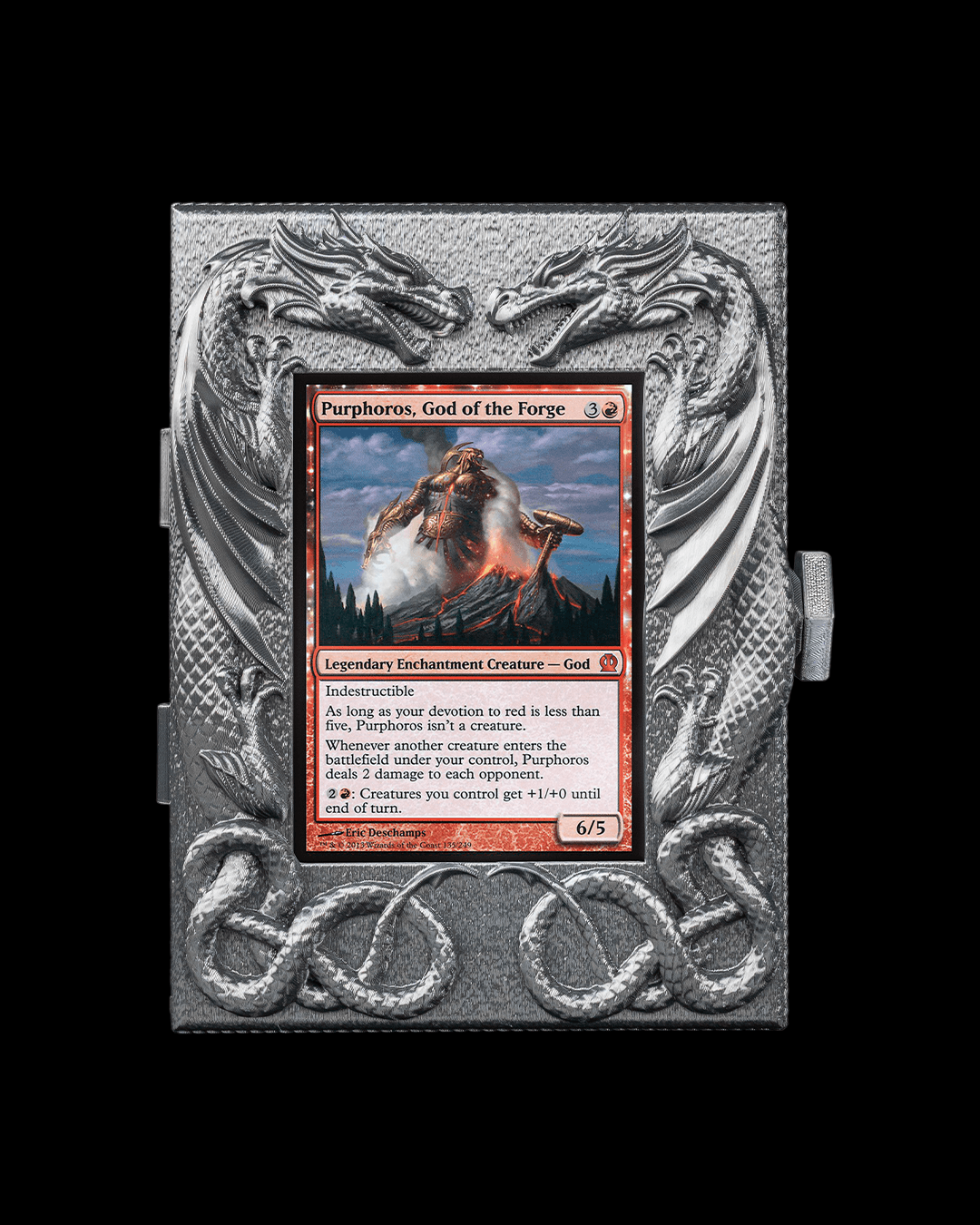
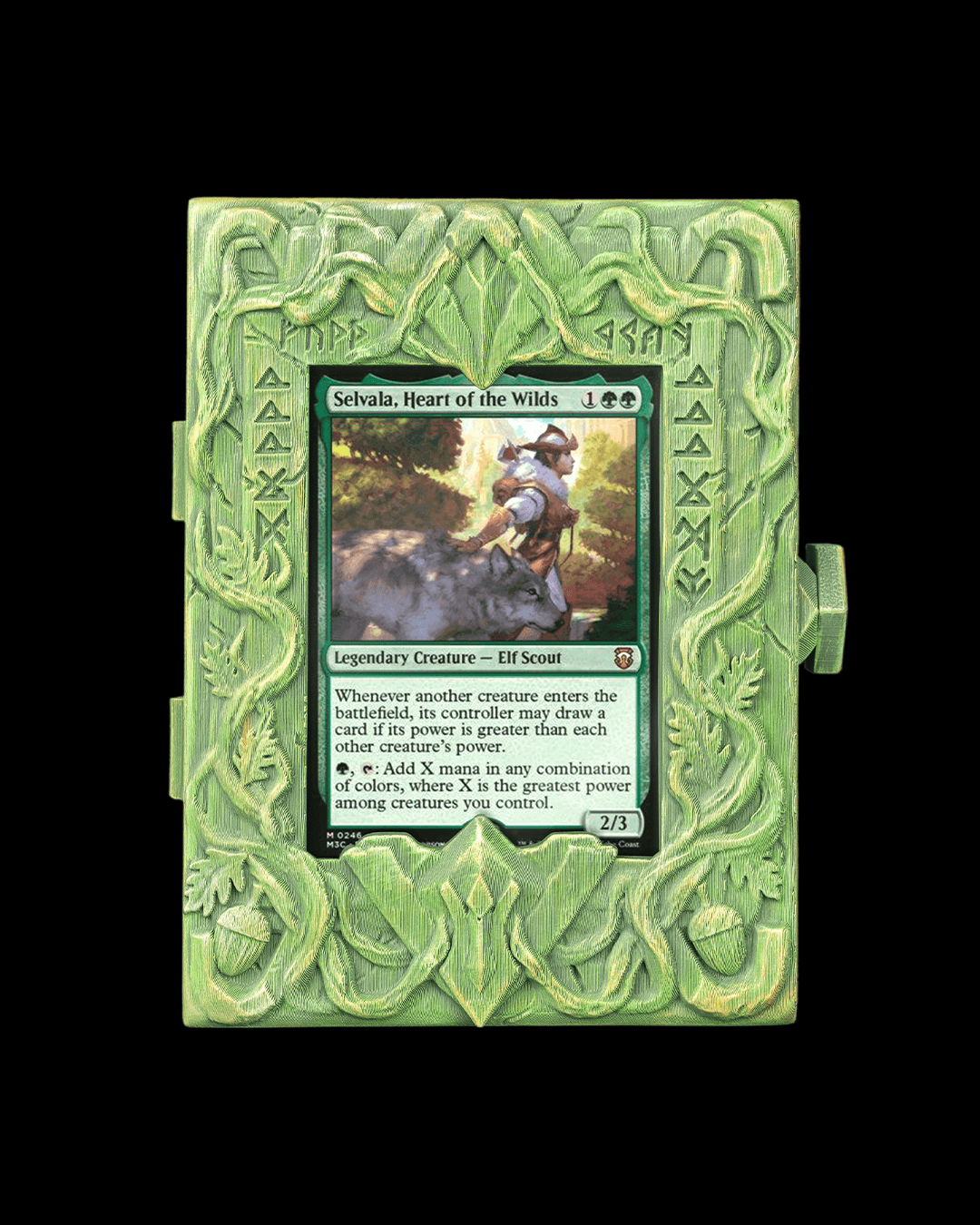
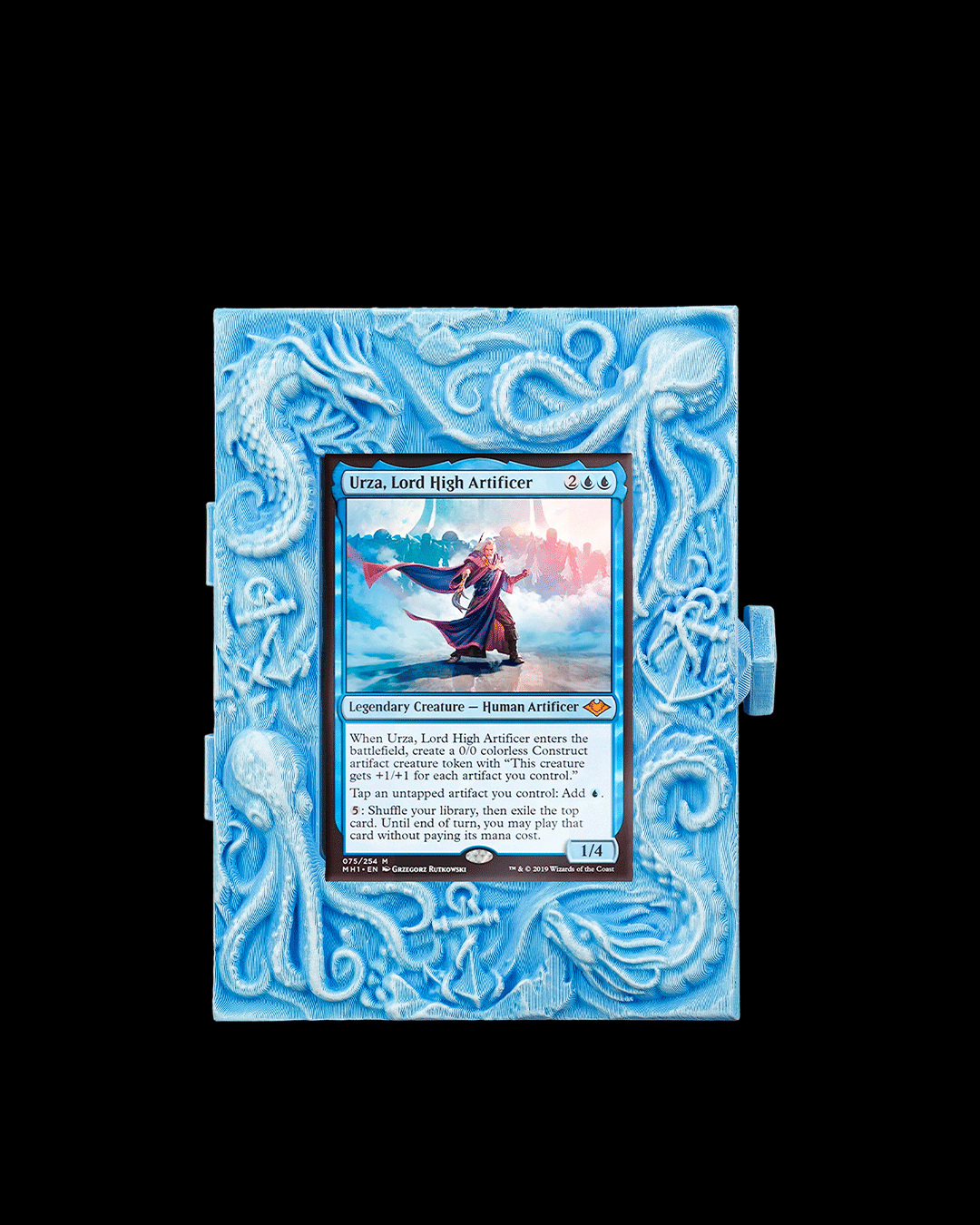
Think of it as two dials. One controls how often you hit land drops. The other controls how often those lands produce the right colours.
Most players only turn the first dial. They check the total, shrug, and add a few more basics of whichever colour feels thinnest. That fixes nothing, because the real shortage is rarely where it feels like it is.
The usual culprits are easy to spot once you look:
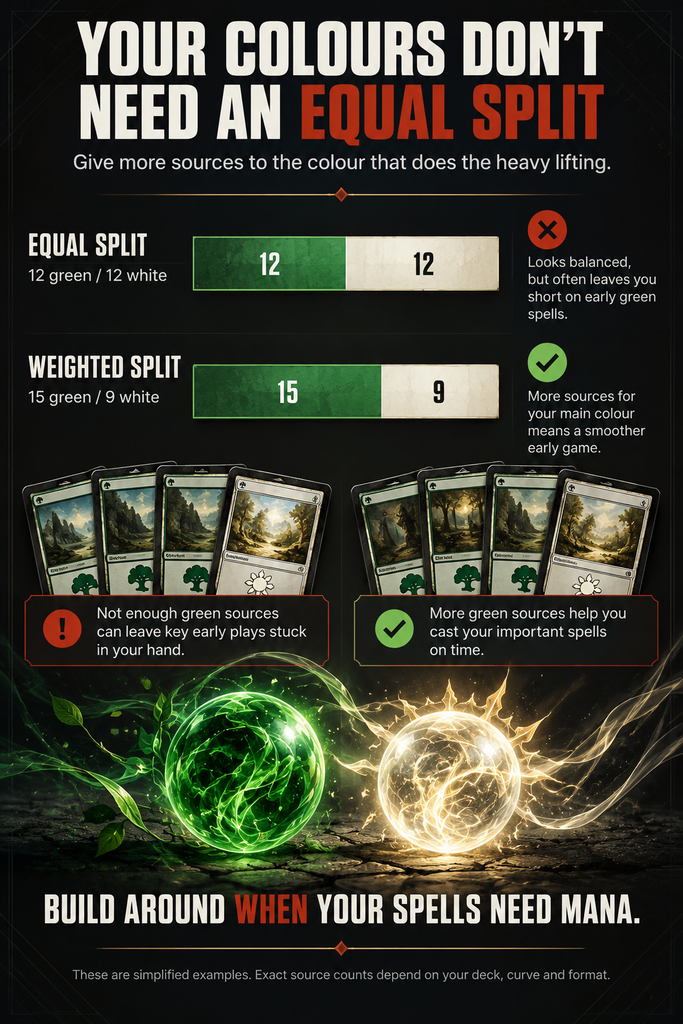
- A two-colour deck split 12/12 when one colour carries all the cheap spells
- Double-pip cards (like a spell costing two blue mana) sitting in the 2-drop slot with only a handful of sources
- A splash colour that gets the same treatment as a main colour
- Tapped lands piled into a deck that wants to curve out
If you have ever wondered why mana screw and mana flood feel worse in some decks than others, this is usually why. The base was built around a number, not around the cards.
🔢 Count Your Colour Requirements First
Before you touch a single land, work out what the deck needs. Go through your spell list and write down, for each colour, two things: how many pips it has, and how early you want to cast it.
A pip is one coloured mana symbol in a cost. A card costing one generic and one blue has a single blue pip. A card costing two blue has a double pip, and that is the number that really strains a mana base.
Then sort your spells into two groups. Early drops are the cards you want on turns one to three. Late drops are the ones you can afford to cast on turn five or beyond.
This is where most mana bases quietly go wrong. Early double-pip cards need far more sources than late single-pip cards, even when both belong to the same colour.
What a source table actually tells you
Frank Karsten’s hypergeometric work is the standard reference here. His article, How Many Sources Do You Need to Consistently Cast Your Spells? A 2022 Update, defines “consistently” as roughly a 90 percent chance of casting a one-mana spell on curve, rising slightly for pricier cards.
The numbers depend on how many lands the deck runs. Using the 25-land column of the table as reproduced on Peasant Magic, a single-pip one-drop wants around 14 sources. A one-mana-plus-single-pip card such as 1C wants 13. A 1CC card wants 18, and a straight CC two-drop wants 21.
The same table in a 20-land build drops those figures to 12, 11, 15 and 18. That gap is the point. A low-curve deck with fewer lands can get away with fewer sources, but only if the curve supports it.
Read the gap between single-pip and double-pip rows and you will see the real lesson. Double pips are expensive. A deck with several early double-pip cards in two colours is asking more of its lands than the total suggests.
Check these figures against Karsten’s original article before you build around them, since the columns shift with land count.
Splitting sources between early and late
Once you know your requirements, split your sources deliberately. The colour with the most early double-pip cards gets the most sources, and that often means an uneven split.
A 15/9 split between a main colour and a support colour can be correct. A 12/12 split is only right when both colours have equally demanding early plays.
If your second colour only shows up from turn four onward, you can run fewer sources for it and accept the occasional stumble. That trade-off is the whole job.
🧮 Land Count: A Baseline, Not a Rule
Land count still matters, it just comes second. Your curve decides the baseline, and three things shift it from there.
Start with the curve. A deck full of one- and two-drops wants fewer lands than a deck whose plan is a five-drop on turn five. Our mana curve glossary entry is a good primer if you want the vocabulary.
Then adjust for what the deck does with its mana:
- Ramp: Mana rocks and mana creatures count as partial lands, so decks built around them can trim a land
- Card draw and filtering: cheap cantrips and looting effects smooth your draws, which supports a slightly lower count
- Mana sinks: if the deck has places to put spare mana, flooding hurts less, so you can afford one more land
Karsten also publishes a separate land-count analysis, How Many Lands Do You Need in Your Deck?, that works through these adjustments with real numbers. Use it for the exact count rather than trusting a round figure from a forum.
Our Aggro and Ramp guides show how differently those archetypes set their land counts.
🛠️ The Fixing Toolkit, by Category
Once your source counts are set, fixing is how you hit them without wrecking the deck. Each category trades something away, so pick based on your format and your curve.
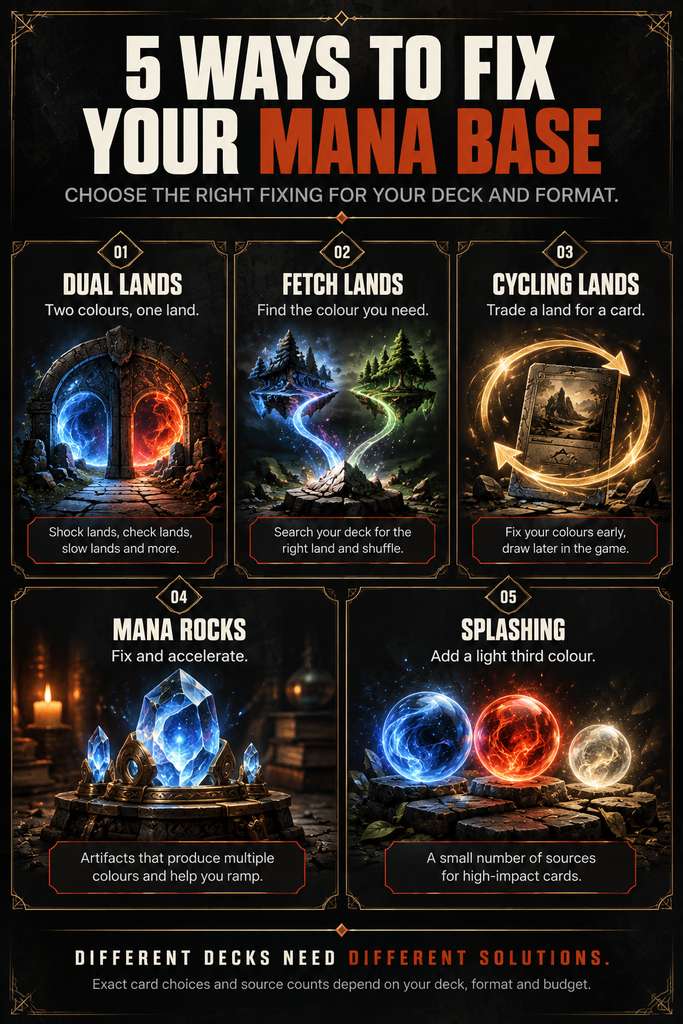
Dual lands and their cousins
Dual lands are the cleanest fix. A land that taps for either of your colours counts as a source for both, which is why they are so effective at solving a lopsided split.
The cost is usually tempo or a drawback. Some enter tapped, some demand the right basic type, and some deal damage. A slower deck can happily run tapped lands, while a deck that wants to curve out should treat each one as a real cost.
Fetch lands
Fetch lands thin your deck and find whichever colour you are missing. In paper, they can also fix for dual lands with basic types.
Their value is highest when your deck has real colour tension and a way to use the thinning. They are weaker in a deck with a simple split, where a basic does the same job for free.
Cycling lands and flexible lands
Cycling lands start life as a land and can be swapped for a fresh card late in the game. That softens the flood problem, which is why they suit decks that would otherwise run one land too few.
The downside is that they usually enter tapped or cost mana to cycle. Count them as partial fixing, not full fixing.
Mana rocks
Mana rocks fix colour and accelerate, but they cost a spell slot and a turn. They shine in slower decks with expensive payoffs and struggle in anything trying to curve out.
Splashing
A splash adds a light third colour for a handful of cards. Treat it as its own project, with its own small source count and strict rules about which cards deserve it.
Splash only cards that are strong whether or not you cast them on time, and avoid anything that needs the splash colour early. A splash that you can only cast late is a splash that works.
Our mana fixing glossary entry covers the terminology if you want a quick reference. The mana base entry is the one to bookmark.
🃏 Paper vs Arena: Same Deck, Different Mana
Here is the part that catches players moving between the two. The same 60-card mana base does not behave the same way in paper and on Arena.
In paper, your shuffle is your shuffle. The opening hand is what you get, and your mana base has to survive the full range of random draws.
On Arena in best-of-one, the picture changes. Community analysis, summarised in Draftsim’s guide to hand smoothing (last updated May 2025), suggests Arena looks at two possible opening hands and keeps the one whose land-to-spell ratio sits closest to the deck’s overall ratio. The same article says this applies to the opening hand only and not to later draws, and that it does not apply in best-of-three.
Wizards has not published the exact algorithm, so treat the detail as community analysis rather than official fact. Check it against the current client before you build a deck around it.
What that means in practice is simple. Bo1 opening hands tend to look more balanced, which can make a greedy mana base feel safer on Arena than it really is. In best-of-three, and in paper, that cushion is gone.
Our Bo1 vs Bo3 guide and MTG Paper vs Arena cover the format differences in full. If a hand looks borderline, our mulligan guide walks through the decision.
The cost of duals on Arena
The other difference is what a good mana base costs you. In paper, a dual land is a purchase. On Arena, it is a wildcard.
That makes fixing a resource decision as well as a deckbuilding one. Our wildcard economy guide covers how those costs work, so we will not repeat it here. The short version is that a budget-friendly base is a legitimate choice, not a failure.
If you are building around a tight collection, 5 Budget Standard Decks for MTG Arena shows how cheaper mana bases get built in practice. From Budget to Meta covers when it is worth spending to upgrade.
Test before you commit
If you play paper and want to check a mana base before spending real money, you can prototype it digitally first. Our guide to testing your paper deck on Arena covers how.
For the paper side, a bulk stack of basic lands is the cheapest way to tune a base on the table. Swap a few in and out over a handful of games and you will learn more than any calculator can tell you.
🔧 Fixing a Stumbling Deck: A Worked Example
Let’s walk through a diagnosis at the archetype level. Imagine a two-colour midrange deck that keeps stumbling, with a green main colour and a white support colour.
The green cards are mostly cheap, with several early double-pip plays. The white cards are a mix, with a couple of strong two-drops and a few late payoffs.
The first pass at the mana base split the lands evenly. The deck stumbled, and the pilot kept adding lands. It kept stumbling.
Here is the diagnosis, step by step:
- Count the pips. Green carries the early double pips. White has only two cards that matter before turn four.
- Rank by urgency. The green two-drops are the cards that must come down on time. White’s late payoffs are not.
- Rebalance sources. Shift lands toward green until its early plays are supported, and let white run on fewer sources.
- Add fixing where it pays. A couple of duals help most with the white two-drops, since that is where the leaner base hurts.
- Test and adjust. Play enough games to see which colour is still lagging, then tweak one land at a time.
The fix is rarely more lands. It is almost always a better split of the ones you already have.
For the archetype itself, our midrange guide explains why these decks lean on consistent mana. If you tune a base for a specific matchup, sideboarding in MTG covers the swaps.
🧭 A Quick Word on Commander
Everything here is built around 60-card decks. A 100-card singleton deck follows different rules, with higher land counts and different fixing options.
If that is what you are building, start with Commander Deckbuilding 101, which covers the mana base for that format.
✅ The Short Version
A mana base is a set of answers to a set of questions. How many early double pips do you have? Which colour needs sources first? What does your format let you pay for fixing?
Work those out and the land count mostly sorts itself. Skip them and no number of extra lands will save you.
Next time a deck stumbles, resist adding a land. Count the pips, rank the urgency, and move the sources to where the cards are.
If you want a format to try this on, MTG Arena in 2026: Which Format Should You Actually Be Playing? is a good place to start.
Continue Your Journey
- MTG Paper vs Arena: Why Your Deck Plays Differently
- Bo1 vs Bo3 on MTG Arena: How the Format You Choose Changes Everything
- Arena Wildcard Economy: Gold, Gems, and Wildcards Explained for New Players
- Testing Your Paper Deck on MTG Arena Before You Buy
- Commander Deckbuilding 101: Your First 100-Card Singleton Deck