
As an Amazon Associate I earn from qualifying purchases and sometimes recommend products from other sellers at no extra cost you. For more details see my disclosure policy and privacy policy.
You have probably heard the name for years. Maybe a friend plays it, maybe you saw a table of people at a game store staring at tiny cards, or maybe you have just noticed that “Magic” keeps turning up in conversations about games. Then you looked it up and found thirty years of cards, a dozen ways to play and a vocabulary that sounds like another language.
That reaction is normal, and it is not a sign the game is too hard for you. Magic: The Gathering is a two-player strategy card game with a short core idea and a very deep set of ways to enjoy it. You can learn the core in an evening.
This guide starts from zero and keeps paper and Arena on equal footing. It explains what the game is, how a turn works and what the five colours are for. Then it hands you on, stage by stage, to every other MTG guide on this site, so you always know where to go next.
🃏 What Magic: The Gathering is
Magic is a game where two players (or more, in some formats) each bring their own deck of cards and try to reduce the other player’s life total to zero. Each player starts with 20 life. Every card in your deck is something you can use during the game: a creature, a spell, or a land that produces the energy to cast everything else.
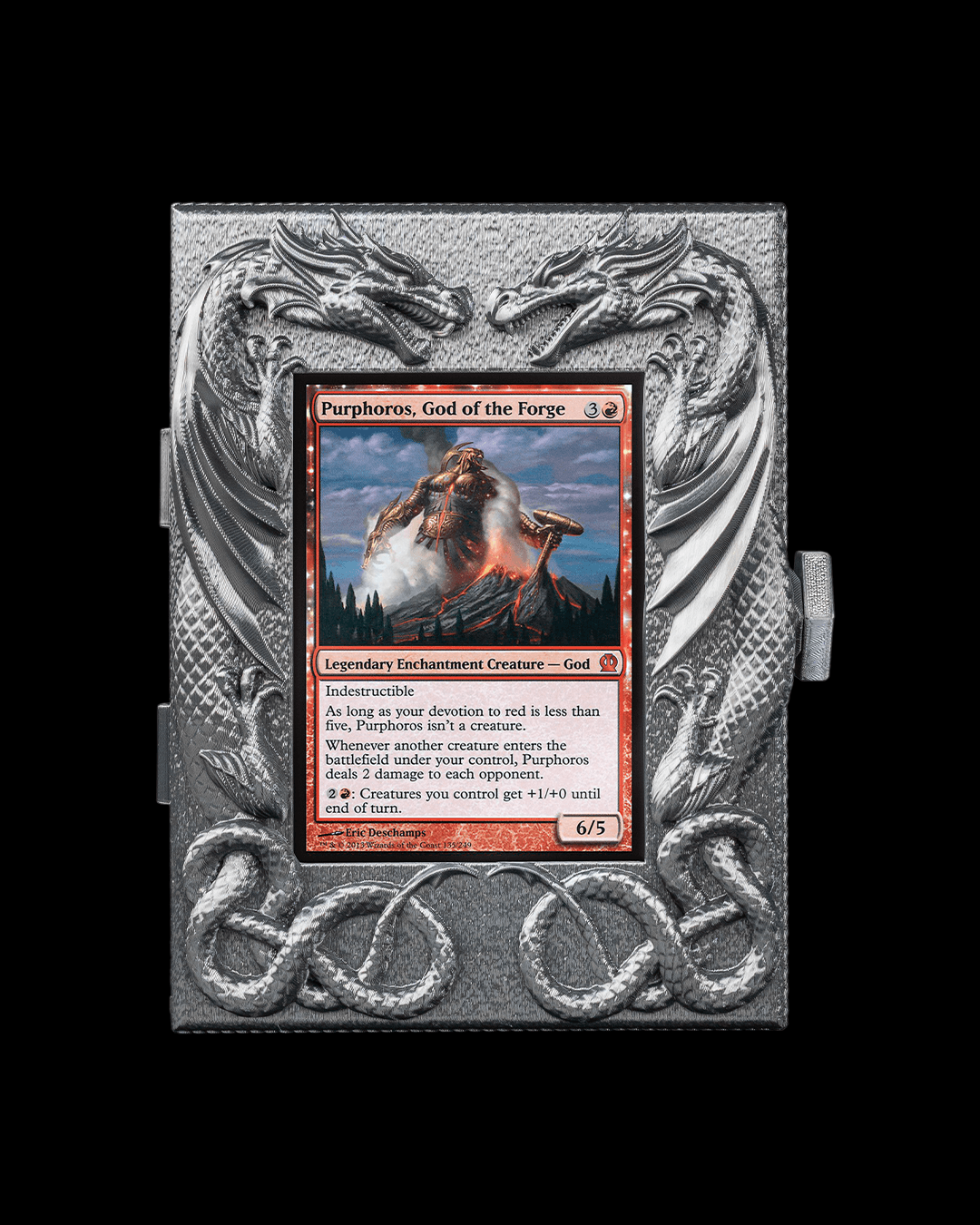
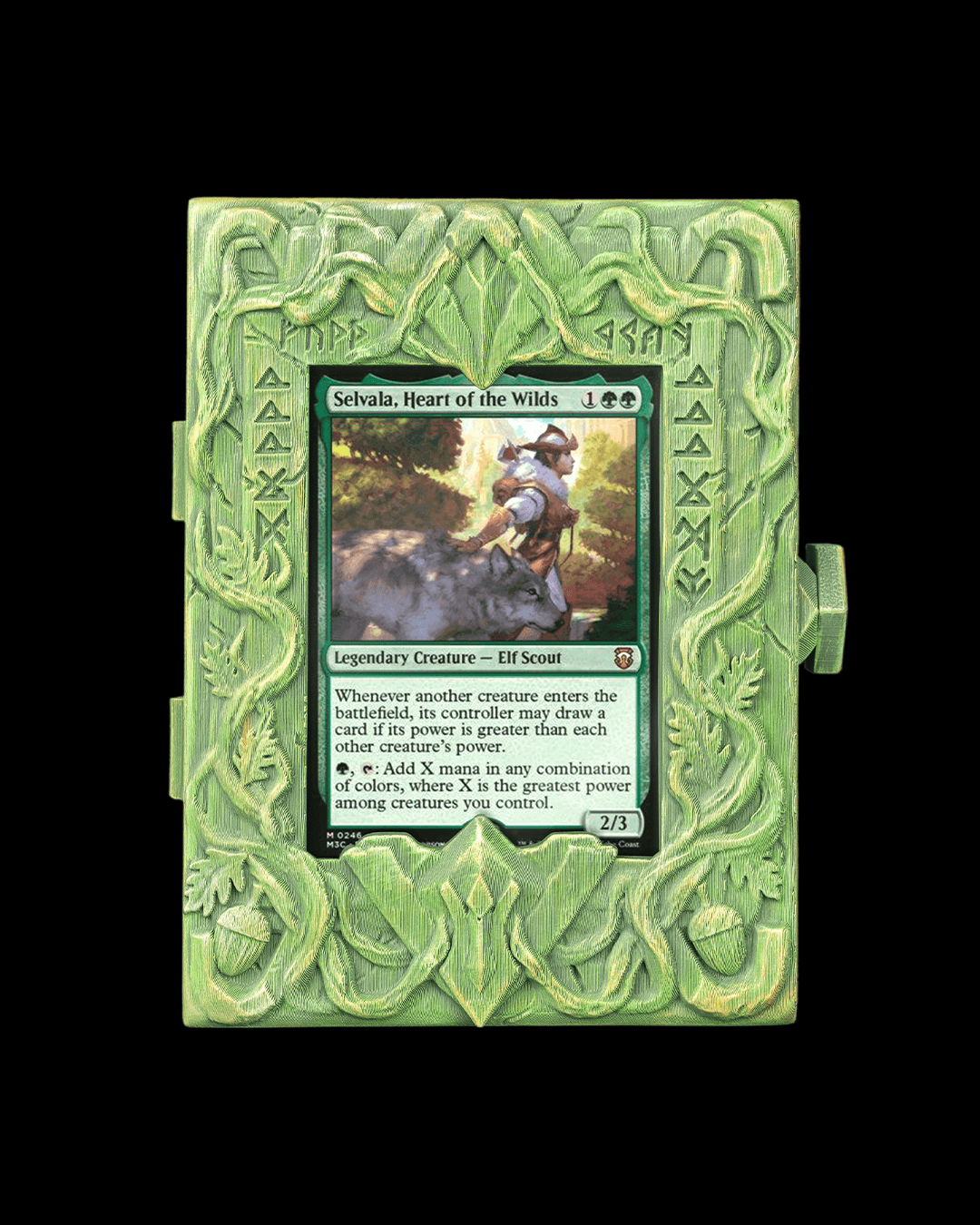
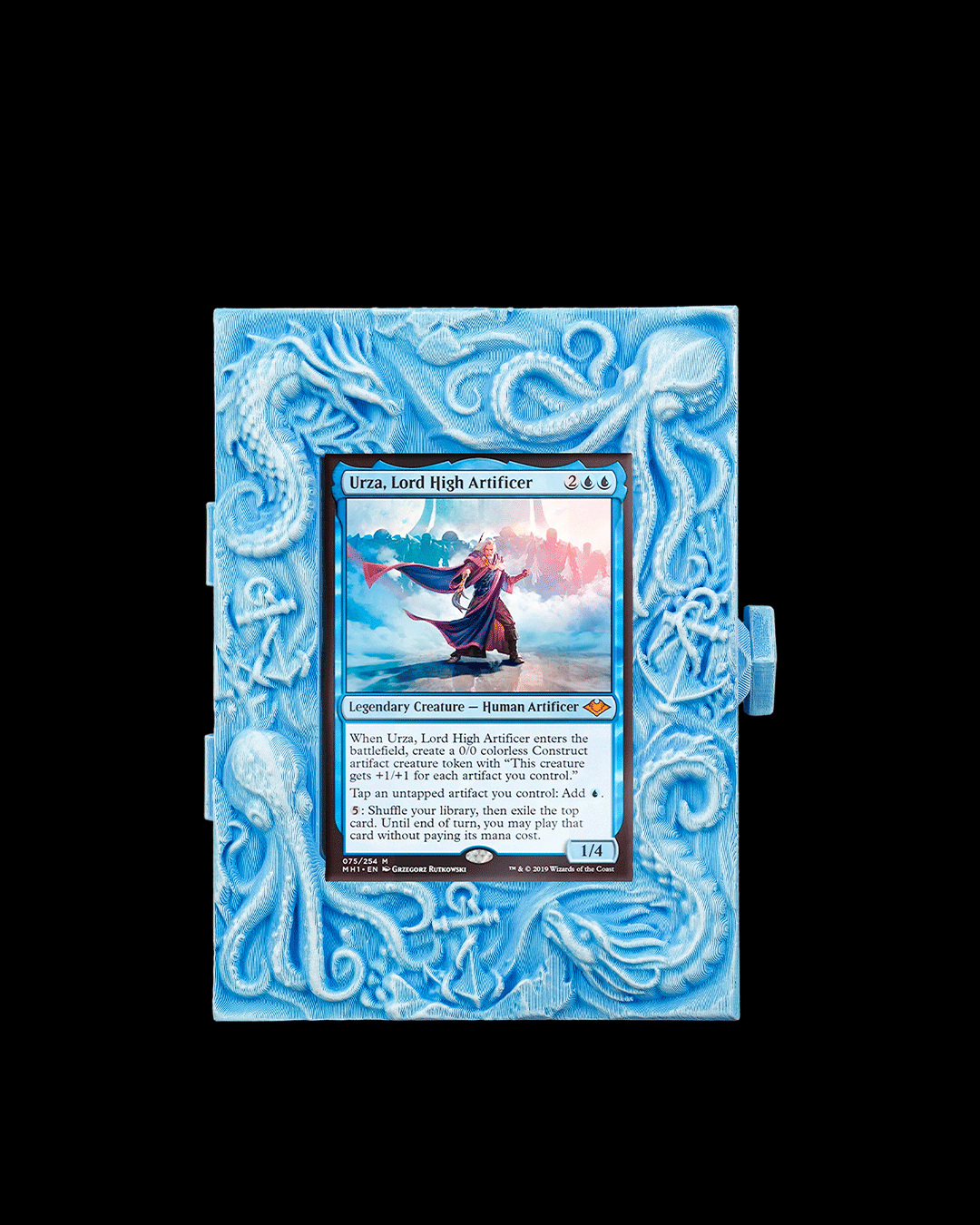
Unlike most board games, you build your own deck before you sit down. A standard constructed deck is a 60-card constructed deck. That means two players with the same rules can bring completely different strategies, and a big part of the fun is choosing and refining yours.
Think of it as a game of two halves. One half happens at the table, where you make decisions turn by turn. The other half happens before the game, when you choose which cards to bring and why.
Magic first came out in 1993 and is still going. New sets arrive several times a year, and the game exists as physical cards and as a digital game called MTG Arena. The rules are the same in both places, which is why this guide treats them as two doors into one game.
🔁 How a turn works and how you win
Each player starts the game by drawing seven cards. You can send a poor hand back for a fresh one through a mulligan, which is a decision worth learning about later. The player who goes first skips their first draw, which is why being on the play or on the draw matters a little.
A turn follows the same order every time. Here is the short version:
- Untap and draw. Your permanents get ready for the turn (tap and untap is how Magic shows a card is “used”), and you draw a card.
- Main phase. You can play one land and cast spells using the energy your lands produce.
- Combat. You choose which creatures attack. Your opponent chooses which of their creatures block.
- Second main phase. You can play anything you held back.
- End of turn. You pass the turn to your opponent.
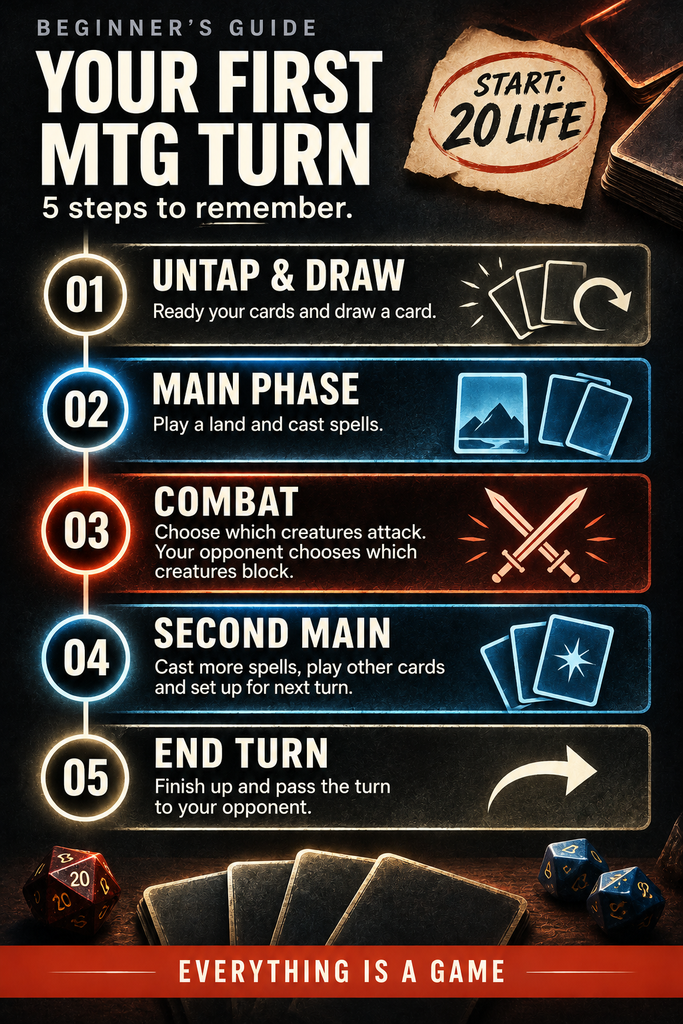
That is the whole shape of the game. Each turn you gain a little more energy, add a little more to the board, and decide whether to attack or hold back. Permanents like creatures and lands stay on the table until something removes them.
You win by reducing your opponent’s life total from 20 to 0. You can also win if they have to draw from an empty deck, and some cards give you other ways to win. Those cards are called a win condition in strategy talk, and you will meet the idea often.
Where the depth comes from
This guide will not teach you every rule, and you do not need to learn them all at once. When both players can respond to each other mid-turn, the game uses a system called the stack. The back and forth about who is allowed to act next is called priority, and fighting over creature sizes is covered in combat math.
If those terms look intimidating, ignore them for now. The built-in tutorials on Arena and the starter products in paper walk you through exactly what you need, one piece at a time. You will pick up the rest by playing, the same way you did with chess or poker.
🎨 The five colours and what each is for
Magic’s cards come in five colours, and each one stands for a style of play. Understanding them is the fastest way to decide what kind of deck you want to build. Here they are, with the idea each colour is built around.
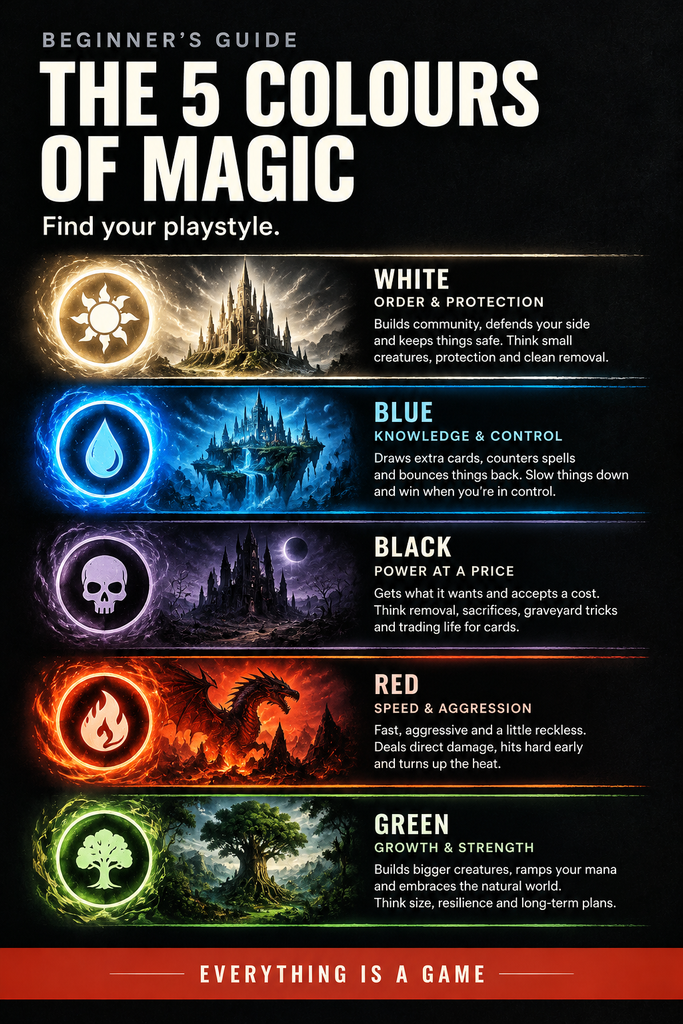
White: order and protection
White is about community, defence and keeping things safe. Its cards tend to be small creatures that work well together, ways to protect your side of the table, and tidy removal that deals with a problem. If you like building a disciplined team, start here.
Blue: knowledge and control
Blue is the thinker’s colour. It draws extra cards, counters your opponent’s spells and bounces things back to hand. Blue decks usually want to slow things down and win once they are in command of the game.
Black: power at a price
Black gets what it wants and accepts a cost. Think removal, sacrifices, bringing creatures back from the graveyard and trading life for cards. Players who like clever, ruthless plans often find themselves here.
Red: speed and emotion
Red is fast, aggressive and a bit reckless. It deals direct damage, hits hard early and rewards you for pushing the pace. If you like winning before your opponent has settled in, red is for you.
Green: growth and size
Green grows. It makes mana for you, produces the biggest creatures in the game and wins by overwhelming the table. If you enjoy a satisfying “number goes up” feeling, green delivers it.
Mixing colours
Most decks use one or two colours, and some use three or more. When you pair colours, you get the strengths of both, along with the challenge of making sure your lands produce the right colours at the right time. The site explains that in detail in Building a Mana Base: Fixing Your Colours in Paper and on Arena.
You can also see the pairings in action through terms like Boros (red-white), Dimir (blue-black) and Gruul (red-green). These are nicknames you will hear everywhere once you start playing.
🧙 The main card types
Every Magic card has a type. You do not need to memorise them all, but the main ones cover almost everything you will see in your first hundred games.
- Land. Lands are your resource. You normally play one per turn, and you tap them to pay for your other cards.
- Creature. Creatures attack, block and do the fighting. They stay on the table until they are removed.
- Instant. An instant is a one-time spell you can cast at almost any moment, including on your opponent’s turn.
- Sorcery. A sorcery is a one-time spell you can only cast during your own main phase.
- Artifact. Artifacts are colourless items such as tools, vehicles and mana sources that stay on the table.
- Enchantment. Enchantments create lasting effects, from small bonuses to rules changes.
- Planeswalker. A planeswalker is a powerful ally that you protect while it generates value each turn.
A few cards are tied to a special rule. A legendary creature, for example, is a named character you can only have one copy of at a time. Other cards create tokens, which are creatures or objects that appear on the table without a card to match.
Reading a card is easier than it looks. The top of a card shows its name and cost, the middle shows its type, and the bottom holds the rules text and, for creatures, the power and toughness. Take your time with the first few cards, and the pattern becomes automatic.
🧭 Pick your path: paper or Arena
Magic exists in two main forms, and neither one is the “real” version. Paper is the original: physical cards, a table, other people and usually a local game store. Arena is the digital version, where the game runs on your computer or device and does the rules for you.
Paper is social and tactile. You trade cards, talk across the table and can play with friends in your living room. Arena is fast and convenient, with automatic rules, an easy way to find a match at any hour and a built-in route into the game.
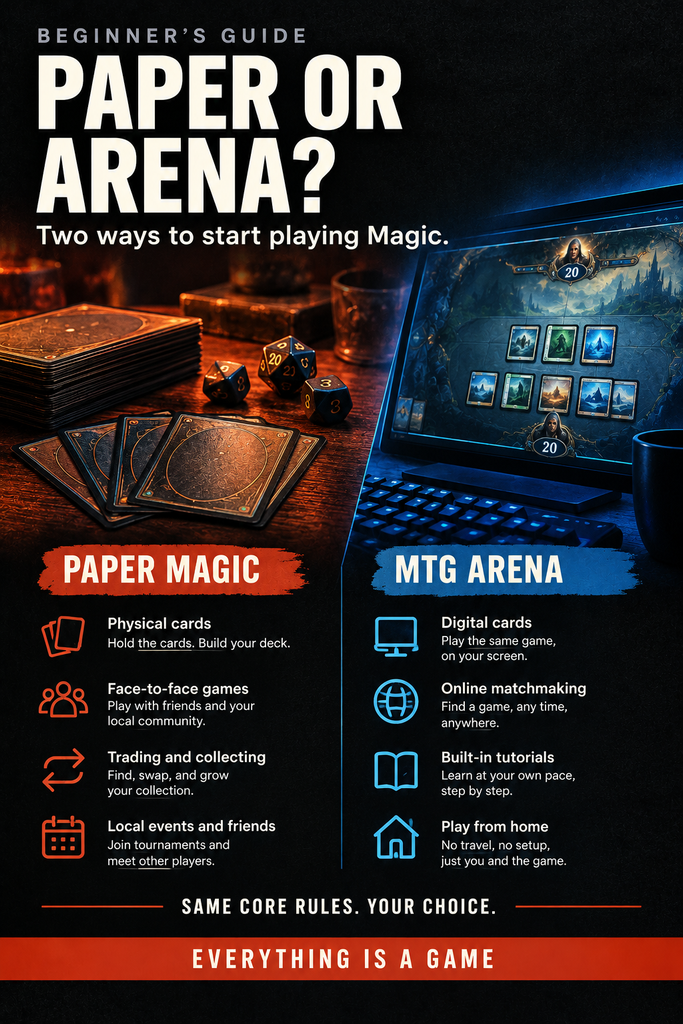
Both are good places to start. If you are not sure, the guide MTG Paper vs Arena: Why Your Deck Plays Differently compares how they feel, and you can try one without committing to the other. Plenty of players do both.
A lot of people use Arena to test ideas before they buy cards. The walkthrough Testing Your Paper Deck on MTG Arena Before You Buy shows how. It is a useful bridge if you like the idea of paper but want to be sure first.
A note on cost
Magic can be as cheap or as expensive as you want it to be. Arena gives you a way to earn cards by playing, and the guide to Gold, Gems, and Wildcards explains how that economy works. In paper, starter products and casual play with friends keep the cost modest, and nobody needs to chase the priciest cards to have a good time.
🗂️ Formats in brief
A format is a set of rules about which cards you can use and how big your deck is. Choosing a format is like choosing which version of the game you are playing tonight. Here are the ones beginners meet first, with the posts that explain them properly.
Standard uses recent sets only and is a common starting point on Arena. Cards leave Standard over time through rotation, which keeps the pool manageable. See the glossary entries on rotating formats and non-rotating formats if you want the detail.
Commander is a multiplayer, singleton format built around a leader you choose. It is popular with friends at a kitchen table because it is relaxed and social. Our guide Commander Deckbuilding 101 covers your first deck.
Arena also has Explorer, Historic and Brawl, each with its own card pool and feel. If you are weighing them up, MTG Arena in 2026: Which Format Should You Actually Be Playing? is the best single place to compare them side by side.
You do not need to pick a format for life. Most players try a few, and the format you play on your first night is rarely the one you end up with.
Best of one or best of three
Arena offers matches that are a single game or a best-of-three set. A single game is quick and simple, which suits an evening with limited time. A set of three adds depth, because you can adjust your deck between games using a sideboard.
The terms are Bo1 and Bo3. If you want the full picture, Bo1 vs Bo3 on MTG Arena breaks down how the choice changes the way you play and build.
🎴 Draft and sealed: playing without a deck
Not every Magic game starts with a deck you already own. In Limited play, you build a deck on the spot from a pool of cards you open or pick. It is one of the most beginner-friendly ways to play, because everyone starts on the same footing.
The most popular version is a draft. Each player takes a pack, picks a card, and passes the rest along. You repeat that until everyone has a pile of cards, then build a deck from your picks.
On Arena there are several modes, from fast ones to slower ones with real opponents. Traditional Draft vs. Quick Draft vs. Premier Draft compares them, and the glossary entry for Quick Draft is a short primer. In paper, a prerelease is a friendly way to try Limited, as described in Drafting a MTG Paper Prerelease.
Once you enjoy it, How to Draft MTG: Reading Signals and Staying Flexible gives you the habits that turn a pile of picks into a good deck. A different flavour is How to Draft the Arena Cube, where the card pool is a hand-picked collection of strong cards.
📅 Current meta box
Current meta snapshot. Last checked: 2026-11-08.
The “meta” is what most players are playing right now, and it changes as new sets arrive. This guide deliberately avoids card names and banned lists, because they date quickly. Use the posts below for the detail, and treat their own dates as the guide to how fresh they are.
- The Standard Meta on MTG Arena After Marvel Super Heroes: What’s Actually Winning in July 2026 is the main Standard snapshot. It was written earlier in the year, so check whether newer sets have changed things.
- 5 Budget Standard Decks for MTG Arena (5 Rares or Fewer) is the practical starting point if you want to play Standard without spending much.
- How Secrets of Strixhaven Changed Standard on MTG Arena shows how a single set can reshape a format.
Rotation timing has shifted recently, so confirm what is currently legal on the official Wizards of the Coast Standard page before you buy cards or spend wildcards.
Read the metagame entry in the glossary if the word is new. You do not need to follow the meta to have fun, but it helps to know what other players are likely to bring.
🗺️ Your journey map through the MTG cluster
This is where the guide hands you on. The posts are grouped into five stages, and you can jump in wherever you are. Each stage lists every guide that fits, with a line on what it gives you.
Stage 1: Learn the game
You are here. After this guide, the fastest way to learn is to play a few games in the Arena tutorial, or sit down with a starter product and a friend in paper. These two guides will deepen what you learned above.
- MTG Arena Mulligan Decisions: When to Keep or Send Back explains the first decision of every game, and it applies to paper too.
- MTG Mana Curve and Tempo: Sequencing a Deck That Does Something Every Turn shows why the order you play cards matters. A mana curve is simply how your deck’s costs are spread out.
Stage 2: Pick paper or Arena
If you chose paper, these guides help you get comfortable at a game store and with your own collection. They cover the practical side of the physical game.
- Playing Your First FNM: A Nervous Newcomer’s Guide walks you through your first weekly event, known as FNM, at your local game store.
- Drafting a MTG Paper Prerelease: What First-Timers Get Wrong prepares you for a launch-day event.
- Trading Cards in Paper Magic: A Skill Arena Never Taught You covers the social side of building a collection.
- Sleeves, Storage, and Deck Boxes: Protecting a Paper Collection That Actually Grows helps you look after your cards.
If you chose Arena, the economy guide is the one to read first. It explains how free progress works so you spend wisely.
- Arena Wildcard Economy: Gold, Gems, and Wildcards Explained for New Players covers the basics of earning and spending.
- From Budget to Meta: How to Upgrade Your MTG Arena Deck Without Wasting Wildcards shows how to improve a deck step by step.
Unsure which to pick? These two bridge the gap.
- MTG Paper vs Arena: Why Your Deck Plays Differently compares the two experiences.
- Testing Your Paper Deck on MTG Arena Before You Buy: A Practical Guide uses Arena as a free test bench.
Stage 3: Pick a format
Now choose how you want to play. These guides map out the options, from relaxed multiplayer to Arena’s card pools.
- MTG Arena in 2026: Which Format Should You Actually Be Playing? is the overview of Arena’s modes.
- Explorer Format on MTG Arena: Is It Pioneer Now? clears up how Explorer relates to Pioneer.
- Historic Brawl on Arena: Commander’s Digital Cousin, Explained is the digital take on a multiplayer favourite.
- Bo1 vs Bo3 on MTG Arena: How the Format You Choose Changes Everything explains match lengths.
- Commander Deckbuilding 101: Your First 100-Card Singleton Deck gets your first Commander deck together.
- MTG: Commander Power Levels and Rule 0: Talking to Your Pod helps you find a fair game with your group.
Standard fans should also see the current meta box above. If you prefer building a deck on the spot, the draft guides come next.
- Traditional Draft vs. Quick Draft vs. Premier Draft: Which Arena Limited Mode Should You Play? helps you choose a mode.
- How to Draft MTG: Reading Signals and Staying Flexible teaches the core habits.
- How to Draft the Arena Cube: Archetypes, Power Cards, and Picks That Win takes you into a curated card pool.
Stage 4: Build a deck
Decks fall into a handful of broad styles called archetypes. Knowing which one appeals to you makes choosing cards far easier. Each of these guides covers one style in depth.
- Aggro on MTG Arena: Why Fast Decks Reward Strategic Thinking More Than You’d Expect is for players who like to attack early. See also the entry for aggro.
- How to Play Midrange on MTG Arena: The Strategy Behind the Format’s Most Consistent Decks is the flexible, balanced approach.
- Control on MTG Arena: How to Actually Win (Not Just Survive) with Control Decks is for patient players, and the glossary covers control.
- Ramp and Big Spells on MTG Arena: Building Toward Game-Winning Threats shows how to cast huge things early.
- Combo on MTG Arena: Assembling Game-Winning Pieces Before Your Opponent Interacts is for people who love puzzles.
When you have a style in mind, start with the budget list in the current meta box above, which links 5 Budget Standard Decks for MTG Arena. Then get your lands right.
- Building a Mana Base: Fixing Your Colours in Paper and on Arena is the guide to the lands that make the whole deck work.
Stage 5: Play better
Once you can play and build, the gains come from small decisions. These guides sharpen the habits that win games.
- MTG Arena Mulligan Decisions: When to Keep or Send Back is worth rereading once you have a few games behind you.
- Sideboardinging MTG: The Skill Bo1 Never Lets You Practise teaches you to adjust between games.
- MTG Mana Curve and Tempo: Sequencing a Deck That Does Something Every Turn is the one to revisit when your plays feel clumsy.
🚦 If you want X, start here
Not sure where to begin? Match your goal to a starting point below.
- If you want to play with friends around a table, go to paper, learn the basics here, then read Commander Deckbuilding 101.
- If you want to learn on your own, at any hour, install Arena and then read the wildcard economy guide.
- If you want a low-pressure first event, read Playing Your First FNM or the prerelease guide.
- If you want to try everything without a deck, try a draft with the draft mode comparison.
- If you want to play on a budget, start with 5 Budget Standard Decks for MTG Arena.
- If you want to be sure before buying paper cards, follow the Arena testing guide.
- If you want to understand why people love it, play three games of anything, then read about archetypes to see what suits your style.
🎲 Gear for a paper start
If you go with paper, you need very little to begin. A deck box keeps a deck together, and our guide on sleeves and storage explains how to protect cards as you collect them. A deck box with a sideboard divider keeps your main deck and your extra cards in one place.
You also need a way to track life totals. A set of dice for counting life and counters works well, and a pen and paper works just as well. If your collection starts to grow, a zippered binder for trading cards is a handy way to keep spare cards organised.
❓ Common questions from new players
Do I have to spend a lot of money?
No. Arena lets you earn cards by playing, and in paper you can start with a preconstructed deck or a casual game with a friend. Spending is optional, and plenty of enjoyable decks are inexpensive.
Is Magic hard to learn?
The core loop is quick to learn. The depth comes later and arrives at a pace you choose. Many players enjoy the game for years without knowing every rule.
Will I be judged for being new?
Most players remember being new and are happy to help. Local game stores often run beginner-friendly nights, and Arena matches are anonymous. Asking questions is a normal part of the game.
Do I need to know the meta?
Not at first. Play what you enjoy, and learn the meta later if you want to compete. The metagame only matters once you start caring about winning against strong decks.
🎬 Ready to play
Magic looks like a mountain from the outside. From the inside it is a game: two players, a deck each, twenty life and a few simple turns. Everything else is a path you can choose to walk when you are ready.
Pick a door, paper or Arena, play your first few games and come back to the journey map when you wonder what to learn next. The rest of the site is built to meet you there.